
Pakistan Rejects Reports of Air Force Deployment in Yemen Conflict
Pakistan's Information Ministry firmly rejected foreign media reports alleging Pakistan Air Force jets were deployed against Yemen's Houthis, denouncing the claims as entirely fabricated.
The Core Development
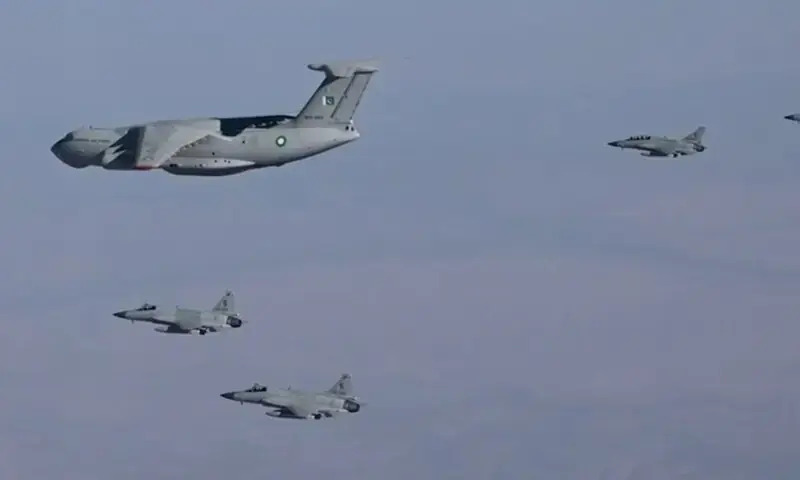
The Ministry of Information and Broadcasting formally and categorically dismissed a high-profile international media report alleging that Pakistan Air Force (PAF) assets and fighter jets were actively engaged in military operations against Yemen’s Houthi movement. The controversy erupted following an October 7 report published by The New York Times, which relied heavily on unnamed intelligence and diplomatic sources to claim that Pakistani military hardware and personnel were being utilized amid the volatile and escalating cross-border conflict involving Saudi Arabia.
In an official statement disseminated via the social media platform X, accompanied by a screenshot of the contested article, the ministry labeled the assertions as entirely "fake and fabricated." Pakistani state authorities emphasized that such unverified claims misrepresent the nation's steadfast foreign policy framework, which explicitly avoids military entanglements in active foreign theaters unless conducted under strict United Nations mandates or authorized multilateral coalitions.
Commercial & Economic Implications
While the controversy centers on military and geopolitical affairs, market analysts and financial observers at Kalyar Traders note that international perceptions of geopolitical stability directly influence investor sentiment, domestic currency valuations, and sovereign risk premiums in Pakistan. Persistent rumors regarding foreign military entanglements can trigger localized market jitters, affecting foreign direct investment (FDI) inflows, external trade negotiations, and investor confidence across critical industrial sectors.
Furthermore, heightened regional tensions in the Middle East historically exert upward pressure on global crude oil prices, supply chain logistics, and shipping insurance premiums. For an import-dependent economy like Pakistan, any instability or perceived alignment in major regional conflicts carries profound implications for domestic fuel prices, inflationary trajectories, retail trade costs, and wholesale commodity distribution channels. Maintaining clear, transparent neutrality safeguards the national economy from imported inflationary shocks and protects vital remittance corridors.
Related Intelligence: Istanbul Building Collapse Exposes Urban Infrastructure and Economic Vulnerabilities
Stakeholder Perspectives & Market Reactions
Business councils, defense analysts, and trade associations across Pakistan have strongly endorsed the government's swift rebuttal, emphasizing the necessity of protecting national sovereignty and diplomatic non-alignment. Industry leaders underscored that Pakistan’s strategic interests are best served by fostering economic diplomacy, regional trade partnerships, and peace rather than being drawn into protracted Middle Eastern conflicts.
Legal and policy experts have similarly criticized the reliance on anonymous sources by major Western publications, arguing that speculative journalism undermines bilateral relations and misinforms global markets. Public response has overwhelmingly coalesced around support for the armed forces' institutional stance, reflecting a broad societal consensus against foreign military interventions that could jeopardize national security and economic stability.
Forward Outlook & Key Watchpoints
As the diplomatic fallout from the disputed report subsides, policymakers and market watchers will closely monitor international media coverage and bilateral communications between Islamabad and Middle Eastern capitals. Key watchpoints include official diplomatic exchanges, updates on bilateral trade agreements with Gulf Cooperation Council (GCC) nations, and potential adjustments to foreign policy communication strategies by the federal government.
Authorities have formally requested major global news organizations to exercise rigorous editorial diligence, adhere to verified reporting standards, and refrain from speculative assertions regarding Pakistan's defense posture. Ensuring absolute clarity on military deployments remains paramount for preserving domestic stability, maintaining investor confidence, and upholding the nation's sovereign integrity across the international arena.
Join Our Official WhatsApp Channel
Receive live commodity alerts, policy changes, and commercial intelligence directly on WhatsApp.