
Government Rejects PTI Demands, Citing Economic Stability Risks
Adviser to the Prime Minister Rana Sanaullah declared that the government will resist opposition pressure, warning that political confrontation jeopardizes national economic stability and trade continuity.
The Core Development
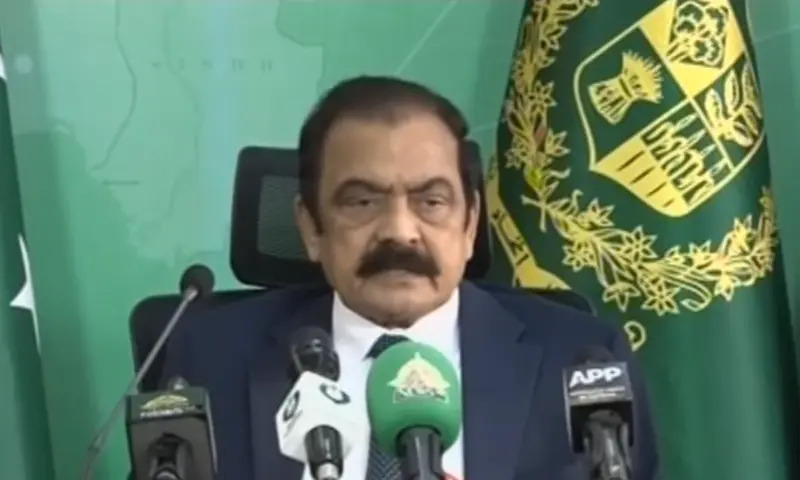
The political standoff in Islamabad escalated sharply on Wednesday as Adviser to the Prime Minister on Political Affairs, Rana Sanaullah, issued a definitive rejection of Pakistan Tehreek-e-Insaf's (PTI) negotiation tactics. Speaking to media representatives in the federal capital, Sanaullah asserted that the ruling administration will not capitulate to political demands made while holding the state apparatus "hostage."
The latest friction stems from the opposition's persistent call for unyielding political concessions, countered by Prime Minister Shehbaz Sharif's administration offering conditional dialogue. While reiterating that government doors remain officially open for constructive engagement, Sanaullah drew a firm red line against utilizing street agitation and ultimatums as leverage. He lamented that national politics has increasingly degraded into a culture of intolerance and personal attacks, which he argued successfully obstructs broader legislative and administrative peace.
Commercial & Economic Implications
For the broader business community, wholesale distributors, and retail markets across Pakistan, persistent political instability translates directly into commercial friction. Financial analysts note that prolonged protests and uncertainty invariably undermine investor confidence, disrupt vital supply chains, and exert upward pressure on retail prices and inflation.
Kalyar Traders and other commercial entities across the country depend heavily on policy predictability and uninterrupted trade corridors. When political actors deploy disruptive street protests, freight movement slows, consumer spending contracts, and foreign exchange reserves face renewed vulnerability due to dampened market sentiment. The business sector has consistently maintained that macroeconomic recovery, stabilization of the Pakistani Rupee, and inflation control require a stable political environment, free from recurring existential gridlocks.
Related Intelligence: Pakistan Accelerates ML-1 Railway Overhaul and Corporate Reforms
Stakeholder Perspectives & Market Reactions
Trade bodies, chambers of commerce, and industrial associations have expressed deep unease regarding the hardening stances of both major political factions. Representatives from key business hubs have repeatedly urged political leadership to prioritize economic revival over partisan disputes.
Legal experts and constitutional analysts observe that while political opposition is a cornerstone of parliamentary democracy, leveraging state-level paralysis to force executive capitulation establishes a damaging precedent for governance. Meanwhile, government representatives maintain that ongoing structural reforms under international financial frameworks necessitate absolute administrative continuity, leaving little room for destabilizing concessions to street agitation.
Forward Outlook & Key Watchpoints
As the political calendar unfolds, market watchers and corporate leaders are closely monitoring several critical indicators. The immediate priority is whether the PTI leadership will heed calls to abandon planned protests in favor of structured parliamentary dialogue, or if confrontation will escalate.
Key watchpoints for the coming weeks include potential disruptions to major trade arteries, regulatory policy announcements from the federal cabinet, and any shifts in the stance of key institutional stakeholders. For Pakistan's commercial sector, avoiding prolonged gridlock remains vital to sustaining recent marginal gains in macroeconomic stability and ensuring predictable market operations.
Join Our Official WhatsApp Channel
Receive live commodity alerts, policy changes, and commercial intelligence directly on WhatsApp.