
Pakistan Reaffirms Saudi Defense at UN Amid Escalating Red Sea Risks
Pakistan condemned Houthi incursions targeting Saudi civilian infrastructure at the UN Security Council, emphasizing strategic solidarity as maritime shipping volatility threatens regional trade and energy supply chains.
The Core Development
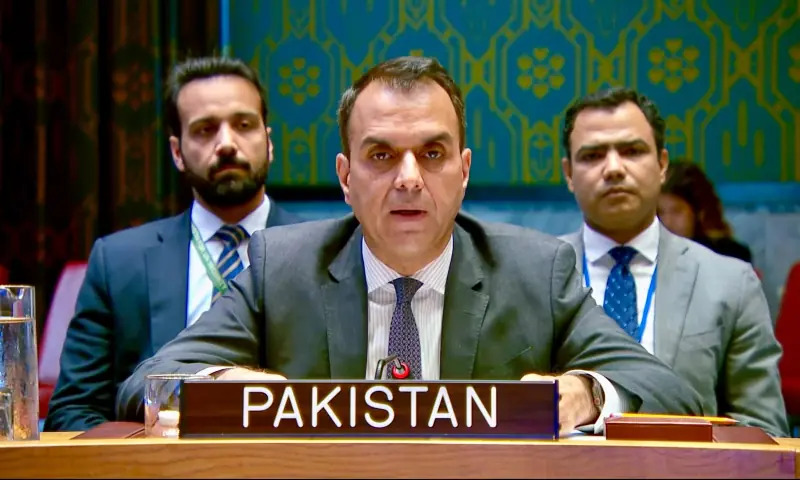
At a United Nations Security Council (UNSC) debate addressing spiraling instability across the Middle East, Pakistan issued an unequivocal condemnation of Houthi militant strikes directed at the civilian and economic infrastructure of the Kingdom of Saudi Arabia. Addressing the council in New York, Ambassador Usman Jadoon, Pakistan’s Acting Permanent Representative to the UN, declared that hostile incursions against the Kingdom must cease immediately. Islamabad reaffirmed its principled commitment to Saudi Arabia's sovereignty, territorial integrity, and legitimate right to self-defence under international law.
Ambassador Jadoon underscored that deliberate targeting of commercial installations and population centers contravenes established global norms and severely complicates ongoing diplomatic endeavors to resolve the protracted conflict in Yemen. Pakistan maintained that durable stability in the Arabian Peninsula necessitates an inclusive, peaceful political settlement negotiated among Yemeni factions, even as Riyadh maintains its fundamental right to protect its borders. The official statement reinforces a long-standing defense framework between Islamabad and Riyadh, characterized by deep military cooperation and mutual security commitments.
Commercial & Economic Implications
For Pakistan’s domestic economy, wholesale trade, and industrial sectors, the geopolitical stability of the Gulf is an issue of existential commercial importance. Saudi Arabia remains a vital pillar of Pakistan’s macroeconomic stability, serving as a primary provider of bilateral financial support, central bank deposits, and deferred-payment oil facilities. Any sustained threat to Saudi industrial assets or Gulf navigation directly reverberates across Pakistan's fiscal balance.
The commercial implications are acute for maritime supply chains. Heightened military engagements along the Red Sea and Gulf waterways have driven commercial shipping liners to reroute around Africa or incur substantial war-risk insurance surcharges. These incremental freight expenses are transferred directly to Pakistani importers, driving up the landed cost of capital goods, petrochemical intermediates, and raw edible oils. For the domestic retail and wholesale distribution network, elevated transport expenses and energy market volatility threaten to reignite cost-push inflation, compressing profit margins across mid-tier merchants and depleting consumer purchasing power.
Related Intelligence: Maduro Pleads Not Guilty to Expanded Federal Charges in New York Court
Stakeholder Perspectives & Market Reactions
Domestic market actors and industrial associations have closely monitored Islamabad's diplomatic positioning. Trade bodies, including the Federation of Pakistan Chambers of Commerce and Industry (FPCCI), consistently emphasize that unimpeded sea lanes in the western Indian Ocean and Arabian Gulf are critical for sustained export competitiveness, particularly for textile consignments bound for European and North American markets.
Financial analysts view Pakistan's diplomatic alignment at the UNSC as indispensable for safeguarding broader economic interests. The Kingdom hosts more than 2.5 million Pakistani expatriates, whose remittances constitute a major pillar of foreign currency inflows, stabilizing the current account. Corporate treasuries and commodities traders note that uninterrupted economic activity within Saudi Arabia is critical to maintaining these remittance flows, while bilateral investment negotiations under the Special Investment Facilitation Council (SIFC) remain contingent on a secure Gulf security architecture.
Forward Outlook & Key Watchpoints
Moving forward, market participants must monitor three pivotal flashpoints: the frequency of retaliatory strikes within the Gulf, the volatility index of international benchmark crude oil, and marine insurance underwriting terms for regional transit. Should maritime disruption intensify, downstream retail prices for fuel, synthetic packaging, and agricultural inputs across Pakistan will experience immediate upward revisions.
Diplomatically, Pakistan is expected to continue leveraging its status at multilateral forums to advocate for comprehensive de-escalation while sustaining clear security guarantees for Riyadh. Stakeholders should track upcoming bilateral trade delegations and SIFC investment milestones, which will provide tangible indications of whether strategic defense alignment successfully translates into enhanced capital inflows and fortified energy security arrangements.
Join Our Official WhatsApp Channel
Receive live commodity alerts, policy changes, and commercial intelligence directly on WhatsApp.