
Pakistan Military Warns Against Compromising Counter-Terrorism Policy for Politics
Military leadership has declared that national counter-terrorism efforts are paramount and immune to political bargaining, while vehemently rebutting hostile foreign propaganda.
The Core Development
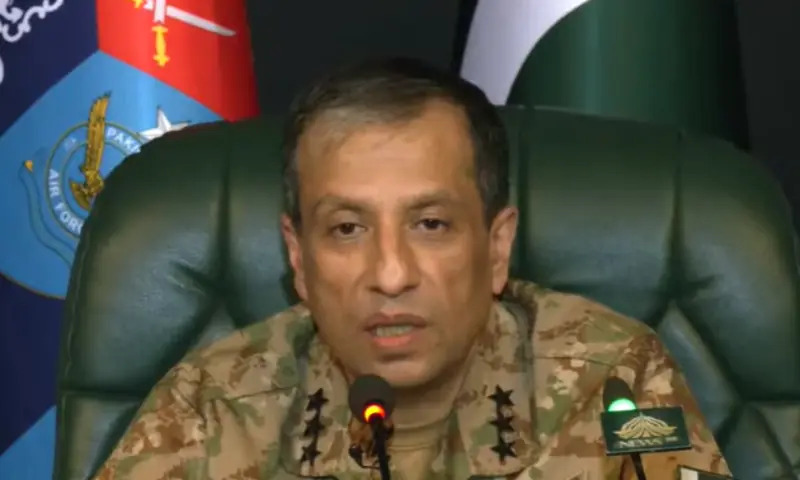
Inter-Services Public Relations (ISPR) Director General Lt Gen Ahmed Sharif Chaudhry delivered a resolute policy stance during a high-stakes press briefing, declaring that Pakistan's ongoing war against terrorism is paramount and cannot be compromised for partisan political gains. The military spokesperson addressed a spectrum of critical national security concerns, most notably dismantling fabricated narratives propagated by Indian media outlets alleging the neutralization of a Pakistan Army trooper during an encounter in the Korag area of Indian-occupied Kashmir. Terming these claims as baseless disinformation, the DG ISPR underscored the military's operational readiness and commitment to debunking malicious cross-border propaganda designed to mislead domestic and international audiences.
The briefing also tackled the sensitive discourse surrounding domestic political figures advocating for political negotiations with the Afghan Taliban. While acknowledging that diverse viewpoints on security policy may exist within the political spectrum, the military leadership drew a hard line against subordinating national defense to political expediency. The core message reinforced that while democratic debate is welcome, the overarching imperative of eradicating terrorism must remain unified, institutionalized, and shielded from populist rhetoric.
Commercial & Economic Implications
For an emerging market like Pakistan, persistent security instability directly translates into dampened investor confidence, elevated risk premiums, and supply chain disruptions. Wholesale distribution networks, retail trade corridors, and commercial hubs in major urban centers are acutely sensitive to the perception of security threats. When national security is perceived as vulnerable or politicized, foreign direct investment (FDI) inflows stall, capital flight risks increase, and domestic inflationary pressures are exacerbated through supply chain bottlenecks and logistical delays.
Furthermore, maintaining a stable security apparatus requires substantial fiscal outlays, impacting national budgetary allocations. A firm, unambiguous state stance against terrorism helps stabilize financial markets by signaling regulatory predictability and state writ. For Kalyar Traders and the wider business community operating across Pakistan, a decisive security policy minimizes the risk of commercial disruptions, protects critical trade routes, and fosters a predictable macroeconomic climate necessary for retail expansion and industrial output.
Related Intelligence: Sharif-Trump UNGA Encounter Signals Fresh Diplomatic Engagement
Stakeholder Perspectives & Market Reactions
Business councils, corporate leaders, and trade associations have consistently maintained that economic recovery is inextricably linked to absolute security permanence. Representatives from various chambers of commerce across Pakistan noted that political consensus on national security is a prerequisite for long-term commercial planning. Investor sentiment on the Karachi Stock Exchange (KSE) and other financial platforms typically reacts favorably to resolute state messaging that dampens geopolitical friction and counters hostile foreign narratives.
Legal experts and civil society stakeholders have similarly emphasized the necessity of aligning state policy with constitutional mandates, ensuring that counter-terrorism measures are executed within a robust legal framework. Public response, as gauged through national discourse, leans heavily toward supporting unified state action against militant threats, reflecting widespread fatigue over violence affecting daily commerce and community life.
Forward Outlook & Key Watchpoints
As Pakistan navigates complex geopolitical dynamics along its western and eastern borders, the trajectory of counter-terrorism policy will remain a critical variable for economic planners and institutional investors. Key watchpoints include the implementation timeline of federal security frameworks, diplomatic engagements regarding cross-border militant sanctuaries, and the ability of political leadership to forge a unified national consensus.
For businesses and financial analysts, monitoring executive statements, legislative actions regarding security funding, and regional diplomatic developments will be essential. Ensuring that political debates do not derail operational security initiatives will determine whether Pakistan can sustain its economic stabilization trajectory and attract much-needed foreign investment in the upcoming fiscal quarters.
Join Our Official WhatsApp Channel
Receive live commodity alerts, policy changes, and commercial intelligence directly on WhatsApp.