
Pakistan Media Safety Frameworks Falter Over Resource and Enforcement Deficits
Pakistan's landmark safety laws for media practitioners remain largely theoretical as federal and provincial commissions face institutional paralysis, budgetary neglect, and weak enforcement mechanisms.
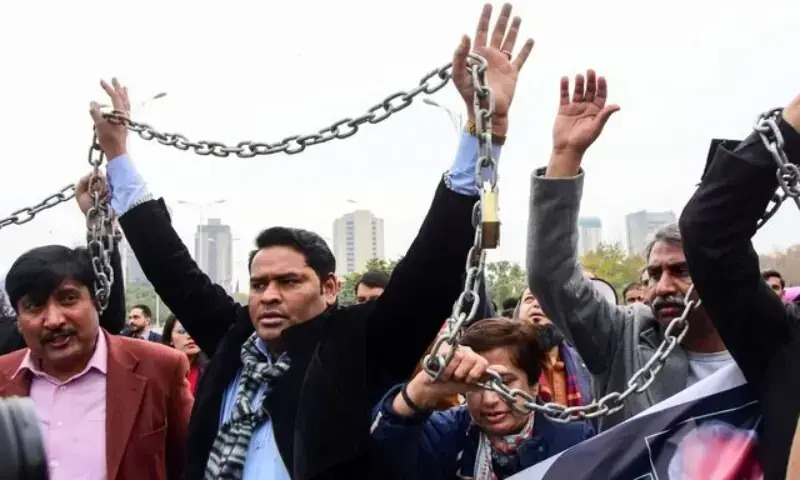
The Core Development
Pakistan's statutory guarantees aimed at safeguarding journalists and media professionals risk becoming obsolete legal artifacts due to operational paralysis, institutional underfunding, and bureaucratic bottlenecks. According to an investigative assessment released by media watchdog Freedom Network in partnership with International Media Support, the statutory bodies established under federal and provincial legislation are struggling to fulfill their mandates. The report, authored by Minahil Shahab and Adnan Rehmat and titled 'From safety on paper to safety in practice,' scrutinizes the performance of the federal commission appointed under the Protection of Journalists and Media Professionals Act 2021 and its counterpart under Sindh's Commission for the Protection of Journalists and Other Media Practitioners Act 2021.
Drawing on multi-stakeholder consultations and survey responses from working journalists across urban and rural beats, the findings delineate a structural failure in institutional operationalization. Despite clear legislative intent, the designated commissions lack independent offices, functional digital grievance portals, dedicated investigation units, and fiscal resources. This vacuum has left journalists exposed to physical violence, digital intimidation, and arbitrary detention, without a reliable redressal mechanism to trigger state security protocols.
Commercial & Economic Implications
While press freedom is ostensibly a civil liberties domain, its suppression directly imperils Pakistan’s macroeconomic stability and commercial environment. Transparent, independent journalism provides the foundation for accurate market data, corporate accountability, and consumer protection. When media watchdogs are silenced or compromised, state and private sector corruption goes unchecked, distorting wholesale distribution networks, disguising artificial supply bottlenecks, and enabling unregulated hoarding of essential consumer commodities.
Furthermore, institutional erosion directly impacts Pakistan’s international sovereign risk rating and trade preferences. The European Union’s Generalized Scheme of Preferences Plus (GSP+) facility mandates adherence to key United Nations conventions, including those safeguarding fundamental human rights and freedom of expression. Persistent non-compliance and legislative failures regarding journalist protection jeopardize Pakistan’s duty-free export access to European retail and industrial markets, posing direct risks to textile exporters and wholesale manufacturing supply chains.
Related Intelligence: FDLR Ideological Persistence Threatens Great Lakes Stability and Mineral Trade
Stakeholder Perspectives & Market Reactions
Legal experts, media representative bodies, and economic analysts have voiced acute concern over the state’s inertia. Press freedom advocates argue that establishing commissions without operational budgets represents a deliberate administrative strategy to neutralize oversight. Media trade unions highlight that district-level reporters, who frequently investigate agricultural cartelization, cross-border smuggling, and illicit financial practices, face the highest risk profile with virtually zero institutional backing.
Conversely, state officials frequently cite prevailing fiscal austerity as the principal impediment to fully resourcing statutory bodies. However, independent legal observers argue that political will, rather than liquidity constraints, remains the definitive roadblock. The lack of standardized investigation protocols and inter-agency coordination between the federal commission, provincial police departments, and judicial magistrates has perpetuated a pervasive climate of impunity, weakening confidence among domestic commercial enterprises relying on investigative reporting to expose anti-competitive practices.
Forward Outlook & Key Watchpoints
Moving forward, the efficacy of Pakistan's journalist safety architecture hinges on three immediate structural interventions: executive notification of procedural rules, independent budget allocations under the upcoming national and provincial fiscal frameworks, and the establishment of secure, anonymous grievance portals. Over the next two quarters, civil society coalitions and international trade monitors are scheduled to evaluate Pakistan’s institutional compliance ahead of multilateral trade and rights reviews.
Market observers and legal analysts should closely track whether the federal government establishes a dedicated secretariat for the commission and aligns provincial administrative frameworks with statutory mandates. If legislative gaps persist without enforcement, the resulting degradation of transparency will exacerbate systemic risks, dampening foreign direct investment and further destabilizing Pakistan's broader commercial ecosystem.
Join Our Official WhatsApp Channel
Receive live commodity alerts, policy changes, and commercial intelligence directly on WhatsApp.