
Pakistan and EU Deepen Cooperation to Curb Irregular Migration and Smuggling
Prime Minister Shehbaz Sharif and EU Commissioner Magnus Brunner met in Islamabad to enhance bilateral cooperation, prioritizing legal mobility frameworks and aggressive crackdowns on illegal migrant smuggling networks.
The Core Development
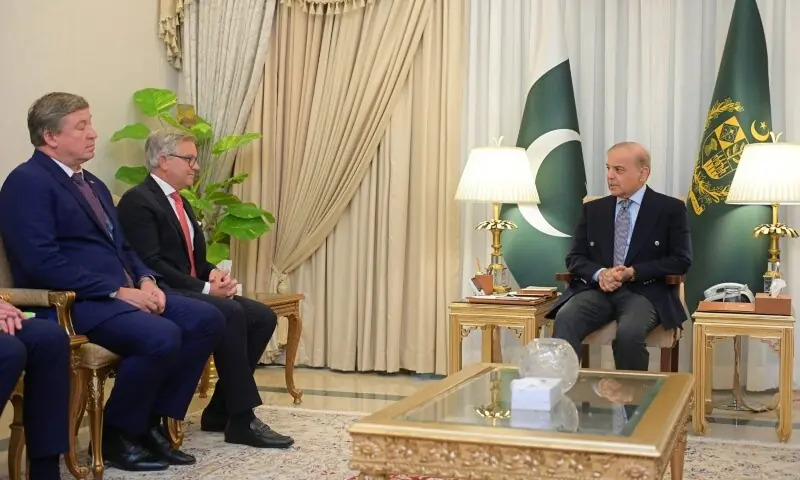
In a high-level diplomatic meeting in Islamabad, Prime Minister Shehbaz Sharif hosted the European Union Commissioner for Internal Affairs and Migration, Magnus Brunner, to review and consolidate bilateral cooperation on migration, border security, and human trafficking. The visit, marking Commissioner Brunner’s first official mission to Pakistan, served as an operational checkpoint for migration and mobility—one of the eight structural pillars underpinning the Pakistan-EU Strategic Engagement Plan established in 2019.
According to an official communique from the Prime Minister’s Office, Prime Minister Shehbaz emphasized Pakistan’s multifaceted strategy to curb irregular migration. The premier detailed legislative reforms, enhanced border control mechanisms, institutional capacity building within the Federal Investigation Agency (FIA), and deeper international intelligence sharing. The bilateral discussions placed considerable emphasis on addressing the root causes of migrant exploitation, dismantling organized transnational criminal networks, and establishing legal, skill-oriented pathways for Pakistani nationals seeking employment across European member states.
Commercial & Economic Implications
For Pakistan's domestic economy, the diplomatic dialogue with the European Union carries direct ramifications for foreign exchange liquidity, diaspora remittances, and bilateral trade privileges. The EU remains one of Pakistan's largest trading partners, absorbing substantial volumes of value-added textiles, leather, and surgical goods under the Generalised Scheme of Preferences (GSP Plus). Preserving and extending GSP Plus concessions hinges on institutional compliance with international conventions, encompassing human rights, good governance, and effective rule-of-law frameworks.
Remittances constitute a critical pillar of Pakistan's current account stabilization, generating over 30 billion dollars annually. Irregular migration networks facilitate an underground financial ecosystem reliant on informal Hawala and Hundi channels to fund transit fees. By formalizing migration corridors and dismantling smuggling operations, the state redirects foreign exchange inflows through scheduled banking networks, bolstering foreign exchange reserves, easing pressures on the rupee, and enhancing fiscal visibility. Furthermore, opening legal employment channels for skilled artisans, industrial technicians, and digital workers protects human capital while mitigating brain-drain risks.
Related Intelligence: Pakistan and EU Strengthen Border Security Pact as Irregular Migration Plummets
Stakeholder Perspectives & Market Reactions
Exporters, business chambers, and legal experts have tracked these developments with keen interest. Trade associations, including the Federation of Pakistan Chambers of Commerce and Industry (FPCCI), note that sustained alignment with Brussels on border management and migration diplomacy is indispensable to securing broad-spectrum economic support and retaining preferential tariff quotas in European markets.
Legal analysts and human rights practitioners point out that enforcement mechanisms against human trafficking syndicates must be matched by structural employment reforms domestically. Persistent inflationary headwinds and localized economic stagnation have historically pushed youth toward high-risk irregular migration routes. Official stakeholders, including the Ministry of Overseas Pakistanis and Human Resource Development, maintain that diplomatic validation from the European Commission will facilitate bilateral labor mobility agreements, providing regulated pathways for Pakistani labor.
Forward Outlook & Key Watchpoints
Moving forward, bilateral engagement will focus on translating diplomatic assurances into measurable security and legislative outputs. Key indicators over the coming quarters include increased joint operations between Pakistani law enforcement and Europol, formalized technical training programs funded by EU development envelopes, and regularized deportations or repatriations under existing readmission protocols.
Pakistan’s capacity to demonstrate measurable declines in irregular maritime and land transit across the Mediterranean and Balkan corridors will serve as a baseline metric for forthcoming EU evaluations. Institutional progress on these benchmarks is poised to strengthen Pakistan’s bargaining position in broader trade negotiations, securing access for domestic export sectors while stabilizing critical external financial buffers.
Join Our Official WhatsApp Channel
Receive live commodity alerts, policy changes, and commercial intelligence directly on WhatsApp.