
Pakistan and EU Strengthen Border Security Pact as Irregular Migration Plummets
Pakistan and the European Union have agreed to reinforce border management protocols following a 64 percent drop in irregular migration, creating strategic avenues for structured legal workforce mobility.
The Core Development
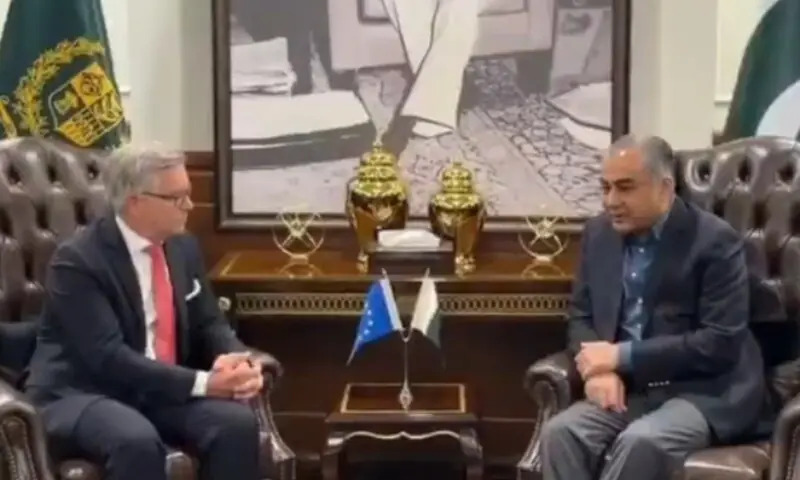
In a high-level diplomatic engagement held in Islamabad, Pakistan and the European Union cemented an expanded framework to combat irregular migration, reinforce border security, and establish transparent avenues for legal migration. Federal Minister for Interior Mohsin Naqvi hosted European Commissioner for Internal Affairs and Migration Magnus Brunner for extensive bilateral talks, followed by comprehensive delegation-level consultations.
A central focus of the discussion was the performance of Pakistan's heightened enforcement measures along unauthorized transit corridors. Commissioner Brunner officially commended Pakistan's sustained enforcement drive, noting that targeted interdiction efforts, tighter surveillance by the Federal Investigation Agency (FIA), and heightened vigilance along maritime and land exit routes resulted in a documented 64 percent decline in irregular migration attempts toward the European continent. Minister Naqvi reiterated Islamabad's commitment to dismantle transnational human trafficking syndicates while urging the European bloc to simultaneously expand formal, skill-based migration channels for Pakistani professionals and certified technical workers.
Commercial & Economic Implications
For Pakistan's domestic macroeconomic landscape and regional commercial networks, the enforcement partnership carries measurable structural ramifications. Human smuggling networks have historically functioned as parallel financial ecosystems, diverting substantial capital away from official banking channels into illicit Hawala and Hundi networks. Curbing these conduits directly aids in the formalization of capital flows, channeling overseas transactions back through state-regulated exchange companies and commercial banks.
Furthermore, the stabilization of migration policy intersects directly with workforce productivity and retail consumer spending. Unregulated outward migration often depletes local semi-skilled labor forces, destabilizing supply chains across manufacturing, agricultural logistics, and small-to-medium enterprise (SME) wholesale operations. Transitioning to structured, bilateral legal mobility frameworks guarantees that remittances arrive through formal, traceable channels, augmenting Pakistan's foreign exchange reserves and providing sustainable household liquidity. This predictable liquidity directly supports domestic consumer demand across FMCG, retail commodities, and local trade operations without sustaining underground financial networks.
Stakeholder Perspectives & Market Reactions
Commercial bodies, financial analysts, and legal experts have observed the Islamabad-Brussels dialogue with strategic optimism. Trade associations and chambers of commerce emphasize that closer institutional alignment with the European Union improves Pakistan’s broader geo-economic standing, indirectly safeguarding critical trade preferences such as the Generalized Scheme of Preferences Plus (GSP+) status. GSP+ concessions remain vital for Pakistan's textile and value-added export sectors, which generate billions of dollars annually.
Legal authorities and human rights analysts have welcomed the focus on institutionalized migration mechanisms. Experts argue that rigorous punitive measures against trafficking mafias must be balanced by accessible, merit-driven visa regimes. Legal mobility prevents the exploitation of vulnerable labor demographics and protects national reputational capital in European labor markets. Meanwhile, the domestic financial sector views tighter border and remittance compliance as an essential step toward satisfying international financial oversight standards and fortifying domestic fiscal integrity.
Forward Outlook & Key Watchpoints
Looking ahead, bilateral working groups are slated to operationalize joint technical protocols. Key watchpoints include the implementation of digital biometric data-sharing, joint capacity-building initiatives for Pakistani law enforcement, and the formalization of technical talent migration programs with individual EU member states.
Market observers will monitor whether this operational success translates into tangible concessions for Pakistani business travel, trade visas, and academic exchange. Policymakers must now focus on sustaining rigorous domestic border checks while aggressively negotiating bilateral labor agreements that integrate Pakistan’s youthful labor force into Europe’s aging industrial markets through certified, transparent channels.
Join Our Official WhatsApp Channel
Receive live commodity alerts, policy changes, and commercial intelligence directly on WhatsApp.