
Pakistan Denounces Houthi Strikes on Saudi Targets at UN Security Council
At the United Nations Security Council, Pakistan condemned Houthi attacks against Saudi Arabia, reaffirming defense ties while managing economic risks tied to Gulf energy corridors and crucial worker remittances.
The Core Development
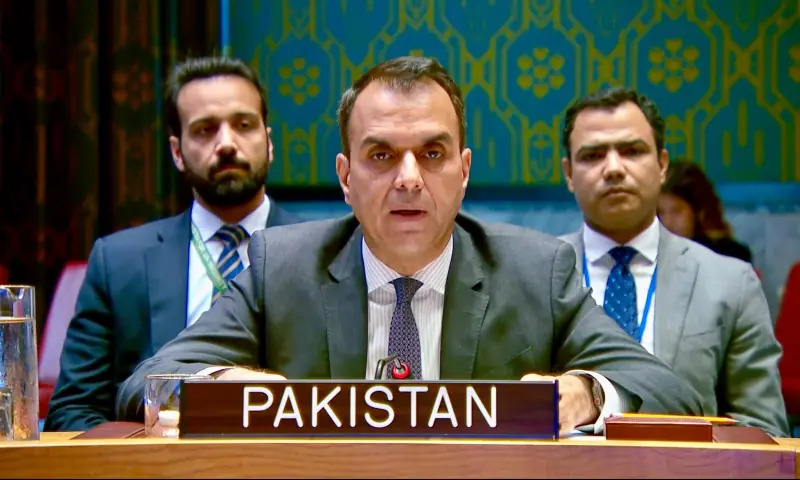
During a United Nations Security Council debate addressing escalating volatility across the Middle East, Pakistan issued an unequivocal condemnation of Houthi militant strikes directed against civilian and commercial infrastructure in the Kingdom of Saudi Arabia. Addressing international envoys in New York, Ambassador Usman Jadoon, Pakistan’s acting Permanent Representative to the United Nations, demanded an immediate cessation of cross-border aerial incursions and naval disruptions. He underscored Islamabad’s steadfast defense alignment with Riyadh, reiterating Pakistan’s recognition of the Kingdom’s sovereign right to self-defense under international statutes.
The diplomatic intervention comes as regional proxy hostilities intensify, threatening critical logistical corridors in the Red Sea and Gulf zones. Islamabad affirmed its backing for multilateral diplomatic initiatives aimed at achieving a durable, peaceful resolution to the protracted Yemeni crisis. However, the mission emphasized that attacks targeting commercial arteries, energy installations, and non-combatant urban zones violate international humanitarian law and jeopardize broader geopolitical equilibrium.
Commercial & Economic Implications
For Pakistan's domestic market, regional security dynamics across the Arabian Peninsula hold direct operational and macroeconomic consequences. Saudi Arabia represents not only a strategic geopolitical partner but also a primary anchor for Pakistan’s external financial stability. The Kingdom hosts an estimated 2.7 million Pakistani expatriate workers whose remittances routinely exceed 7 billion dollars annually, forming a principal pillar of foreign exchange liquidity and balance-of-payments management.
Direct strikes on Saudi industrial or petroleum processing infrastructure introduce immediate downside risks to global crude oil benchmarks. Any sustained disruption to Gulf energy logistics raises crude and refined product import costs for Pakistan, which remains heavily dependent on Gulf-origin fuel imports. In the domestic marketplace, higher import parity pricing translates into immediate upward revisions in retail petroleum, oil, and lubricant rates. For wholesale distribution networks, transport cartels, and downstream fast-moving consumer goods traders, inflated transport expenditures exert severe cost-push inflationary pressure, squeezing retail margins and depressing consumer purchasing power.
Furthermore, heightened regional hostilities drive up maritime war-risk premiums for vessels navigating contiguous maritime corridors, including the Bab el-Mandeb and the Strait of Hormuz. Elevated freight charges and surcharges on incoming maritime cargo directly inflate landed input costs for raw materials, packaged goods, and intermediate industrial products arriving at Karachi ports.
Related Intelligence: Pakistan Reaffirms Saudi Defense at UN Amid Escalating Red Sea Risks
Stakeholder Perspectives & Market Reactions
Domestic commercial bodies, including the Federation of Pakistan Chambers of Commerce and Industry and major wholesale trade associations, have closely monitored developments across the Gulf corridor. Industrial representatives emphasize that supply chain predictability between Pakistan and Gulf Cooperation Council economies is essential to domestic production planning. A flare-up in Gulf hostilities directly affects lead times for imported resin, chemicals, and industrial feedstock.
Financial sector analysts in Karachi note that Pakistan’s external financing matrix relies extensively on bilateral deposits and oil financing facilities provided by Riyadh. Official market responses in Pakistan have framed the diplomatic posture at the UNSC as vital to protecting strategic economic relationships. Energy market analysts caution that escalating regional strikes could compound fiscal deficits if sovereign fuel import bills surge during periods of foreign exchange constraints.
Forward Outlook & Key Watchpoints
Market participants and policy analysts must track several immediate watchpoints. Foremost among them is whether regional maritime security mechanisms can deter further projectile and drone strikes against commercial hubs along the Saudi coastline and adjacent shipping channels. Any expansion of operational targets to include commercial ports or refining complexes could trigger swift reactions across Brent crude indices, transmitting immediate price shocks to developing Asian markets.
Domestically, policymakers will monitor the trajectory of expatriate remittances and bilateral funding pipelines. Sustained stability across Saudi Arabia's industrial hubs will determine the continuity of bilateral investment programs, including proposed sovereign fund participation in Pakistan’s refining and mineral sectors. In the coming weeks, the level of adherence to international de-escalation protocols will serve as the primary barometer for logistical costs and energy price volatility.
Join Our Official WhatsApp Channel
Receive live commodity alerts, policy changes, and commercial intelligence directly on WhatsApp.