
Pakistan Bar Council Vindicates Ahsan Bhoon Amid Degree Controversy
The Pakistan Bar Council has officially verified the law degrees of its elected members, dismissing challenges against prominent lawyer and Judicial Commission member Ahsan Bhoon.
The Core Development
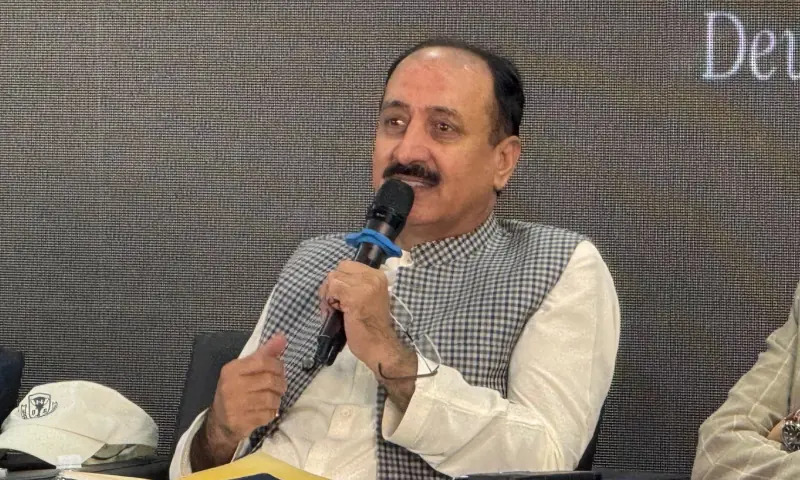
In a definitive institutional clarification issued on Thursday, the Pakistan Bar Council (PBC)—acting as the supreme regulatory body for the legal fraternity in the country—formally declared that the law degrees of its elected members, most notably prominent legal figure Ahsan Bhoon, are entirely genuine. This announcement comes in the wake of mounting public and legal debate concerning the academic credentials of senior practitioners within Pakistan's premier judicial forums. The controversy intensified significantly after Capt Safdar moved the Judicial Commission of Pakistan (JCP) to challenge the validity of Bhoon's law degree, bringing the qualifications of high-profile legal figures under intense national scrutiny.
Responding directly to the allegations, the PBC outlined its rigorous administrative protocols, emphasizing that returning officers appointed for both the 2020 and 2025 council elections meticulously verified the educational credentials of all returned candidates from their respective degree-granting universities before issuing official notifications. The regulatory body asserted that these institutional safeguards successfully upheld the integrity of the electoral process and confirmed the absolute authenticity of the documentation submitted by its members.
Commercial & Economic Implications
While the controversy primarily centers on legal ethics and institutional governance, developments within supreme regulatory bodies like the Pakistan Bar Council carry profound secondary implications for Pakistan's broader business, commercial, and economic landscape. Stability within the judicial system and its regulatory architecture is a cornerstone for investor confidence, commercial dispute resolution, and contractual enforcement. When core legal institutions experience friction or leadership challenges, foreign and domestic investors closely monitor the climate for potential risks to regulatory predictability and judicial independence.
A stable, credible legal framework directly underpins wholesale distribution, retail trade, and industrial market operations by ensuring that commercial litigation and regulatory compliance are managed by verified, competent professionals. Any perceived instability in apex legal bodies can ripple through financial markets, potentially delaying crucial corporate restructuring, regulatory approvals, and macroeconomic policy implementation. Therefore, a swift and authoritative resolution to credential controversies helps restore certainty to the business community, ensuring that commercial jurisprudence remains focused on economic revitalization rather than protracted institutional disputes.
Related Intelligence: Middle East Escalation Threatens Global Supply Chains and Domestic Trade
Stakeholder Perspectives & Market Reactions
Ranging from prominent trader associations and corporate industry bodies to senior legal practitioners and independent constitutional experts, reactions to the PBC's announcement have been sharply divided yet deeply engaged. Representatives from major trade and commercial chambers noted that institutional transparency is vital for maintaining a healthy business environment, urging regulatory bodies to prioritize rigorous credential verification across all professional spheres. Meanwhile, legal fraternities and bar associations largely rallied behind the regulatory framework, praising the PBC for defending its members against what many described as politically motivated challenges designed to undermine the credibility of the Judicial Commission of Pakistan.
Legal analysts point out that while challenges to qualifications are a standard mechanism for institutional accountability, they must be handled with strict adherence to established legal procedures to prevent reputational damage to national institutions. The formal statement by the PBC serves as an official closure to the immediate dispute, though various legal observers anticipate continued public discourse regarding transparency, meritocracy, and the verification mechanisms governing Pakistan's highest legal and judicial offices.
Forward Outlook & Key Watchpoints
As the dust settles on the immediate controversy surrounding Ahsan Bhoon's credentials, legal and regulatory stakeholders are shifting their focus toward upcoming administrative reforms within Pakistan's bar councils and judicial bodies. Key watchpoints for the coming months include potential revisions to candidate vetting protocols, increased digitization of university degree verification processes, and the ongoing proceedings within the Judicial Commission of Pakistan.
Policymakers and industry analysts will closely monitor how the PBC enforces compliance and transparency in future electoral cycles to preempt similar controversies. Additionally, the broader impact on judicial appointments and administrative efficiency will remain critical indicators of institutional stability. As Pakistan navigates complex economic and structural reforms, maintaining unassailable credibility across legal regulatory bodies will be paramount for sustaining both domestic confidence and international economic engagement.
Join Our Official WhatsApp Channel
Receive live commodity alerts, policy changes, and commercial intelligence directly on WhatsApp.