
Pakistan Army Rejects Compromise on Terrorism Amid Regional Tensions
Pakistan's military leadership has asserted that the fight against terrorism is paramount and immune to political compromise, while categorically dismissing fabricated Indian media reports.
The Core Development
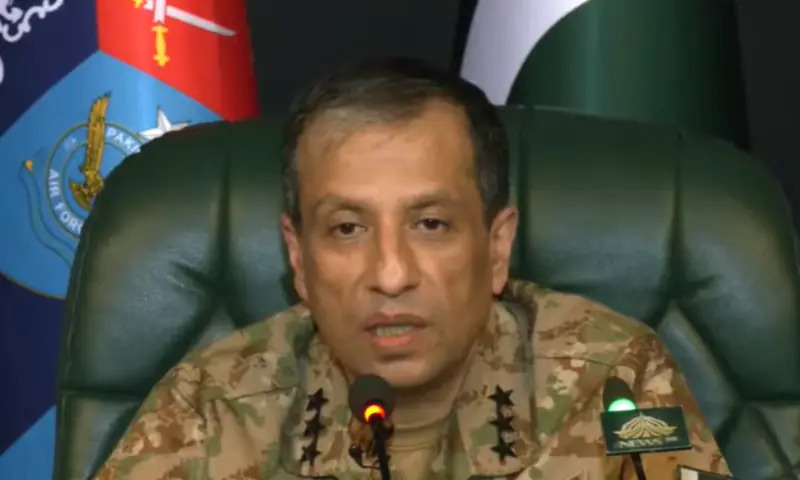
In a definitive press briefing that underscored the security establishment's uncompromising stance on national defense, Inter-Services Public Relations (ISPR) Director General Lieutenant General Ahmed Sharif Chaudhry declared that Pakistan's ongoing counter-terrorism operations are paramount. He emphasized that state security protocols and anti-terror initiatives cannot and will not be sacrificed at the altar of partisan politics.
The high-profile press conference was convened primarily to dismantle and rebut persistent Indian media claims alleging that an individual neutralized in an encounter in the Korag area of Indian-occupied Kashmir was an active-duty Pakistan Army trooper. ISPR categorically dismissed these assertions as malicious disinformation campaigns designed to mislead international observers and deflect attention from domestic human rights abuses in occupied territories. Transitioning to domestic political discourse, the ISPR chief addressed public statements made by various political figures advocating for formal negotiations with the Afghan Taliban. While acknowledging that diverse viewpoints exist within the political sphere regarding the management of cross-border security threats, General Chaudhry maintained that national consensus must ultimately align behind a unified, robust framework to eradicate terrorism.
Commercial & Economic Implications
Persistent security challenges and cross-border tensions carry profound ramifications for Pakistan's macroeconomic stability, commercial corridors, and investor sentiment. In an economy striving to consolidate post-stabilization gains under International Monetary Fund oversight, national security directly dictates market confidence. Business operations across major wholesale hubs in Khyber Pakhtunkhwa and Balochistan remain sensitive to localized security fluctuations, which periodically disrupt supply chains, inflate logistical overheads, and delay freight movement.
Wholesale distribution networks and retail trade rely heavily on predictable transit routes and stable regional dynamics. Investor inflows, both foreign and domestic, are intrinsically tied to perceptions of long-term state stability and the effective neutralization of insurgent threats. When security expenditures escalate or trade corridors face disruption due to heightened regional tensions, inflationary pressures can intensify through increased transportation risks and constrained market supplies. Consequently, the military's firm stance against internal political compromises on security is viewed by business analysts as a necessary prerequisite for establishing a predictable, investment-friendly commercial environment.
Related Intelligence: UK Detention of Veteran Human Rights Barrister Escalates Civil Liberties Standoff
Stakeholder Perspectives & Market Reactions
Business councils, trade associations, and corporate leaders have consistently advocated for an unyielding state approach toward national security as a foundational element for economic growth. Chambers of commerce across major urban centers have repeatedly underscored that commercial activity thrives only when the writ of the state is absolute and unchallenged by extremist elements.
Legal and policy experts have likewise weighed in on the delicate intersection between national security imperatives and political dialogue. Analysts note that while political pluralism is essential for democratic governance, matters concerning state defense and violent extremism require a bipartisan consensus. Public response, reflected across national media and policy forums, strongly favors insulating security policies from short-term political expediency. Stakeholders across the board agree that clear administrative resolve against terrorism reduces uncertainty, thereby reassuring financial markets and international trade partners.
Forward Outlook & Key Watchpoints
As Pakistan navigates complex geopolitical dynamics along its western and eastern borders, the trajectory of its counter-terrorism strategy remains a critical metric for domestic and international observers. Key watchpoints for the coming months include the evolution of diplomatic engagements with regional neighbors regarding border management, the enforcement of tighter counter-terrorism protocols across vulnerable provinces, and the degree of alignment achieved between civilian leadership and military commanders.
Market participants and economic analysts will closely monitor policy execution, legislative backing for anti-terror frameworks, and any potential fiscal adjustments required to sustain high-tempo security operations. Maintaining institutional clarity and insulating operational security directives from political turbulence will be vital in preserving economic stability and fostering long-term investor confidence across Pakistan's industrial sectors.
Join Our Official WhatsApp Channel
Receive live commodity alerts, policy changes, and commercial intelligence directly on WhatsApp.