
North Korea Tests AI-Enabled Missile Amid Rising Peninsula Tensions
North Korea tested an AI-integrated intermediate-range strategic missile following heightened border tensions with Seoul, complicating regional security dynamics.
The Core Development
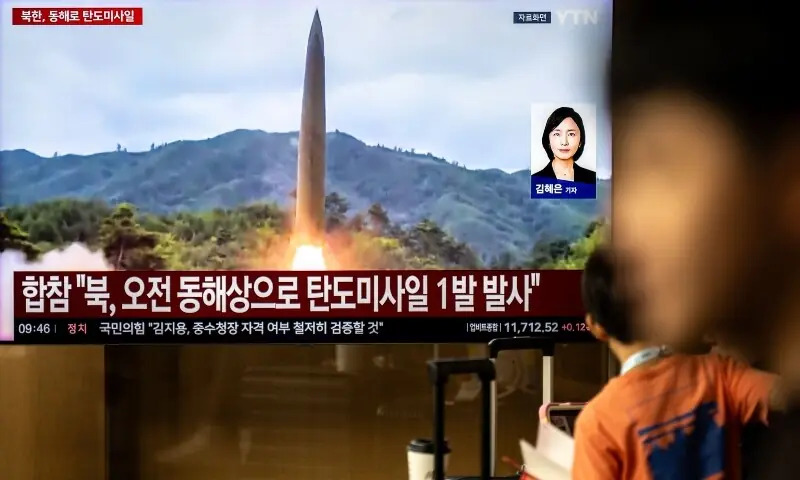
North Korea announced on Saturday that it successfully conducted a test of an intermediate-range strategic missile incorporating artificial intelligence technology. The launch occurred hours after South Korea’s military reported detecting a ballistic missile fired from the Wonsan area toward the East Sea, also known as the Sea of Japan. This military demonstration follows days of sharply escalating rhetoric and border incidents between Pyongyang and Seoul.
The crisis intensified after a blast in the heavily fortified Demilitarised Zone wounded three South Korean soldiers. Seoul’s military formally demanded an immediate apology from Pyongyang, attributing the explosion to North Korean landmines. Pyongyang categorically denied responsibility, subsequently labeling South Korea's civilian leadership as 'despicable' in state media statements released on Friday. This vitriolic exchange completely undermined recent diplomatic overtures initiated by Seoul aimed at reviving inter-Korean dialogue.
Commercial & Economic Implications
While geopolitical tensions on the Korean Peninsula primarily register as security concerns, their ripple effects extend to global supply chains, international shipping lanes, and commodity markets relevant to trading nations like Pakistan. East Asian maritime routes, particularly the Sea of Japan and surrounding waters, serve as critical arteries for global container shipping and energy transport. Any sustained military escalation in the region elevates maritime insurance premiums, inflates freight rates, and introduces volatility into global technology supply chains, particularly regarding semiconductor manufacturing and advanced electronics components.
For emerging market economies such as Pakistan, geopolitical instability involving advanced technology powers often translates into imported inflation, currency pressures, and tighter global financial conditions. Disruptions in global tech manufacturing hubs can delay industrial equipment imports and push up costs for wholesale distribution networks relying on Asian electronics. Furthermore, heightened risk aversion among international investors can cause capital outflows from developing markets, impacting domestic retail trade stability and driving up consumer price indices for imported goods.
Related Intelligence: South Korean Golfer Tom Kim Secures Crucial Military Service Exemption
Stakeholder Perspectives & Market Reactions
International defense analysts and regional trade bodies have expressed deep concern over the integration of artificial intelligence into strategic weaponry. The incorporation of algorithmic targeting and autonomous flight adjustments marks a dangerous qualitative shift in regional arms races. In response to the launch, defense authorities in South Korea, the United States, and Japan activated enhanced trilateral intelligence-sharing protocols. Joint Chiefs of Staff from the three allied nations reaffirmed their commitment to maintaining a robust defense posture, emphasizing that technological provocations will meet coordinated strategic deterrence.
Meanwhile, economic analysts and chambers of commerce in export-driven Asian economies have warned that sustained military friction dampens investor confidence across the wider Indo-Pacific region. Business associations stress that regional stability remains a prerequisite for predictable commodity pricing and reliable supply chain execution, urging diplomatic channels to remain open despite the breakdown in bilateral communications.
Forward Outlook & Key Watchpoints
As intelligence agencies analyze telemetry data from Saturday's missile test, international monitors will be closely watching for further technological disclosures from Pyongyang regarding its AI military capabilities. Key watchpoints include potential UN Security Council deliberations, upcoming joint military exercises between Washington and Seoul, and any shift in diplomatic posture from neighboring regional powers.
Policy enforcement and sanctions compliance will remain critical focal points for global trade regulators monitoring dual-use technology transfers. For businesses operating in interconnected global markets, hedging against logistics volatility and monitoring currency fluctuations will be essential strategies as the geopolitical landscape in East Asia enters an increasingly unpredictable phase.
Join Our Official WhatsApp Channel
Receive live commodity alerts, policy changes, and commercial intelligence directly on WhatsApp.