
Bilawal Reveals Centre Weighed KP Emergency Before PPP Intervened
PPP Chairman Bilawal Bhutto-Zardari disclosed that the federal government prepared to impose emergency rule in Khyber Pakhtunkhwa before his party urged a political strategy to counter terrorism.
The Core Development
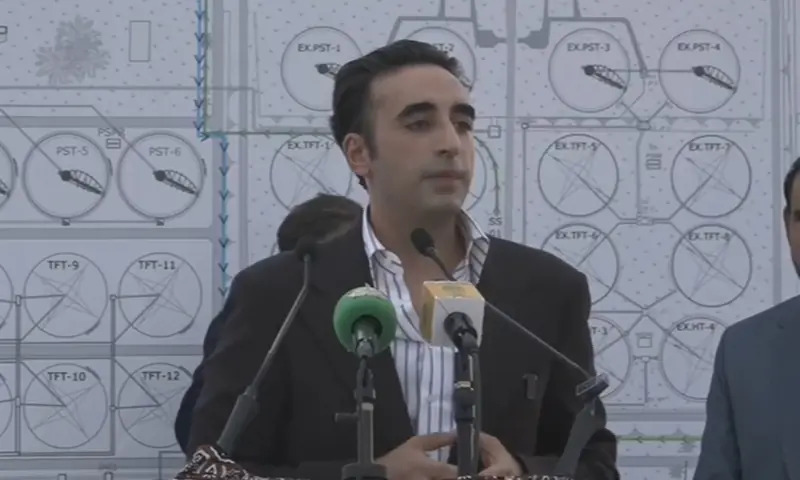
In a significant political disclosure, Pakistan Peoples Party (PPP) Chairman Bilawal Bhutto-Zardari revealed on Saturday that the federal government was entirely prepared to impose a state of emergency or governor's rule in Khyber Pakhtunkhwa (KP). Addressing a high-profile public gathering in Karachi, Bilawal stated that federal authorities had maintained active consultations with President Asif Ali Zardari and the PPP leadership regarding the escalating security and political volatility gripping the nation.
According to the PPP chairman, the central administration viewed extraordinary constitutional measures as an immediate necessity, driven largely by persistent security threats and militant attacks emanating from across the Afghan border. While acknowledging that the invocation of governor's rule or provincial emergency remains a legitimate constitutional instrument under Article 234 of the Constitution of Pakistan, Bilawal emphasized that his party cautioned against dropping what he termed a "constitutional atomic bomb." Instead, the PPP successfully steered the coalition dynamic toward pursuing a broader, consensus-based political solution to confront the militant threat more holistically.
Commercial & Economic Implications
For the business community, financial markets, and commercial stakeholders across Pakistan, the specter of direct federal intervention in a major border province carries profound economic ramifications. Prolonged political instability and governance deadlocks in Khyber Pakhtunkhwa directly threaten vital supply chains, trade routes with Central Asia via the Torkham border, and overall investor confidence.
Uncertainty regarding provincial administration and security management immediately dampens retail trade, wholesale distribution networks, and regional commerce. In Pakistan's current delicate macroeconomic stabilization phase—anchored by International Monetary Fund (IMF) benchmarks—any escalation in internal political friction threatens to fuel inflation expectations, disrupt transport logistics, and deter critical domestic and foreign direct investment in key border economic zones.
Related Intelligence: Khyber Pakhtunkhwa CM Afridi Defends October 4 Long March Amid High Stakes
Stakeholder Perspectives & Market Reactions
Business councils, trader associations, and legal experts have expressed cautious relief regarding the avoidance of a direct constitutional clash between Islamabad and the KP provincial government. Industry bodies across Peshawar and Karachi have repeatedly stressed that economic recovery is contingent upon uninterrupted administrative continuity and collaborative federal-provincial coordination.
Legal constitutionalists have noted that while the federal government possesses clear statutory authority under specific conditions of internal disturbance, resorting to governor's rule without deep political consensus risks severe judicial challenges and heightened polarization. Meanwhile, opposition groups and provincial stakeholders continue to monitor federal maneuvers closely, demanding that national security policies incorporate robust economic packages to rehabilitate conflict-hit commercial markets in the country's northwest.
Forward Outlook & Key Watchpoints
As political actors navigate the complex security matrix, market watchers and business analysts are tracking several critical indicators. Key watchpoints include the federal government's willingness to implement the PPP's proposed political framework, the efficacy of diplomatic and border management policies regarding Afghanistan, and the maintenance of legislative stability in the upcoming fiscal quarters.
Failure to establish a sustainable security and governance consensus in Khyber Pakhtunkhwa could revive pressures for emergency measures, injecting fresh volatility into national markets. Conversely, a genuine political dialogue could stabilize business sentiment, safeguard regional supply chains, and reassure investors monitoring Pakistan's fragile economic recovery trajectory.
Join Our Official WhatsApp Channel
Receive live commodity alerts, policy changes, and commercial intelligence directly on WhatsApp.