
New Delhi Secures Capital Amid Massive Electoral Protests
New Delhi deploys thousands of police ahead of major protests demanding the election chief's resignation over disputed electoral roll revisions.
The Core Development
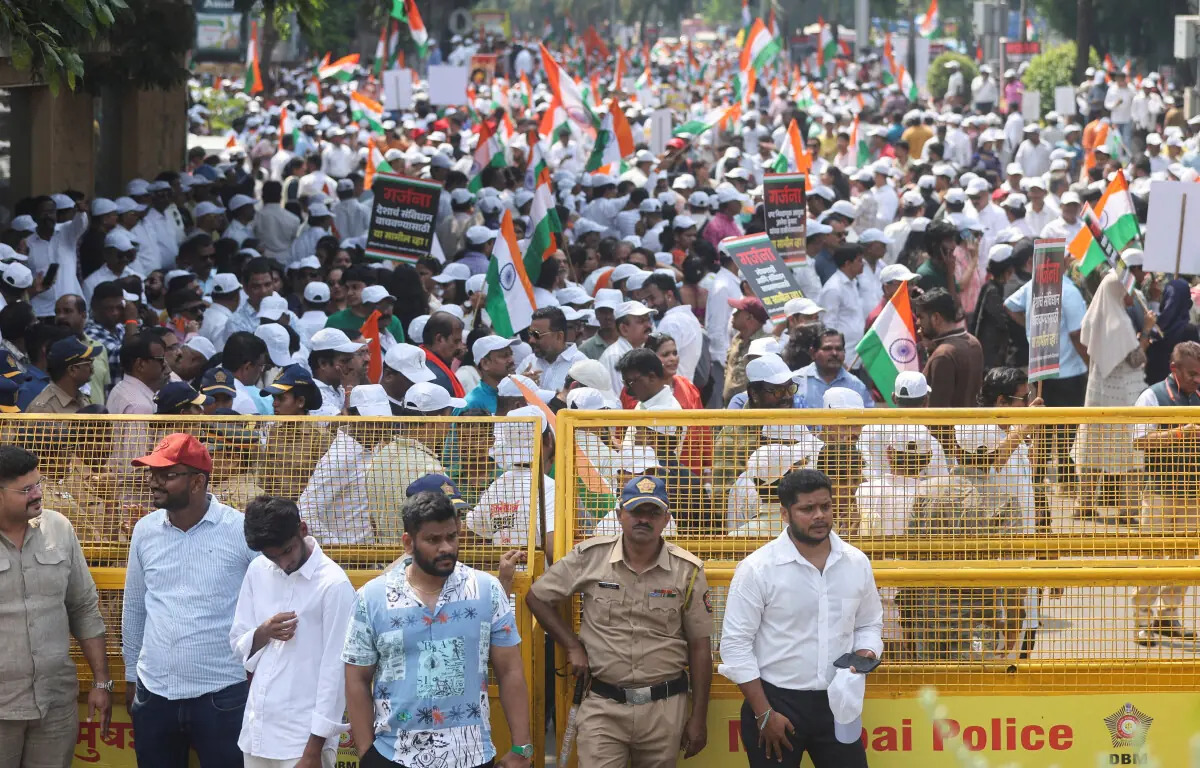
Thousands of security personnel were deployed across the Indian capital of New Delhi, establishing heavy cordons and barricades ahead of coordinated nationwide demonstrations. The protests demand the resignation of the Chief Election Commissioner following widespread allegations of systematic voter-roll irregularities. The demonstrations stem from a contentious 'special intensive revision' of electoral rolls initiated by the Election Commission of India (ECI). While election authorities maintain that the sweeping administrative exercise is designed strictly to eliminate duplicate and ineligible entries, opposition factions argue it represents a calculated maneuver to purge legitimate voters from electoral rolls to favor Prime Minister Narendra Modi’s ruling Bharatiya Janata Party (BJP).
The political standoff has escalated sharply over recent weeks, drawing prominent national figures into street-level confrontations. Rahul Gandhi, a principal leader of the opposition Indian National Congress, was briefly detained by law enforcement during demonstrations in the capital, galvanizing opposition supporters and intensifying media scrutiny. The involvement of top opposition leadership has transformed administrative grievances into a broader national referendum on institutional independence and democratic governance within the world's largest democracy.
Commercial & Economic Implications
For commercial enterprises and financial markets across South Asia, prolonged political instability in India carries notable macroeconomic repercussions. While immediate trade corridors between Pakistan and India remain heavily restricted through formal channels, broader market sentiment across the region reacts sensitively to disruptions in New Delhi. Investor confidence, currency valuations, and regional risk premiums fluctuate when political friction threatens policy continuity in major economies.
Domestically within Pakistan, business councils and wholesale trade associations monitor Indian regulatory and political shifts for potential impacts on international commodity pricing, particularly regarding agricultural inputs, textile supply chains, and regional energy markets. Any domestic turbulence that impairs administrative bandwidth in New Delhi can delay bilateral trade diplomacy or influence multilateral financial negotiations, indirectly affecting retail inflation and supply chain predictability for Pakistani importers and exporters.
Related Intelligence: Brazilian Supreme Court Warrant for Eduardo Bolsonaro Shakes Global Markets
Stakeholder Perspectives & Market Reactions
Opposition parties and civil rights organizations have launched scathing critiques against the ECI, accusing the statutory body of partisan compliance. Legal analysts argue that opaque revisions to voter databases undermine public trust in foundational democratic institutions, potentially triggering protracted judicial challenges. Conversely, representatives and supporters of the ruling BJP have strongly defended the ECI's administrative autonomy, dismissing opposition rallies as politically motivated maneuvers designed to discredit transparent governance and electoral reforms.
Financial market participants in regional hubs have maintained a cautious posture, weighing the immediate risk of urban civil unrest against the long-term stability of federal economic policies. Stock exchanges in Mumbai and New Delhi have experienced moderate volatility as institutional investors assess whether escalating political protests could derail upcoming legislative agendas or delay critical fiscal reforms.
Forward Outlook & Key Watchpoints
As demonstrations unfold across New Delhi and surrounding states, the immediate trajectory depends heavily on the government's crowd-control response and the opposition's mobilization capacity. Key watchpoints for regional observers include potential judicial interventions regarding the electoral roll revision, subsequent pronouncements by the Supreme Court of India, and the electoral fallout in upcoming state assembly contests. Stakeholders across the sub-continent will continue monitoring these developments to gauge institutional resilience and political stability in New Delhi.
Join Our Official WhatsApp Channel
Receive live commodity alerts, policy changes, and commercial intelligence directly on WhatsApp.