
Maldives President Muizzu Arrives in Pakistan for Bilateral Trade Talks
Maldivian President Dr Mohamed Muizzu undertakes a three-day state visit to Pakistan, targeting expanded bilateral trade, investment opportunities, and maritime cooperation.
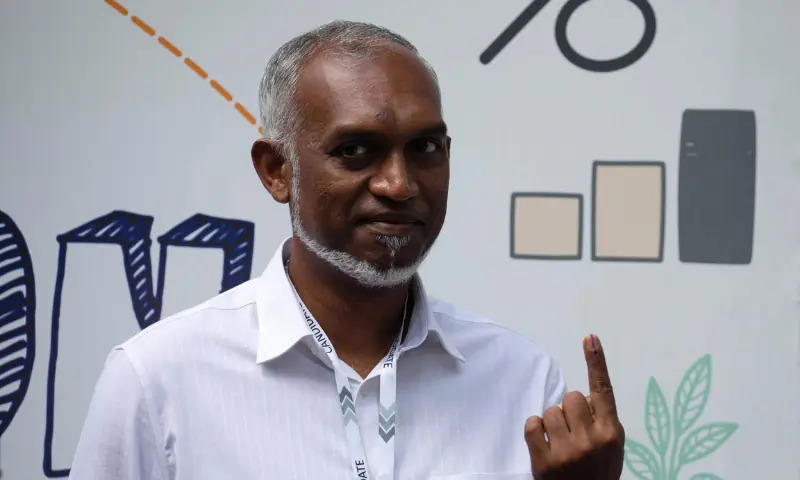
The Core Development
President Dr Mohamed Muizzu of the Republic of Maldives has commenced a three-day official state visit to Pakistan, scheduled from October 20 to October 22. The visit takes place pursuant to an official invitation extended by Prime Minister Shehbaz Sharif, according to formal disclosures by the Ministry of Foreign Affairs (FO) in Islamabad.
Accompanying President Muizzu is First Lady Sajidha Mohamed alongside a high-level official delegation comprising cabinet ministers, senior economic advisers, and diplomatic functionaries. The official itinerary features high-level diplomatic and bilateral engagements, beginning with formal talks hosted by President Asif Ali Zardari, who will also hold a state banquet in honour of the visiting dignitary at Aiwan-e-Sadr.
Substantive discussions will occur during both restricted and delegation-level sessions presided over by Prime Minister Sharif and President Muizzu. Bilateral negotiations will review the entire institutional matrix of Pakistan-Maldives relations, focusing heavily on trade diversification, investment frameworks, health infrastructure, vocational education, hospitality linkages, agriculture, and maritime surveillance. Both sovereign nations, situated as key littoral states within the Indian Ocean region, also intend to address multilateral climate change resilience and regional security cooperation.
Commercial & Economic Implications
From a trade and commercial standpoint, bilateral trade between Pakistan and the Maldives has historically remained below its actual potential, held back by logistics constraints, intermediate transshipment delays, and direct banking hurdles. President Muizzu's visit offers an opportune pivot for Pakistani wholesale exporters, light manufacturers, and agribusiness operators.
The Maldives relies almost entirely on imports for its consumer staples, construction inputs, and hospitality sector requirements. Pakistani agro-commodity traders stand to gain substantial headroom by securing structured export quotas for non-basmati and basmati rice, fresh horticulture, meat products, and poultry. Establishing direct cargo routes or optimized sea-freight lanes from Karachi and Port Qasim to Malé can mitigate transshipment surcharges via third countries, lowering wholesale landed costs for Maldivian distributors while yielding higher net margins for Pakistani producers.
Furthermore, Pakistan's domestic pharmaceutical and surgical manufacturing sectors have an institutional opportunity to supply public health procurements in the Maldives, which currently depend heavily on alternative regional sources. Enhanced trade agreements will support bilateral foreign exchange conservation through alternate clearing mechanisms or preferential tariff arrangements under the South Asian Free Trade Area (SAFTA) framework.
Related Intelligence: Maldives President Dr Mohamed Muizzu to Undertake Three-Day State Visit to Pakistan
Stakeholder Perspectives & Market Reactions
Pakistan's apex commercial entities, including the Federation of Pakistan Chambers of Commerce and Industry (FPCCI), have welcomed the state visit as an essential gateway to the broader Indian Ocean rim economy. Exporters within the textile, value-added leather, and construction supply industries emphasize that establishing formal business-to-business (B2B) mechanisms must accompany sovereign memoranda of understanding.
Logistics experts point out that direct air connectivity and coastal shipping lanes remain the prerequisite for durable supply chain linkages. Aviation authorities and national carriers are examining the revival or expansion of commercial routes between Islamabad, Lahore, Karachi, and Malé to facilitate business transit and high-value perishable freight. Market analysts note that Dr Muizzu's foreign policy has sought wider economic diversification, making Pakistan a natural partner for raw agricultural commodities and light industrial goods.
Diplomatic and legal observers underscore that structural trade barriers, including complex phytosanitary clearances and banking payment rails, require explicit regulatory alignment during these high-level talks to convert political goodwill into executed commercial contracts.
Forward Outlook & Key Watchpoints
The immediate focus of the three-day bilateral engagement will center on the signing of targeted Memoranda of Understanding (MoUs) across trade facilitation, customs cooperation, and education exchange programs. Commercial stakeholders will closely watch whether both governments announce formal negotiations for a Preferential Trade Agreement (PTA) or set measurable trade volume targets for the upcoming fiscal cycle.
Key watchpoints following the summit include the establishment of a joint business council, bilateral maritime coordination protocols, and reciprocal customs clearance standards. For Pakistani industrial and retail suppliers, execution timelines on finalized trade pacts will determine whether domestic producers can systematically penetrate the Maldivian market ahead of competing regional suppliers over the next 12 to 24 months.
Join Our Official WhatsApp Channel
Receive live commodity alerts, policy changes, and commercial intelligence directly on WhatsApp.