
Major Powers Issue Saudi Travel Warnings Following Escalated Houthi Missile Strikes
Multiple global powers including the United States, Canada, and Japan have issued strict travel warnings for Saudi Arabia following renewed Houthi cross-border attacks, rattling international energy and transport markets.
Geopolitical & Core Developments
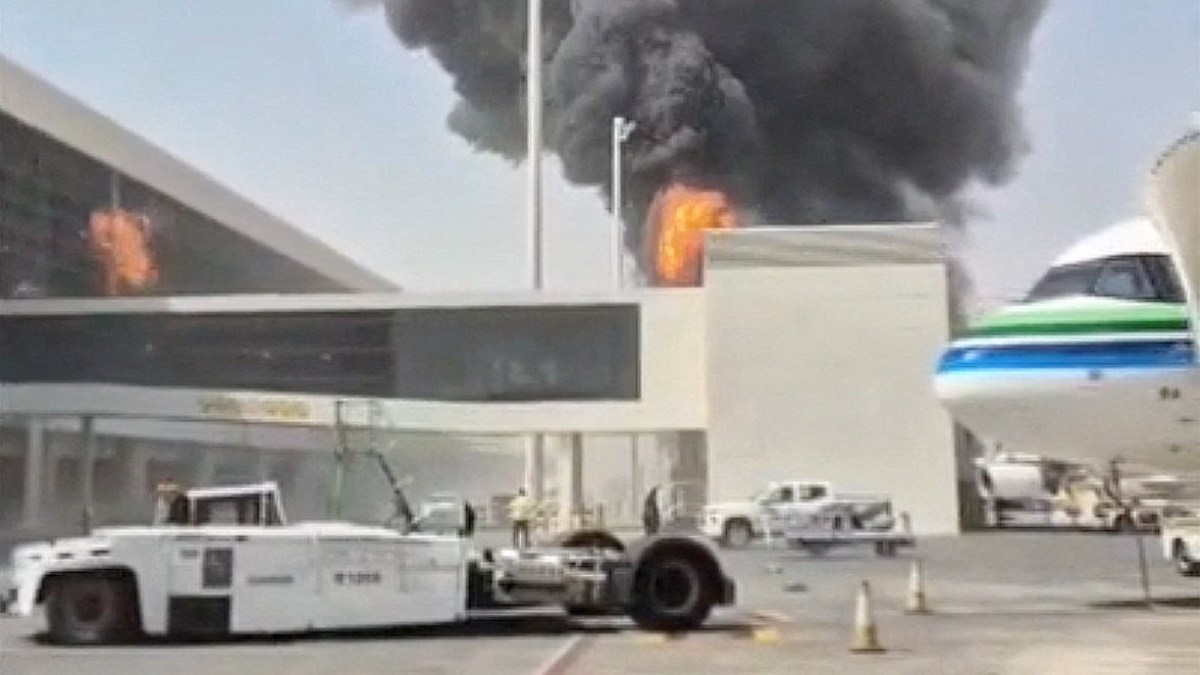
A coordinated series of diplomatic warnings has altered the regional travel and security matrix across the Arabian Peninsula. Western and Asia-Pacific powers, led by the United States, Australia, Canada, Japan, South Korea, and New Zealand, have officially updated their consular guidance, advising citizens to exercise extreme caution or defer non-essential travel to the Kingdom of Saudi Arabia. The revised advisories follow an aggressive resurgence of cross-border drone incursions and ballistic missile salvos executed by Yemen's Ansar Allah movement, commonly known as the Houthis.
The strategic posture shift comes at a critical juncture for Riyadh. The escalation breaches a period of fragile, informal de-escalation that had persisted between Saudi coalition forces and the Yemeni insurgent administration. Recent salvos have increasingly targeted sovereign territory beyond border provinces, directing unmanned aerial loitering munitions toward industrial clusters, international airports, and major urban centers. Military analysts note that the cadence and technological sophistication of the projectiles indicate resilient logistical pipelines and continued strategic alignment with regional proxy networks, significantly elevating the threat envelope for non-combatants and multinational business personnel operating within the Kingdom.
Global Trade & Economic Ripples
The immediate consequence of these heightened travel advisories has registered across international energy markets and logistics networks. Following the official notifications, Brent Crude and West Texas Intermediate (WTI) registered upward momentum, reflecting an expanded geopolitical risk premium. Given Saudi Arabia's preeminent role as the swing producer within the OPEC+ alliance, any persistent vulnerability to its refining complexes—particularly facilities near Ras Tanura and Yanbu—stokes fears of acute physical supply disruptions in a market already contending with tight global inventories.
Simultaneously, maritime shipping lanes traversing the southern Red Sea and the Bab el-Mandeb strait face severe commercial friction. Marine insurers in London and Singapore have recalibrated supplementary war-risk premiums for commercial vessels calling on Saudi western ports. Air freight corridors and business aviation are confronting corresponding adjustments, as international underwriters increase coverage rates for commercial aircraft servicing regional hubs. Furthermore, the travel advisories threaten foreign direct investment inflows vital to Crown Prince Mohammed bin Salman's Vision 2030, an ambitious modernization blueprint largely dependent on foreign talent, leisure tourism, and the relocation of regional multinational corporate headquarters to Riyadh.
Related Intelligence: Saudi Arabia Proceeds with Riyadh Boxing Showcase Amid Regional Security Crises
International Reactions & Diplomatic Stances
The international diplomatic response underscores widespread apprehension regarding broader regional destabilization. The US Department of State emphasized persistent threats posed by unmanned aerial systems and ballistic missiles, urging extreme vigilance specifically near the southern frontier and major civilian transit nodes. Parallel advisories issued by Canada's Department of Foreign Affairs and Japan's Ministry of Foreign Affairs highlighted unpredictability in the kingdom's airspace safety architecture.
Multilateral bodies, including the United Nations Special Envoy for Yemen, expressed profound concern over the erosion of regional detente, warning that renewed hostilities jeopardize ongoing mediated talks aimed at establishing a permanent ceasefire. In response, Saudi diplomatic officials reaffirmed the efficacy of the Royal Saudi Air Defense forces, citing high interception rates via surface-to-air Patriot batteries and localized air defense grids. Riyadh maintained that public safety protocols remain fully operational and categorized the external travel warnings as disproportionate to the actual operational threat level.
Strategic Outlook & Future Scenarios
The trajectory of the conflict hinges on whether diplomatic channels can contain cross-border strikes before they trigger direct kinetic retaliation from coalition forces. If low-level projectile attacks continue to penetrate or test Saudi air defenses, Riyadh may be compelled to intensify aerial interdiction sorties over Yemeni launch nodes, terminating any nascent peace architecture.
In the near term, multinational enterprises operating in the Gulf Cooperation Council (GCC) are expected to review corporate duty-of-care frameworks, potentially reducing expatriate headcounts in sensitive border zones and industrial hubs. Should Houthi strikes inflict measurable damage on downstream energy nodes, the United Nations Security Council will face renewed pressure to tighten maritime interdiction regimes along the Horn of Africa, while OPEC+ may face operational challenges balancing output targets against systemic supply route hazards.
Join Our Official WhatsApp Channel
Receive live commodity alerts, policy changes, and commercial intelligence directly on WhatsApp.