
Magnitude 5.9 Earthquake Jolts Khuzdar, Straining Balochistan Supply Chains
A 5.9-magnitude earthquake struck Balochistan's Khuzdar district on Saturday, prompting emergency assessments and threatening transit corridors along vital regional trade routes.
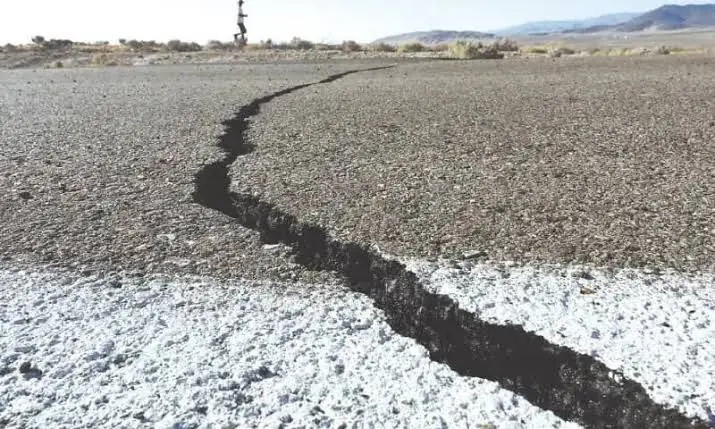
The Core Development
A moderate-to-strong seismic tremor measuring 5.9 on the Richter scale rattled the Khuzdar district of Balochistan on Saturday morning, sending shockwaves across central and southern parts of the province. According to official telemetry released by the Pakistan Meteorological Department (PMD) National Seismic Monitoring Centre in Islamabad, the tremor struck at exactly 10:07 AM local time. The epicenter was pinpointed at latitude 28.02 degrees north and longitude 66.20 degrees east, located approximately 48 kilometers northwest of Khuzdar city, with a focal depth registered at 25 kilometers.
The shallow-to-intermediate depth amplified surface shaking throughout adjacent settlements and mountainous terrain. Local district administration personnel immediately mobilized field teams to assess potential structural damage and casualties, particularly in rural union councils characterized by non-engineered adobe and mud-brick dwellings. While preliminary reports from administrative headquarters indicated panic among residents fleeing homes and markets, comprehensive ground assessments remain underway to evaluate the integrity of bridges, hill slopes, and arterial passages.
Commercial & Economic Implications
Beyond immediate civil safety concerns, the seismic event holds direct implications for inter-provincial logistics and trade distribution networks. Khuzdar functions as a preeminent transportation node within Balochistan, anchoring the pivotal N-25 National Highway (the RCD Highway) that connects Karachi to Quetta, and onward to the Chaman border with Afghanistan. Furthermore, Khuzdar intersects key feeder links to Gwadar port and the China-Pakistan Economic Corridor (CPEC) western alignment through the M-8 motorway route.
Any sustained disruption or geotechnical instability along mountainous mountain passes poses immediate friction to freight transit. The region serves as a transit corridor for agricultural commodities, bulk construction materials, petroleum tankers, and consumer goods destined for central Balochistan. Secondary wholesale distribution hubs in Khuzdar supply essential staples across surrounding districts. Supply chain bottlenecks or prolonged road closures would inevitably elevate inland freight tariffs, tighten retail inventories of perishables and FMCG goods, and trigger localized price premiums across regional bazaars.
Related Intelligence: Middle East Energy Crisis Tests Pakistan Economic Resilience Amid Winter Concerns
Stakeholder Perspectives & Market Reactions
Regional trade bodies and logistics operators expressed cautious vigilance following the tremor. Representatives from provincial trucking associations indicated that commercial freight operations paused temporarily during the initial shock as operators inspected arterial routes for rockslides along vulnerable bypasses. Local market chambers in Khuzdar reported that commercial establishments shuttered briefly during the morning hours before gradually resuming limited counter operations under heightened emergency awareness.
Provincial disaster management authorities, alongside civil administration officials, confirmed that emergency response teams were placed on high alert across central Balochistan. Structural engineers have been requested by trade associations to conduct rapid visual screenings of warehousing facilities and critical road infrastructure. Wholesale traders highlighted that maintaining unobstructed arterial access to Karachi's primary wholesale terminals remains their chief priority to prevent speculative price spikes in dry groceries and fuel distribution.
Forward Outlook & Key Watchpoints
The trajectory of post-quake recovery hinges on the frequency of secondary aftershocks and subsequent geotechnical assessments. The National Highway Authority (NHA) and the Provincial Disaster Management Authority (PDMA) must verify the structural viability of critical bridges, culverts, and retaining walls along the N-25 and M-8 alignments over the coming 48 to 72 hours.
Market observers and procurement managers should monitor regional freight flow metrics, municipal utility restorations, and municipal supply chains closely. If infrastructure damages remain limited to isolated perimeter zones, normal commercial cargo movement is expected to stabilize rapidly without systemic impact on national inflation metrics. Conversely, any extended logistical paralysis could necessitate administrative interventions and emergency price controls to shield vulnerable regional consumer markets from localized supply contractions.
Join Our Official WhatsApp Channel
Receive live commodity alerts, policy changes, and commercial intelligence directly on WhatsApp.