
Macron Warns Against Domestic Unrest and Foreign Political Interference
French President Emmanuel Macron has vowed to prevent civil chaos, directly reprimanding foreign leaders accused of instrumentalizing domestic protests for external geopolitical leverage.
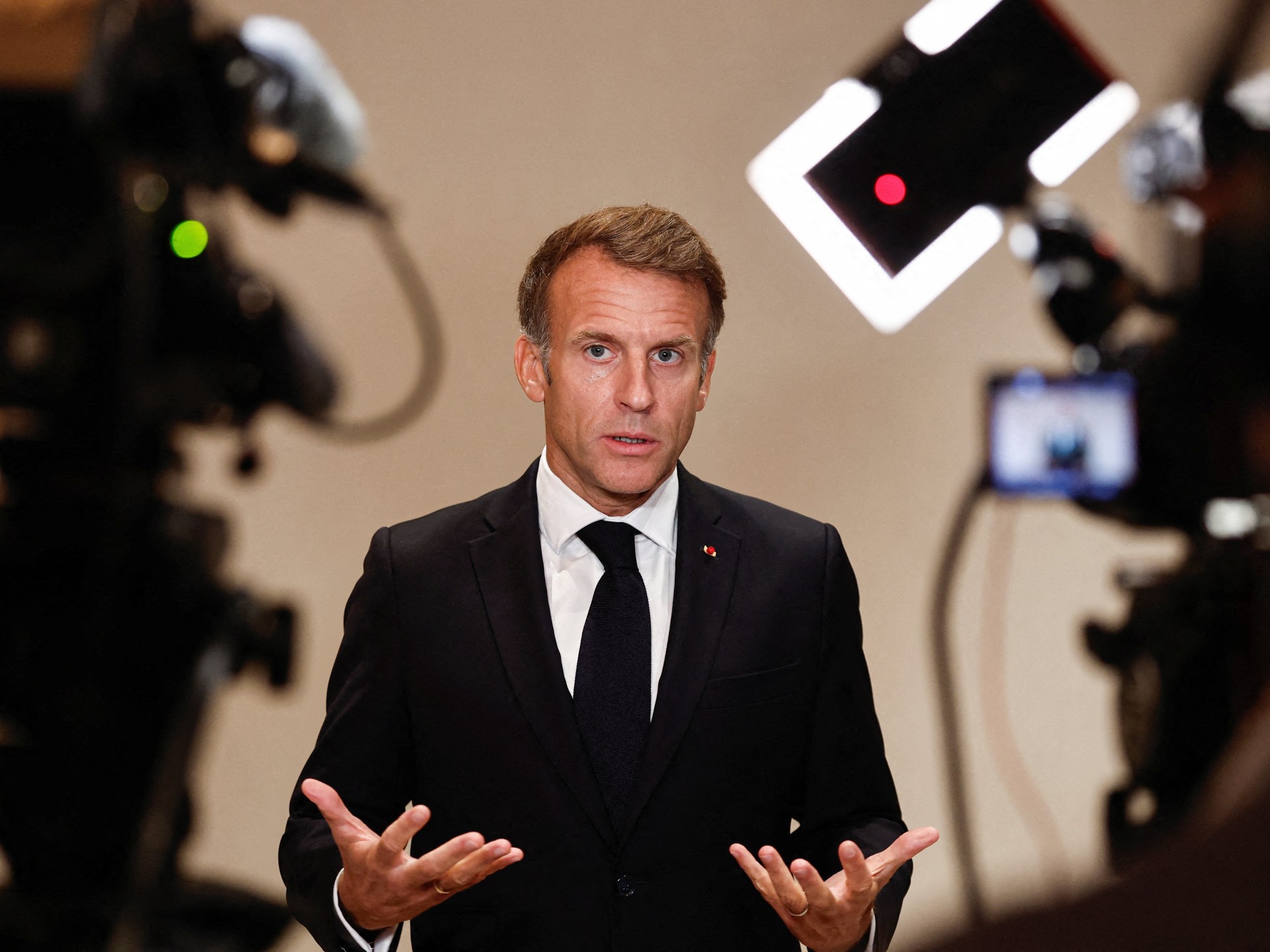
Geopolitical & Core Developments French President Emmanuel Macron has taken a decisive public stance against persistent domestic unrest, affirming that state authorities will systematically prevent agitators from plunging the republic into widespread disruption. Speaking against the backdrop of sustained public demonstrations, industrial action, [and urban](/news/paris-protest-unrest-small-business-economic-impact) flashpoints, Macron emphasized that while democratic dissent remains a constitutional right, organized violence and the destruction of public infrastructure will be met with uncompromising law enforcement.
Crucially, the French head of state expanded his critique beyond domestic agitators, openly castigating foreign leaders and external entities for attempting to instrumentalize France's internal friction. Macron cautioned that hostile and opportunistic foreign actors are actively deploying state-aligned media apparatuses and digital disinformation channels to magnify societal divisions within France. By portraying European democracies as fundamentally fragile and decaying, foreign adversaries seek to erode public confidence in democratic institutions and undermine Paris’s geopolitical posture on the world stage.
Global Trade & Economic Ripples The protracted civil instability in the eurozone’s second-largest economy carries direct ramifications [for regional](/news/west-bank-settler-encroachment-intensifies-regional-stability-risks) and international commerce. Periodic blockades of critical transportation arteries, metropolitan transit networks, and key commercial freight hubs have introduced friction into trans-European supply chains. Continental logistics operators face recurring delays, raising freight risk premiums across intra-European trade lanes.
Furthermore, the industrial instability poses indirect challenges to European energy flows and broader commercial sentiment. Although broader European natural gas and electricity benchmarks have stabilized in recent quarters, periodic work stoppages at domestic processing plants, ports, and power utilities introduce localized volatility into regional wholesale power grids. On financial markets, prolonged social turbulence acts as an underlying headwind for French sovereign debt instruments, modestly widening the yield spread between French OATs (Obligations Assimilables du Trésor) and German Bunds as institutional allocators price in persistent domestic policy gridlock.
Related Intelligence: West Bank Settler Encroachment Intensifies Risks for Regional Stability
International Reactions & Diplomatic Stances The French president’s direct rebuke of foreign interference has resonated across international diplomatic circles. While Paris did not publish an exhaustive inventory of the foreign actors referenced, international affairs analysts widely interpreted the remarks as targeting non-aligned and adversarial states that have consistently used state-backed broadcasting channels to highlight civil disorder across European capitals.
Within the European Union, senior policymakers have privately voiced support for Paris, observing that digital disinformation and hybrid influence operations targeting internal European vulnerabilities represent an escalating national security threat across the bloc. Multilateral analysts at European security think tanks note that foreign weaponization of domestic grievances is designed to weaken the diplomatic cohesion of NATO and EU member states. Conversely, targeted foreign governments have historically dismissed such accusations, asserting that Western nations regularly use external scapegoating to deflect accountability from legitimate domestic economic and social grievances.
Strategic Outlook & Future Scenarios Moving forward, the Elysée faces the dual challenge of re-establishing durable domestic public order while countering sophisticated information warfare orchestrated from abroad. France's security apparatus is expected to strengthen its coordination with European intelligence agencies and cybersecurity desks to systematically identify, attribute, and neutralize foreign influence networks.
In the near term, Macron's administration must navigate critical legislative checkpoints and municipal challenges without triggering further localized industrial paralysis. If street-level disruption persists, French sovereign risk metrics may experience elevated sensitivity, potentially complicating structural fiscal consolidation programs. Internationally, France is likely to raise the issue of state-sponsored narrative warfare at upcoming European Council sessions, pushing for stricter multilateral protocols to insulate member states' democratic mechanisms from external asymmetric interference.
Join Our Official WhatsApp Channel
Receive live commodity alerts, policy changes, and commercial intelligence directly on WhatsApp.