
Macron Prepares Address as Lethal Unrest and Economic Discontent Paralyze France
French President Emmanuel Macron will address the nation following deadly protests driven by living-cost pressures and institutional decay, raising concerns over European economic stability and institutional governance.
Geopolitical & Core Developments
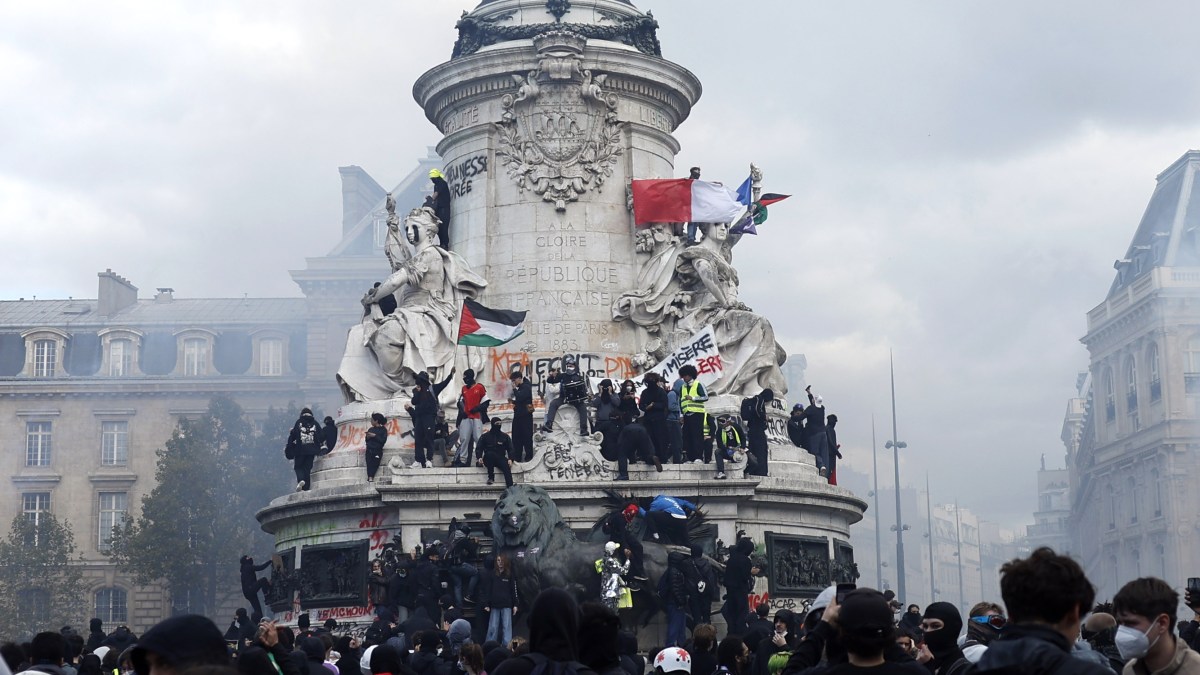
French President Emmanuel Macron is scheduled to deliver a critical address to the nation as civil unrest intensifies across France, resulting in multiple fatalities, hundreds of arrests, and widespread structural damage. What initially emerged as targeted student and faculty strikes concerning deteriorating infrastructure and staffing shortages in public schools has converged with broader societal frustration regarding prolonged cost-of-living increases, tax burdens, and institutional erosion.
Over the past seventy-two hours, demonstrations in Paris, Lyon, Marseille, and Nantes have shifted from organized union rallies to volatile confrontations with internal security forces. The deployment of over forty thousand police officers and gendarmerie units has struggled to contain coordinated disruptions targeting regional transport networks and administrative buildings. The timeline of this mobilization indicates a compounding crisis of executive legitimacy for the Élysée Palace, coming at a juncture when Macron's administration is already navigating a fractured National Assembly and declining public confidence in domestic economic governance.
Global Trade & Economic Ripples
The domestic gridlock is creating measurable friction across Western European commercial corridors. Strategic freight corridors, including key motorway interchanges and logistics hubs serving the Port of Le Havre and Marseille-Fos, have faced recurring, unannounced blockades. International freight hauliers report delays in the transit of agricultural goods, industrial components, and refined petroleum products, elevating localized shipping rates and threatening just-in-time manufacturing chains across neighboring Germany, Belgium, and Spain.
Energy infrastructure has also registered the shockwaves of the labor actions. Intermittent refinery walkouts and depot blockades risk tightening regional diesel and jet fuel inventories ahead of the peak quarterly transit cycle. Simultaneously, the uncertainty has applied upward pressure on sovereign borrowing costs, with the spread between French ten-year OAT yields and German Bunds widening moderately. European retail and hospitality sectors, heavily reliant on metropolitan foot traffic and cross-border tourism, are projecting significant revenue contractions if security operations disrupt urban centers through the upcoming weeks.
Related Intelligence: French School Protests Fuse With Broad Social Unrest Threatening Governance
International Reactions & Diplomatic Stances
Multilateral bodies and European Union partners have observed the deteriorating security landscape with mounting concern. Officials at the European Commission have privately expressed apprehension regarding the political fragility of the bloc's second-largest economy, specifically noting the risk that sustained domestic instability could compromise Paris's ability to drive collective EU industrial and fiscal agendas. Diplomatic missions across Paris, including those of the United States, the United Kingdom, and several Asia-Pacific trade partners, have issued travel advisories warning commercial travelers of disruptions to transit networks and municipal infrastructure.
Market analysts and credit rating agencies have highlighted that France's structural fiscal imbalances leave minimal leeway for extensive public spending concessions without jeopardizing deficit targets mandated by European governance frameworks. Human rights monitoring groups, meanwhile, have called for independent oversight into the operational protocols of riot suppression units following documented civilian casualties and reports of heavy-handed policing tactics.
Strategic Outlook & Future Scenarios
The immediate trajectory of the crisis hinges on the policy substance of Macron's forthcoming address. Should the Élysée offer substantive fiscal concessions—such as targeted subsidies for education and targeted energy credits—the measures could temporarily fracture the coalition of unions and civil demonstrators, albeit at the expense of long-term budgetary discipline. Conversely, a strictly security-focused response prioritizing curfews and emergency decrees risks further alienating youth demographics and organized labor, potentially triggering indefinite general strikes.
Over the medium term, prolonged instability threatens to empower opposition factions across both flanks of the political spectrum, complicating France's foreign policy leadership within NATO and the Group of Seven. As international investors reassess sovereign political risk, the coming days will serve as a definitive test of the Fifth Republic's institutional resilience against systemic socio-economic exhaustion.
Join Our Official WhatsApp Channel
Receive live commodity alerts, policy changes, and commercial intelligence directly on WhatsApp.