
French School Protests Fuse With Broad Social Unrest Threatening Governance
Student protests across France have converged with grassroots populist movements, turning localized education reform disputes into a structural crisis over purchasing power, public services, and fiscal governance.
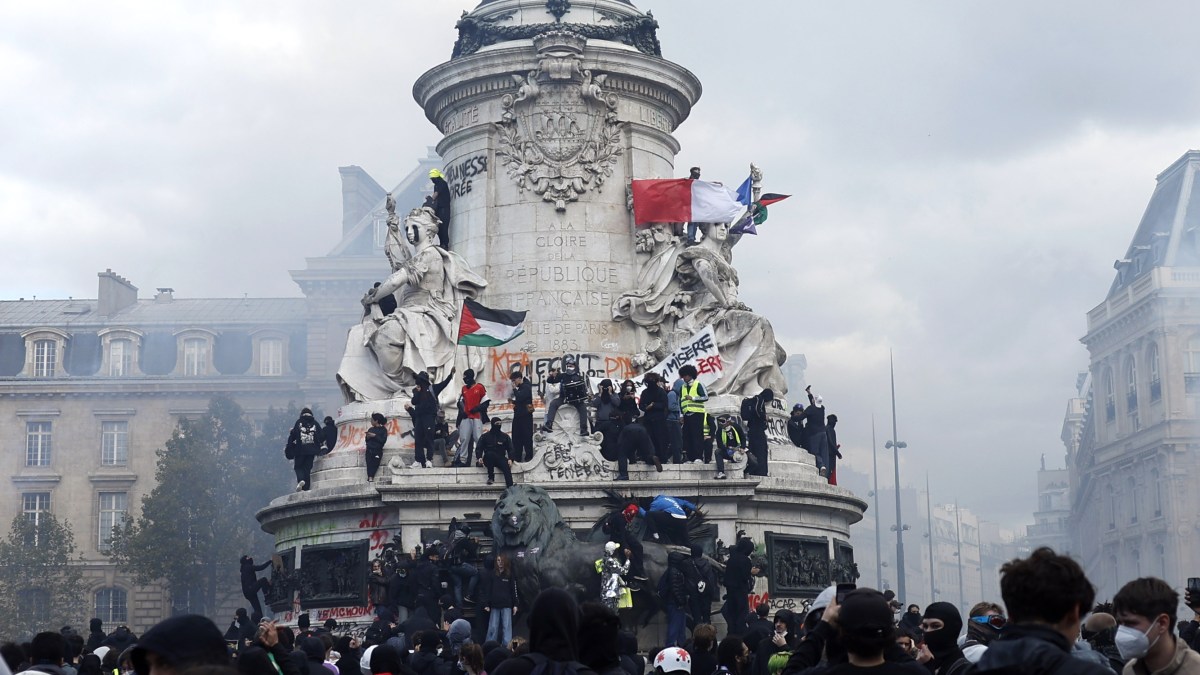
Geopolitical & Core Developments
What began as localized walkouts and blockades by French secondary school and university students has rapidly evolved into an acute governance crisis for the administration in Paris. The protests, initially triggered by contentious educational reforms and austerity measures affecting academic infrastructure, have established common cause with remnants of the 'Gilets Jaunes' (Yellow Vests) movement and major labor confederations. This convergence has transformed fragmented youth grievances into a consolidated nationwide confrontation challenging executive authority.
Across major urban hubs including Paris, Lyon, Marseille, and Toulouse, demonstrations have repeatedly devolved into confrontations with law enforcement, prompting riot police deployments, tear gas usage, and hundreds of preemptive detentions. The strategic stakes for President Emmanuel Macron's government extend far beyond domestic social policy. As France attempts to project leadership within the European Union and maintain a decisive diplomatic posture amid broader continental defense realignments, sustained domestic volatility erodes its strategic leverage. The escalating street mobilization exposes deep socioeconomic fissures, highlighting declining trust in state institutions, resistance to centralized administrative decrees, and entrenched anger regarding the erosion of public services across both peripheral and metropolitan departments.
[Global Trade](/news/us-political-realignment-shifts-global-trade-diplomatic-calculus) & Economic Ripples
While localized in nature, the widening civil unrest carries tangible consequences for European commercial networks and investor sentiment. France represents the second-largest economy in the euro area; persistent street disruptions, secondary road blockades, and coordinated rolling strikes in transport sectors inject operational friction into cross-border freight and intra-European logistics. The logistics bottlenecks risk delaying supply chains linking northern European industrial hubs with Iberian manufacturing nodes, compounding friction across automotive and aerospace components distribution.
Financial markets have registered the domestic friction through marginal widening of the yield spread between 10-year French Treasury bonds (OATs) and equivalent German Bunds, reflecting cautious repricing of French sovereign political risk. Retail commerce, tourism, and services sectors—critical engines of French domestic output—face immediate revenue headwinds as high-street commerce slows amid persistent security alerts. Furthermore, market analysts caution that should prolonged unrest force the French government into unbudgeted fiscal concessions or subsidies to pacify street anger, the sovereign deficit could expand, complicating compliance with renewed European Union fiscal deficit constraints.
Related Intelligence: Mass Funeral in Gaza Deepens Regional Tensions and Supply Chain Risks
International Reactions & Diplomatic Stances
European capitals are monitoring the trajectory of the French unrest with considerable concern, wary of cross-border political contagion. In Brussels, EU officials maintain formal silence regarding internal member state policing, but technocrats privately acknowledge that political instability in Paris weakens the Franco-German engine necessary to steer upcoming European policy debates on competitiveness, trade tariffs, and industrial decarbonization.
International human rights monitors and regional civil liberties bodies have raised concerns regarding the proportionality of domestic security measures, citing heavy-handed police actions and excessive use of preventative arrests during urban demonstrations. Conversely, foreign business federations and multinational credit agencies have adopted a watchful stance, highlighting that structural social polarization in France elevates operational risks and introduces legislative unpredictability, particularly regarding labor market flexibility and long-term budgetary consolidation.
Strategic Outlook & Future Scenarios
In the near term, the French executive faces limited options to de-escalate the standoff without compromising core policy platforms. A failure to establish institutional dialogue with student collectives and allied union leaders risks entrenching rolling disruptions throughout the academic semester, elevating the probability of widespread general strikes across energy, sanitation, and public transport infrastructure.
The strategic risk for the administration lies in a protracted cycle of attrition. Should street protests expand to disrupt strategic infrastructure—such as oil refineries, intermodal rail freight terminals, or major ports—macroeconomic drag will accelerate rapidly. In a broader perspective, persistent instability diminishes Paris's credibility as a stabilizing force in European geopolitics, potentially paralyzing executive decision-making ahead of critical continental summits focused on defense architecture and fiscal coordination.
Join Our Official WhatsApp Channel
Receive live commodity alerts, policy changes, and commercial intelligence directly on WhatsApp.