
Kundi Challenges PTI March as Political Tensions Threaten Commerce
KP Governor Faisal Karim Kundi's challenge to PTI protesters highlights escalating political standoffs, threatening critical supply chains and regional commerce between Khyber Pakhtunkhwa and Punjab.
The Core Development
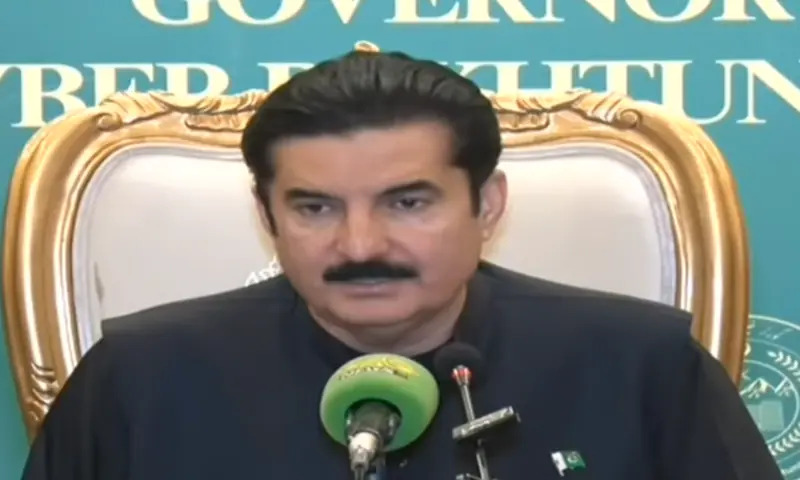
The political landscape of Pakistan has entered another phase of heightened volatility following Khyber Pakhtunkhwa Governor Faisal Karim Kundi's direct challenge to Pakistan Tehreek-e-Insaf (PTI) protesters. On Friday, Governor Kundi publicly challenged opposition demonstrators to dare and cross Swabi, a strategic KP district bordering Punjab’s Attock. Swabi has been designated as the focal assembly point for the party's ongoing long march, which was ostensibly organized to demand the release of jailed PTI founder Imran Khan.
The trajectory of the march has been marked by strategic ambiguity and frequent route adjustments since its official launch on October 4. Although initial announcements indicated a direct push toward the federal capital, Islamabad, the ultimate destination remains highly tentative. Leadership in Khyber Pakhtunkhwa, including Chief Minister Sohail Afridi, has yet to finalize or articulate a concrete itinerary for the movement beyond the borders of Swabi. Consequently, the demonstration has remained largely contained within Khyber Pakhtunkhwa, a province where the PTI holds regional administrative power, thereby setting the stage for a tense inter-provincial confrontation.
Commercial & Economic Implications
For the broader business community and commercial operators across Pakistan, political agitation of this scale translates directly into severe economic friction. The Swabi-Attock corridor serves as a vital economic artery connecting Khyber Pakhtunkhwa with Punjab, facilitating the daily transit of essential commodities, manufactured goods, and raw materials. Protracted political mobilization, road closures, and heightened security checkpoints inevitably strangle these supply chains, resulting in delayed shipments and escalating logistics costs for wholesale distributors.
Retail trade and local markets are already bearing the brunt of this uncertainty. As transport operators reroute or suspend services to avoid potential flashpoints, localized shortages of perishable items and consumer goods begin to manifest, exerting upward pressure on retail prices. In an economy already grappling with sticky inflation and fragile consumer purchasing power, supply chain bottlenecks driven by political friction act as a direct tax on ordinary citizens, eroding commercial margins and dampening marketplace activity.
Related Intelligence: Khyber Pakhtunkhwa Governor Challenges PTI Long March as Political Tensions Escalates
Stakeholder Perspectives & Market Reactions
Trader associations and industrial bodies have expressed mounting anxiety over the unyielding political posturing from both federal and provincial actors. Representatives from major commercial chambers in Peshawar and Rawalpindi noted that continuous disruptions to national highways severely undermine investor confidence. Business leaders argue that repeated closures of major trade routes inflict millions of rupees in daily losses on small and medium enterprises, which form the backbone of the regional economy.
Legal and policy analysts observe that the ongoing standoff reflects a deepening institutional paralysis. While opposition leaders defend their constitutional right to protest and assemble, government officials maintain that maintaining public order and protecting critical economic corridors take precedence. Public response remains polarized, with urban consumers increasingly fatigued by the economic fallout of perpetual political confrontation.
Forward Outlook & Key Watchpoints
As the PTI long march approaches its tentative destination in Swabi, market participants and economic monitors are closely tracking several key indicators. The primary watchpoint remains the exact nature of the provincial government's next moves beyond Swabi and the federal administration's security response at the Punjab border.
Should the confrontation escalate into prolonged highway blockades, the immediate consequence will be a sharper squeeze on inter-provincial trade and localized inflationary spikes. Policymakers and business councils alike are urging restraint to safeguard vital commercial channels, emphasizing that economic stability must be insulated from partisan political maneuvers as the fiscal year progresses.
Join Our Official WhatsApp Channel
Receive live commodity alerts, policy changes, and commercial intelligence directly on WhatsApp.