
Khyber Pakhtunkhwa Governor Challenges PTI Long March as Political Tensions Escalates
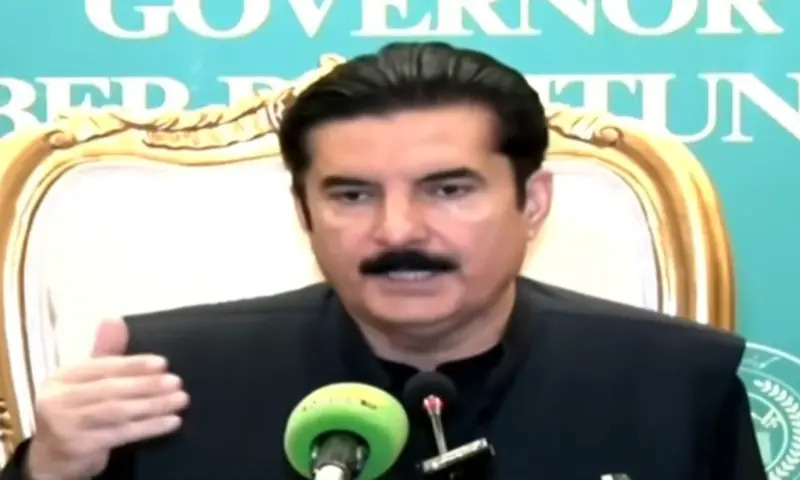
KP Governor Faisal Karim Kundi has challenged PTI protesters to cross Swabi as their long march route remains tentative.
The Core Development
Political friction in Pakistan intensified on Friday as Khyber Pakhtunkhwa Governor Faisal Karim Kundi issued a direct challenge to Pakistan Tehreek-e-Insaf (PTI) protesters, daring them to successfully cross the Swabi district. Swabi serves a critical strategic geographic point as a Khyber Pakhtunkhwa district directly bordering Punjab's Attock region, designated by the opposition party as a primary staging ground for its ongoing long march.
Launched initially on October 4, the protest movement has undergone multiple strategic and logistical revisions. While the party's central leadership originally vowed to press directly toward the federal capital of Islamabad, the final destination and transit routes have remained fluid. Uncertainty has persisted as the Khyber Pakhtunkhwa Chief Minister has yet to officially unveil a concrete operational plan for traversing beyond the Swabi boundary. Throughout the campaign, the march has largely remained confined within the territorial limits of Khyber Pakhtunkhwa, where the PTI maintains a provincial majority administration.
Commercial & Economic Implications
Extended political agitations and highway blockades carry severe financial repercussions for Pakistan's domestic commerce, retail trade, and inter-provincial supply chains. The Grand Trunk Road and associated arterial networks connecting Punjab and Khyber Pakhtunkhwa serve as vital arteries for wholesale distribution and agricultural transport. Disruptions along these crucial corridors inevitably translate into delayed freight movement, elevated logistical expenditures, and localized supply shortages.
For commercial enterprises operating in northern markets, prolonged uncertainty dampens investor confidence and stifles consumer retail demand. Small and medium enterprises, which rely on predictable daily transport schedules for perishable commodities and manufactured goods, absorb the direct costs of heightened security deployment and containerized road closures. Sustained political friction risks exerting upward pressure on retail prices and regional inflation rates as distribution inefficiencies compound operational overheads for businesses.
Related Intelligence: Indonesian Peat Fires Ignite Regional Diplomatic and Supply Chain Crises
Stakeholder Perspectives & Market Reactions
Business councils, trade associations, and industrial bodies across Pakistan have expressed growing apprehension regarding the economic toll of persistent political instability. Representatives from major chambers of commerce have repeatedly urged political stakeholders to prioritize national economic recovery over confrontation, emphasizing that commercial stability depends heavily on uninterrupted supply chains and predictable regulatory environments.
Official statements from provincial and federal authorities highlight a deepening polarization. While the PTI defends the long march as a democratic constitutional right aimed at securing the release of jailed founder Imran Khan, governing coalition representatives view the movement as an disruptive challenge to public order and economic recovery efforts. Legal experts continue to debate the administrative boundaries of provincial jurisdiction versus federal writ enforcement as the march approaches key inter-provincial transit points.
Forward Outlook & Key Watchpoints
As the PTI long march consolidates its position near Swabi, business leaders, market analysts, and security agencies are closely monitoring several critical operational indicators over the coming days. Key watchpoints include the finalization of the onward route plan by PTI leadership, the potential deployment of additional security forces at provincial entry points, and the government's enforcement posture regarding public gatherings.
Market participants will evaluate whether the standoff resolves through negotiated administrative containment or escalates into broader urban disruptions. The commercial sector remains highly sensitive to any escalation that could paralyze major trade routes, making the coming weekend a crucial juncture for both national politics and economic stability.
Join Our Official WhatsApp Channel
Receive live commodity alerts, policy changes, and commercial intelligence directly on WhatsApp.