
Khyber Pakhtunkhwa Non-Cooperation Threatens National Security and Economic Stability
Federal officials have sharply criticized the Khyber Pakhtunkhwa government for failing to cooperate in national counter-terrorism initiatives, raising concerns among business leaders over potential economic fallout.
The Core Development
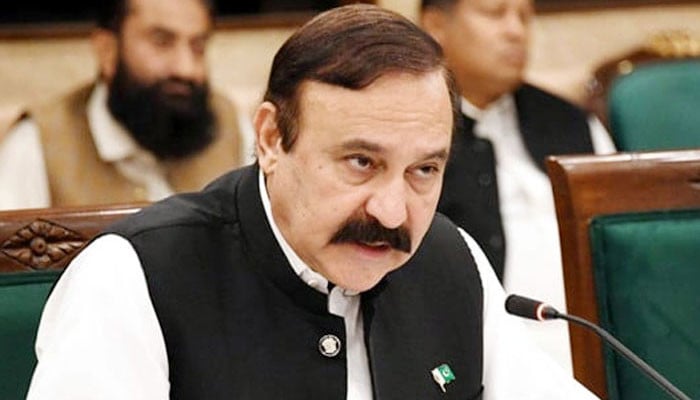
Recent statements from federal authorities in Islamabad have brought the simmering political and administrative tensions between the federal government and the Khyber Pakhtunkhwa (KP) provincial administration to a critical juncture. High-ranking officials, led by prominent political figures such as Dr. Tariq Fazal Chaudhry, have publicly accused the KP government of obstructing coordinated counter-terrorism operations. According to federal assessments, this lack of institutional alignment severely undermines the comprehensive National Action Plan and hampers intelligence-sharing mechanisms vital for neutralizing militant networks operating along the porous western border.
The standoff involves key actors from the ruling federal coalition and the provincial leadership affiliated with the Pakistan Tehreek-e-Insaf (PTI). Analysts point out that effective counter-terrorism requires seamless synergy between federal law enforcement agencies, military intelligence, and provincial police forces. However, jurisdictional disputes, political rhetoric, and conflicting administrative priorities have created a policy vacuum. This friction has tangible consequences for security deployments across high-risk districts including Peshawar, Mardan, Bannu, and the merged tribal districts, where recent security incidents have disrupted routine governance and public administration.
Commercial & Economic Implications
The ongoing security impasse carries profound ramifications for commercial activity, retail trade, and wholesale distribution throughout Pakistan, particularly within the northwestern corridor. Khyber Pakhtunkhwa serves as a vital economic gateway for bilateral trade with Afghanistan and Central Asian markets through key arteries like the Torkham border crossing. Persistent security vulnerabilities and political instability directly threaten cross-border trade volumes, leading to delayed shipments, higher logistics costs, and elevated insurance premiums for freight transporters.
For local markets and consumers, these disruptions translate into persistent inflationary pressures. Supply chain bottlenecks caused by heightened security alerts and transport delays often result in localized shortages of essential commodities, driving up prices of food staples, construction materials, and imported goods. Furthermore, persistent domestic instability deters foreign direct investment (FDI) and dampens domestic capital expenditure. Industrialists in manufacturing hubs across KP and Punjab hesitate to expand operations or commit long-term capital when the overarching security and regulatory environment remains volatile.
Related Intelligence: French Student Protest Clashes Trigger National Security and Economic Anxiety
Stakeholder Perspectives & Market Reactions
Business and trade associations have expressed growing alarm over the escalating war of words between Islamabad and Peshawar. Representatives from the Sarhad Chamber of Commerce and Industry (SCCI) have repeatedly urged both political factions to prioritize national economic stability over partisan maneuvering. Traders argue that retail markets in urban centers and wholesale hubs are already reeling from high energy tariffs, heavy taxation, and sluggish consumer demand; compounding these challenges with security uncertainty could push marginal enterprises toward insolvency.
Legal experts and constitutional analysts have weighed in on the division of powers under the Eighteenth Amendment, noting that while provinces enjoy considerable autonomy in policing and internal administration, national security remains a shared federal-provincial imperative. Public response has been largely polarized, reflecting the deep political divisions in the country. Civil society organizations and business coalitions continue to issue joint appeals demanding an immediate cessation of political hostility and the establishment of a unified bipartisan framework to address both security threats and economic revitalization.
Forward Outlook & Key Watchpoints
As the federal government weighs potential administrative and legislative countermeasures to ensure provincial compliance, market watchers and policy analysts are closely monitoring several critical indicators. The primary watchpoint is whether institutional channels can be established to depoliticize counter-terrorism operations and restore operational harmony between federal agencies and the KP police force.
Additionally, stakeholders will scrutinize upcoming federal budget allocations and provincial fiscal coordination meetings to assess whether economic development funds for the merged districts are protected from political fallout. If federal-provincial tensions persist without resolution, foreign investors and multilateral financial institutions may downgrade Pakistan's sovereign risk outlook, complicating ongoing structural reform efforts. Ultimately, restoring institutional trust between Islamabad and Peshawar remains an indispensable prerequisite for achieving sustainable macroeconomic recovery and national security.
Join Our Official WhatsApp Channel
Receive live commodity alerts, policy changes, and commercial intelligence directly on WhatsApp.