
Khyber Pakhtunkhwa Faces Imposition of Governor Rule Amid Security Crisis
Federal and provincial officials have evaluated imposing Governor Rule in Khyber Pakhtunkhwa amid intensifying security threats and governance challenges.
The Core Development
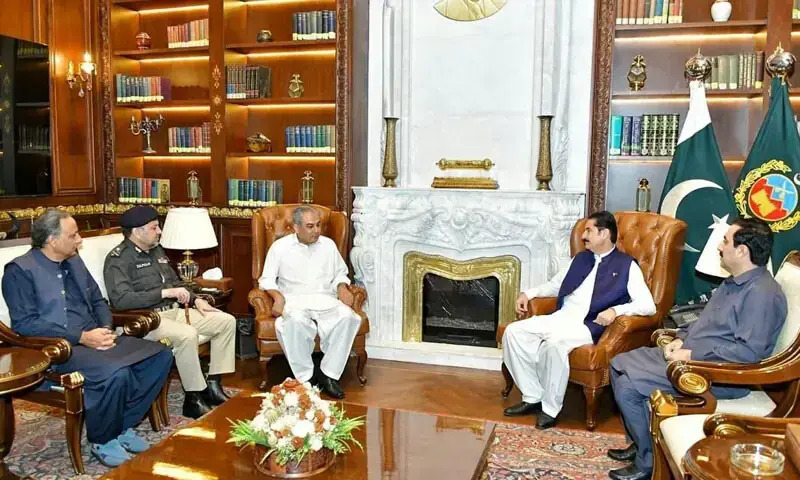
In a high-stakes political development that signals mounting friction between federal oversight and provincial administration, Federal Interior Minister Mohsin Naqvi and Khyber Pakhtunkhwa Governor Faisal Karim Kundi held formal consultations regarding the potential imposition of Governor Rule in the province. The deliberations, convened against a backdrop of escalating security incidents and administrative paralysis, focused heavily on the mechanisms of invoking Article 234 of the Constitution of Pakistan. This constitutional provision allows for federal intervention when the government of a province cannot be carried on in accordance with the provisions of the Constitution.
The meeting detailed the deteriorating law and order matrix across key districts of Khyber Pakhtunkhwa, specifically highlighting threats to critical infrastructure, law enforcement installations, and public safety. Both leaders reviewed intelligence assessments indicating that provincial governance structures were failing to contain militant resurgence and civil unrest. The timeline for potential federal intervention remains contingent upon upcoming parliamentary reviews and a formal assessment report expected to be submitted to federal authorities by the end of the current legislative week.
Commercial & Economic Implications
The prospect of Governor Rule in Pakistan's northwestern frontier carries profound implications for retail trade, wholesale distribution, and cross-border commerce. Khyber Pakhtunkhwa serves as a vital commercial artery connecting Pakistan to Central Asian markets via key trade corridors such as the Torkham border. Prolonged political uncertainty and administrative disruption threaten to paralyze wholesale markets in Peshawar, Nowshera, and other commercial hubs, directly disrupting supply chains.
Supply chain bottlenecks resulting from heightened security lockdowns and administrative transitions immediately translate into inflated transport costs and diminished inventory velocity. Retailers across the province report dwindling consumer confidence, which exerts downward pressure on daily turnover. Furthermore, persistent instability risks stoking inflationary pressures locally, as supply routes face sporadic closures and merchants factor elevated security risks into commodity pricing. Essential food items, petroleum products, and construction materials are particularly vulnerable to price volatility under prolonged emergency governance.
Related Intelligence: Middle East Escalation Threatens Global Supply Chains and Energy Markets
Stakeholder Perspectives & Market Reactions
The business community and major trade associations have expressed deep apprehension regarding the prospect of direct federal rule. Representatives from the Sarhad Chamber of Commerce and Industry (SCCI) warned that any suspension of elected provincial administration could trigger widespread commercial strikes, further compounding economic hardships. Industry bodies argue that political confrontation between Islamabad and Peshawar diverts vital administrative bandwidth away from urgent economic reforms and fiscal management.
Legal experts remain divided on the constitutional threshold required to invoke Article 234 under current circumstances. While government legal aides maintain that extraordinary security exigencies justify federal intervention to protect public life and property, constitutional purists caution that bypassing the provincial assembly could provoke protracted judicial challenges. Public response has been polarized, with civil society organizations calling for institutional restraint and prioritization of cooperative federalism over adversarial political maneuvers.
Forward Outlook & Key Watchpoints
As political consultations intensify in Islamabad and Peshawar, key watchpoints for investors and market analysts include the formal stance adopted by provincial legislators and the reaction of major opposition factions. Observers are closely monitoring security force deployments and intelligence-based operations across high-risk districts, which will serve as a barometer for administrative efficacy.
Policy enforcement measures over the coming fortnight will dictate whether federal authorities proceed with formal constitutional action or permit the provincial government an extended grace period to rectify governance deficits. For the business sector, maintaining uninterrupted supply chain logistics and safeguarding retail market stability remain paramount concerns as political tensions continue to simmer across the region.
Join Our Official WhatsApp Channel
Receive live commodity alerts, policy changes, and commercial intelligence directly on WhatsApp.