
Karachi Infrastructure Crisis as Municipal and Railway Conflict Halts Arterial Project
A jurisdictional clash over a Rs780 million bypass project in Karachi has escalated into criminal litigation, threatening critical arterial decongestion and amplifying urban supply chain bottlenecks.
The Core Development
A deep-seated inter-agency jurisdictional dispute between the Karachi Metropolitan Corporation (KMC) and Pakistan Railways (PR) escalated into severe institutional confrontation this week. A First Information Report (FIR) detailing allegations of kidnapping and physical torture was lodged against Pakistan Railways police personnel following a formal complaint by KMC City Wardens Director Saim Imran. According to the complaint, Imran was allegedly detained by armed railway security officers, transported to an undisclosed installation, and subjected to physical assault amid an ongoing turf dispute over public land utilization.
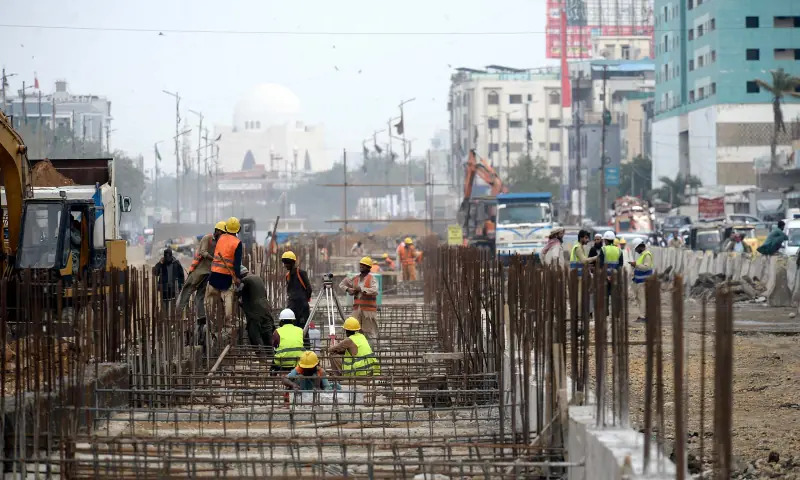
The standoff surrounds the construction of a critical Rs780 million dual carriageway designed to connect Natha Khan Bridge directly with Pehlwan Goth and Habib University, skirting parallel to the Chakor Nullah. The public works project, engineered to bypass chronic arterial choke points on Sharea Faisal and Rashid Minhas Road, stood merely weeks away from scheduled completion before construction was violently interrupted. Pakistan Railways claims the infrastructure work encroaches onto designated federal railway operational territory without institutional clearance, while municipal authorities argue the land allocation forms part of legitimate urban planning corridors vital to citywide connectivity.
Commercial & Economic Implications
For Pakistan's commercial capital, urban mobility bottlenecks represent direct financial losses to the retail, wholesale, and intra-city distribution networks. Sharea Faisal and Rashid Minhas Road represent principal distribution corridors connecting commercial distribution hubs to the residential belts of District East and Malir. Chronic gridlock along these routes forces freight haulers, commercial delivery fleets, and consumer goods distributors to absorb heightened transit times, ballooning fleet maintenance costs, and severe fuel inefficiencies during a period of volatile domestic energy prices.
The delay in opening the Rs780 million dual carriageway compounds economic frictions for surrounding industrial and tertiary services. Habib University and the surrounding academic and technology corridor endure substantial access barriers, while local retailers and agricultural vendors operating along Pehlwan Goth face inventory delays. In aggregate, administrative blockages of major infrastructure projects in Karachi translate to quantifiable deadweight losses, compounding inflationary pressures by increasing the landed transport cost of essential consumer commodities across municipal markets.
Related Intelligence: Pacific Expedition Rebuffs Amelia Earhart Wreckage Claim Amid Remote Exploration Push
Stakeholder Perspectives & Market Reactions
Municipal planning bodies and civil society institutions have expressed alarm over the breakdown of inter-departmental protocol into physical hostility. Legal practitioners note that criminal litigation between two arms of the state undermines administrative legitimacy and signals institutional dysfunction to private infrastructure contractors and engineering partners executing public-private ventures.
Urban logistics associations and transport operators have condemned the standstill, pointing out that municipal coordination mechanisms should preempt violent disruptions on infrastructure that directly impacts freight economics. Business leaders within the Karachi Chambers of Commerce and Industry (KCCI) have frequently warned that institutional infighting over rights-of-way chills domestic capital investment and damages the operational viability of key transport links. Conversely, Pakistan Railways representatives maintain that federal assets must be strictly safeguarded against encroachment, demanding formal leasing arrangements before structural development proceeds.
Forward Outlook & Key Watchpoints
The trajectory of the dispute now hinges on legal and administrative intervention at both provincial and federal tiers. The Sindh provincial government and the federal Ministry of Railways will likely be forced to initiate high-level executive negotiations to resolve right-of-way rights and demarcate land titles without jeopardizing the ongoing capital outlay already committed to the corridor.
Key watchpoints over the coming weeks include whether the Sindh Police proceed with formal arrests of implicated railway security officers under the filed FIR, which could exacerbate departmental friction. Simultaneously, market participants will monitor the progress of independent survey teams if deployed to delineate land jurisdiction along Chakor Nullah. The project's completion window, initially slated for early culmination, remains contingent upon establishing a legally binding inter-agency agreement to ensure construction crews can resume work safely.
Join Our Official WhatsApp Channel
Receive live commodity alerts, policy changes, and commercial intelligence directly on WhatsApp.