
JUI-F Chief Urges Islamabad to Permit PTI Long March
Jamiat Ulema-i-Islam chief Maulana Fazlur Rahman has called on the government to permit PTI's protest march, as business leaders warn of severe economic disruption from capital lockdowns.
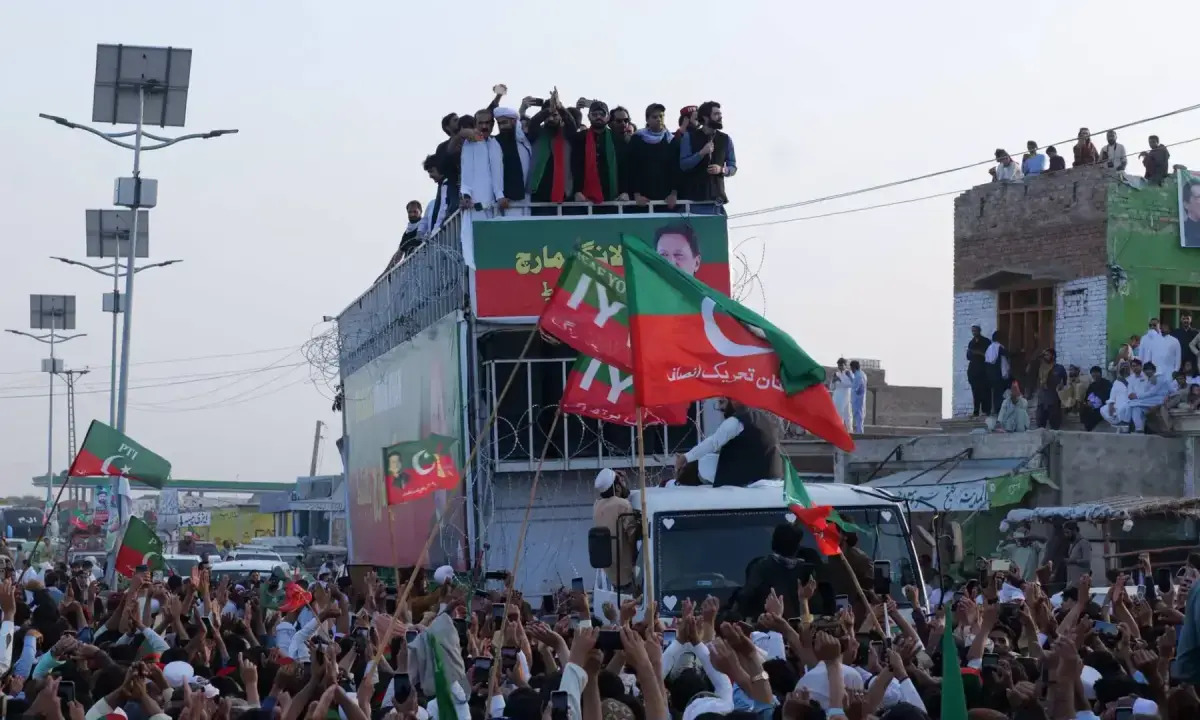
The Core Development
In a significant political development unfolding in Islamabad, Jamiat Ulema-i-Islam-Fazl (JUI-F) chief Maulana Fazlur Rahman has publicly advised the federal administration to refrain from obstructing the Pakistan Tehreek-e-Insaf (PTI) long march heading toward the federal capital. Speaking to media personnel outside his residence on Tuesday, the veteran politician emphasized that peaceful protest remains an immutable democratic right guaranteed to all political formations under the constitution.
The appeal came in the wake of stringent administrative measures, container placements, and heavy security deployments ordered by the government to seal off entry points to Islamabad. Maulana Fazlur Rahman asserted that when political parties provide assurances regarding the peaceful nature of their demonstrations, authorities should extend trust rather than preemptive hostility. This stance emerged following a high-stakes consultative meeting at the JUI-F chief's residence, where a prominent opposition delegation arrived to coordinate a unified political response. The visiting delegation included Senate opposition leader Allama Raja Nasir Abbas, Asad Qaiser, Akhundzada Hussain, and Salman Akram Raja, while the host side featured key JUI-F figures such as Senator Kamran Murtaza.
Commercial & Economic Implications
For Kalyar Traders and the broader business community across Pakistan, the looming threat of political gridlock and capital lockdowns carries severe immediate consequences. Extended road closures and containerized blockades paralyze major national transport corridors, severely disrupting wholesale distribution networks and inter-city freight movement. Retail trade in urban centers, particularly in Rawalpindi and Islamabad, experiences immediate downturns as consumer mobility drops sharply during heightened security alerts.
Furthermore, supply chain bottlenecks directly translate into inflationary pressures for essential commodities. Delays in perishable goods transit from rural agricultural hubs to major municipal wholesale markets result in localized shortages and volatile price spikes. Commercial hubs report a sharp contraction in daily cash turnover and transaction volumes, aggravating existing liquidity strains faced by small and medium enterprises already grappling with high borrowing costs and depressed domestic demand.
Related Intelligence: Flavio Bolsonaro's Surge Reshapes Brazil's Political and Economic Outlook
Stakeholder Perspectives & Market Reactions
Representative bodies of merchants, chambers of commerce, and retail associations have expressed deep dismay over the recurring cycle of political confrontation and administrative shutdowns. Industry leaders argue that the national economy cannot sustain the collateral damage inflicted by sustained political volatility. Commercial stakeholders have reiterated demands for negotiated political settlements, emphasizing that state machinery should prioritize economic stability and uninterrupted market operations over aggressive containment strategies.
Legal experts and constitutional analysts have weighed in on the standoff, noting that while the government possesses a mandate to maintain public order, heavy-handed blockades often infringe upon fundamental freedoms of movement and assembly. Opposition leaders, galvanized by the unified front presented at Maulana Fazlur Rahman's residence, maintain that administrative resistance only deepens political polarization and heightens commercial anxiety.
Forward Outlook & Key Watchpoints
As the PTI long march approaches the capital's periphery, market participants and economic analysts are closely monitoring several critical indicators. The immediate trajectory depends on whether federal authorities alter their containment strategy in response to opposition pressure or maintain stringent lockdowns that risk escalating street-level friction.
Key watchpoints for the commercial sector include the duration of transport suspensions, the physical impact on wholesale markets in Punjab and the federal capital, and any emergency fiscal or regulatory measures introduced by the administration to safeguard supply chains. Business leaders remain vigilant, hoping for a de-escalation that preserves public order while averting further commercial paralysis.
Join Our Official WhatsApp Channel
Receive live commodity alerts, policy changes, and commercial intelligence directly on WhatsApp.