
French School Protests Spark Economic and Political Volatility
Severe protests across French high schools injure hundreds, amplifying political instability and threatening economic reforms ahead of spring presidential elections.
The Core Development
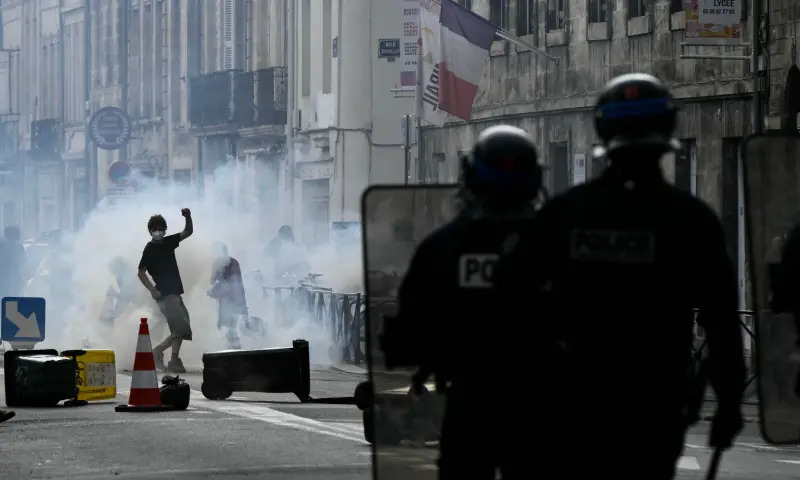
French law enforcement deployed tear gas outside high schools across the country on Tuesday, confronting mass demonstrations comprising students, teachers, and parents. Prime Minister Sebastien Lecornu characterized the mobilization as the largest and most violent wave of school protests witnessed in France in decades. The unrest escalated dramatically following an incident on Monday where a teenager tragically lost a hand during clashes with security forces.
The demonstrations represent a critical flashpoint in ongoing civil unrest, fueled by widespread public dissatisfaction with government policies. Prime Minister Lecornu confirmed to lawmakers that at least 215 teenagers and 85 school staff members have sustained injuries during the persistent confrontations. The movement reflects deep-seated societal grievances, arriving at a delicate political juncture as both far-right and far-left political factions surge in popularity ahead of the presidential election scheduled for the spring.
Commercial & Economic Implications
For international trading partners and emerging market economies such as Pakistan, the escalating turmoil in France carries significant macroeconomic and commercial ramifications. France remains a core pillar of the eurozone economy; prolonged civil unrest disrupts domestic retail trade, commercial distribution networks, and consumer confidence within the single currency bloc. Weakened economic activity in Europe directly impacts bilateral trade volumes, textile exports, and agricultural commodity flows originating from South Asian markets.
Furthermore, the paralysis in French governance undermines the nation's fiscal consolidation efforts. Struggling with stagnant economic growth and mounting public debt, the administration of President Emmanuel Macron faces severe obstacles in implementing budgetary controls. Since Macron's parliamentary allies lost their legislative majority in the 2024 elections, passing vital fiscal legislation has proven extraordinarily difficult. Persistent political friction risks driving sovereign bond yields higher, tightening financial conditions across Europe, and exerting indirect upward pressure on global commodity prices and import costs for Pakistani businesses.
Related Intelligence: Gaza Humanitarian Crisis Strains Middle East Stability and Global Supply Chains
Stakeholder Perspectives & Market Reactions
Industry bodies, labor unions, and financial analysts have expressed growing alarm over the deterioration of public order in Paris and other major urban centers. Business associations warn that prolonged disruptions to transport and educational institutions create cascading inefficiencies across supply chains, depressing retail sales and stalling domestic commerce.
Legal experts and civil rights groups have raised concerns regarding the proportionality of police tactics, particularly following severe injuries reported among minors. Meanwhile, political opposition leaders from both extremes of the ideological spectrum have utilized the crisis to challenge the government's economic agenda, demanding immediate policy reversals and emergency fiscal relief. Investor sentiment has grown increasingly cautious, reflecting fears that legislative gridlock will prevent essential structural reforms.
Forward Outlook & Key Watchpoints
As France navigates this multi-layered crisis, economists and political observers are closely monitoring several critical indicators ahead of the spring presidential elections. Key watchpoints include the government's ability to pass the stalled national budget without resorting to emergency constitutional decrees, which could provoke further parliamentary no-confidence motions.
Additionally, market participants will track labor union escalations, retail sector performance metrics, and Eurozone debt issuance yields. If civil unrest continues to paralyze public administration, foreign direct investment could recede further, complicating macroeconomic forecasts for the broader European Union and altering trade dynamics for international partners relying on European market stability.
Join Our Official WhatsApp Channel
Receive live commodity alerts, policy changes, and commercial intelligence directly on WhatsApp.