
JI Announces Third Wave of Anti-Petroleum Levy Protests Across Pakistan
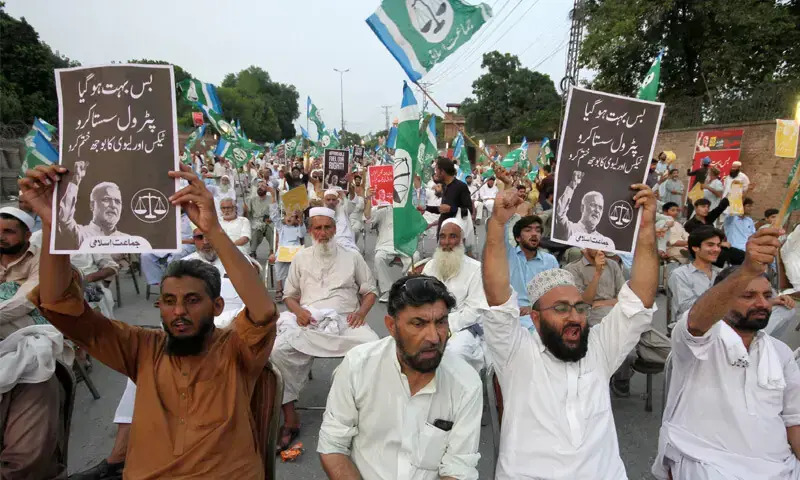
Jamaat-i-Islami has announced nationwide district-level sit-ins starting Friday to demand the complete withdrawal of hefty petroleum levies, exacerbating political pressure on Islamabad amid strict fiscal reforms.
The Core Development
Jamaat-i-Islami Pakistan (JI) has officially unveiled plans to launch the third phase of its nationwide protest movement on Friday, staging coordinated sit-ins across all administrative districts in the country. According to a formal press statement issued from the party’s headquarters in Lahore, the renewed agitation comes on the direct directives of JI Emir Hafiz Naeemur Rehman. The core objective remains the unequivocal and complete abolition of excessive government taxes and surcharges embedded in retail fuel prices.
At present, the federal government levies approximately Rs114 per litre in combined taxes and petroleum development levies on motor gasoline (petrol), alongside Rs100 per litre on high-speed diesel (HSD). These fiscal measures form a critical component of Islamabad's revenue generation commitments under the prevailing International Monetary Fund (IMF) Extended Fund Facility. In early September, the federal administration and JI had arrived at an understanding to form joint consultative committees to evaluate structural mechanisms for rationalising these levies, effectively deferring a planned national strike. However, JI leadership maintains that the state has shown complete inertia regarding implementation, compelling the political party to escalate its agitation back onto the streets.
Commercial & Economic Implications
For commercial enterprises, logistics operators, and retail networks across Pakistan, the petroleum levy remains a significant driver of persistent supply-chain inflation. High-speed diesel powers the country's extensive freight infrastructure, agricultural tube wells, and industrial backup generators. Compounding the landed cost of fuel with triple-digit taxation per litre directly inflates primary and secondary transportation overheads.
Wholesale distribution hubs and consumer-facing retail merchants are forced to pass these logistics surcharges downstream, driving up the end-consumer prices of perishable produce, fast-moving consumer goods, and critical building materials. This dynamic suppresses disposable consumer income and contracts volume turnover across national wholesale markets. Furthermore, the threat of recurring road closures, transport blockades, and urban sit-ins introduces acute logistical friction, risking operational downtime and stock inventory imbalances for regional distributors.
Related Intelligence: West Bank Settler Encroachment Intensifies Risks for Regional Stability
Stakeholder Perspectives & Market Reactions
Trading associations and commercial chambers across urban manufacturing centres have voiced growing solidarity with calls for fuel tax relief. Retail associations note that persistent fuel taxation, combined with unprecedented base electricity tariffs, has made traditional commercial retail operations increasingly unviable. Various transport federations have warned that operating margins have inverted, leaving small-scale freight operators struggling to service commercial vehicle loans.
Conversely, macroeconomic analysts and government economic managers emphasize the severe fiscal constraints facing the Ministry of Finance. Petroleum development levies represent one of the most reliable and immediate direct revenue streams available to achieve primary budget surplus targets mandated by international creditors. The government's fiscal managers argue that any unhedged roll-back of these levies would blow a substantial hole in sovereign balance sheets, risking compliance breaches with the IMF programme and triggering renewed sovereign risk volatility.
Forward Outlook & Key Watchpoints
As Friday approaches, district administrations in major metropolises including Karachi, Lahore, Rawalpindi, and Peshawar are closely monitoring security and traffic management logistics. The initial watchpoint centres on whether the sit-ins remain static urban assemblies or evolve into complete highway blockades and commercial shutter-down strikes, which would severely disrupt inter-city commerce.
Over the medium term, the government faces a precarious policy dilemma. It must balance stringent sovereign revenue collection against mounting street-level political resistance. If the third phase of demonstrations gathers momentum across secondary and tertiary market towns, the federal cabinet may come under intense pressure to explore alternative fiscal realignments or offer marginal administrative concessions to mitigate economic disruption before the close of the current fiscal quarter.
Join Our Official WhatsApp Channel
Receive live commodity alerts, policy changes, and commercial intelligence directly on WhatsApp.