
Jamaat-i-Islami Threatens Islamabad March Resumption Over Petroleum Levy
Jamaat-i-Islami warns it will resume its Islamabad long march with intensified pressure if the government refuses to abolish heavy petroleum levies.
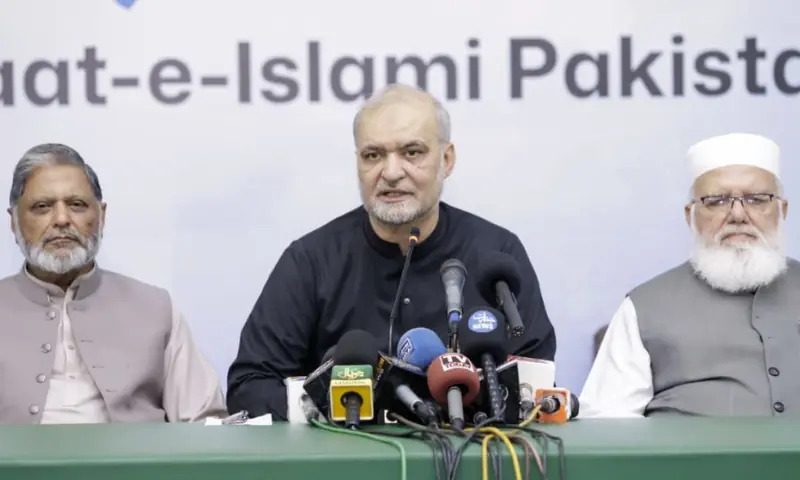
The Core Development
In a stern ultimatum delivered on Thursday, the Jamaat-i-Islami (JI) warned that it would immediately resume its stalled long march toward the federal capital with significantly greater force unless the federal administration completely abolishes the contentious petroleum levy. The political friction escalates following a brief hiatus initiated on September 21, when the religious-political party temporarily suspended its march upon a direct appeal from Prime Minister Shehbaz Sharif, pending formal negotiations.
However, friction has intensified as the party leadership asserts it is no longer bound by any provisional commitments or understandings with the premier, particularly in light of what it terms administrative stalling tactics. Prime Minister Shehbaz Sharif had departed for the United Nations General Assembly session immediately after securing the temporary postponement, leaving critical domestic economic grievances unaddressed upon his return. The original protest campaign, launched to dismantle heavy taxation on essential petroleum products, was paused in good faith for dialogue, but JI officials maintain that patience has officially worn thin.
Commercial & Economic Implications
At the heart of the standoff is an unprecedented tax burden directly impacting the commercial sector and everyday consumers across Pakistan. Current official pricing structures reveal that the government is collecting a staggering Rs114 per litre in taxes and duties on petrol, alongside Rs100 per litre on diesel. These punitive levies serve as a primary driver of compounding inflationary pressures across the national economy, directly inflating wholesale distribution costs, transport tariffs, and retail prices for basic commodities.
For commercial enterprises, logistics operators, and manufacturing units, sustained high fuel costs erode profit margins and suppress consumer purchasing power. Retail trade associations have repeatedly warned that maintaining petroleum duties at these elevated thresholds creates a cascading effect, driving up the cost of food items, electricity generation, and supply chain operations. Any large-scale economic disruption or highway blockades stemming from a resumed long march threaten to severely paralyze commercial activity between major urban centers, notably impacting Lahore and Islamabad.
Related Intelligence: Lenacapavir Breakthrough Tests Global Healthcare Equity and Supply Chains
Stakeholder Perspectives & Market Reactions
Business owners, transport operators, and retail federations have expressed deep anxiety over the brewing political confrontation. While commercial stakeholders heavily support the removal of oppressive petroleum taxes to relieve suffocating operational costs, they simultaneously fear the severe economic fallout of prolonged protests, road closures, and political instability.
Market analysts note that the government finds itself in a precarious fiscal dilemma. Compelled by stringent international financial commitments and revenue targets, fiscal authorities rely heavily on petroleum levies to bridge domestic budget deficits. Conversely, opposition groups and trader bodies argue that squeezing the domestic energy sector is socially unsustainable and economically counterproductive, stifling industrial recovery and fueling public resentment.
Forward Outlook & Key Watchpoints
As the political deadlock persists, all eyes remain on emergency consultations between government intermediaries and JI leadership. The administration faces a critical window to present a viable fiscal compromise before the party finalizes its mobilization schedules for a renewed march on Islamabad.
Key watchpoints for financial markets and business analysts include potential adjustments to petroleum development levies in upcoming fortnightly price reviews, official government responses to the ultimatum, and any emergency decrees from the federal cabinet. If formal talks collapse, the resumption of nationwide demonstrations could trigger widespread transportation strikes and heightened political volatility across Pakistan's major commercial hubs.
Join Our Official WhatsApp Channel
Receive live commodity alerts, policy changes, and commercial intelligence directly on WhatsApp.