
Israel Markets Non-Lethal Crowd Control Weaponry Globally Amid Security Export Boom
Israel is commercializing and exporting its notorious foul-smelling crowd-control agent, known as skunk water, transforming localized security tactics into a global defense export commodity despite human rights concerns.
Geopolitical & Core Developments
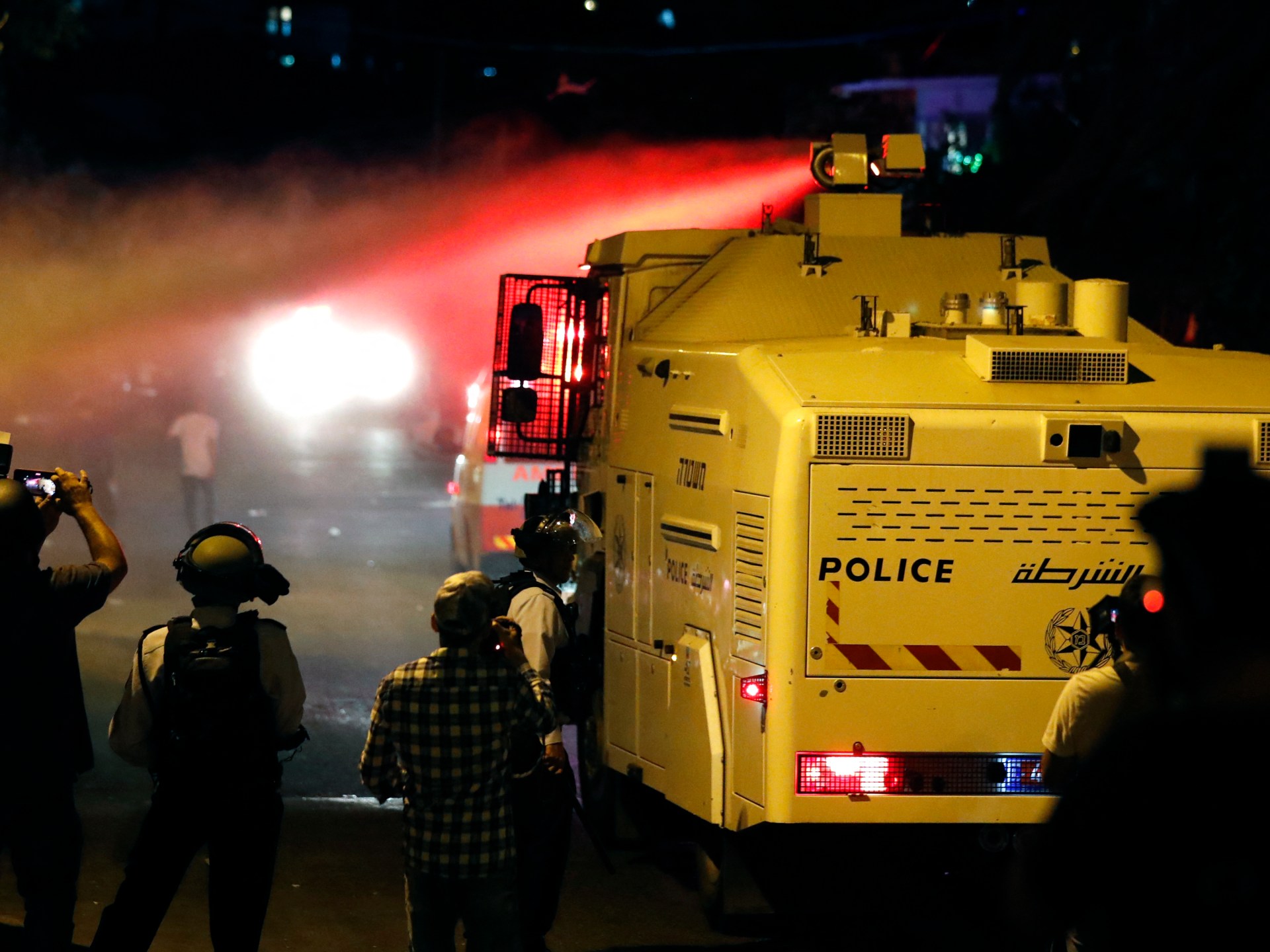
The intersection of domestic security enforcement and international defense commerce has long served as a cornerstone of Israel's advanced technology sector. In recent years, Israeli defense contractors and security agencies have increasingly marketed specialized crowd-control agents to foreign governments facing civil unrest. Central to this portfolio is 'skunk water,' a notoriously foul-smelling liquid engineered to disperse demonstrators through overwhelming olfactory assault. Originally developed and deployed extensively by Israeli security forces against Palestinian protesters in the West Bank and East Jerusalem, the substance has transitioned from a localized tactical tool into a marketable export product.
The deployment of skunk water involves specialized vehicular sprayers that coat protesters, buildings, and thoroughfares with an odor mimicking a combination of rotting garbage, sewage, and decomposing animal carcasses. Because the stench persists for days and resists standard washing techniques, it functions as a potent psychological deterrent. By showcasing its effectiveness in high-stress operational environments, Israeli manufacturers have utilized ongoing asymmetric conflicts as a live-fire testing ground, subsequently pitching these capabilities to international buyers seeking non-lethal alternatives to firearms and tear gas.
Global Trade & Economic Ripples
The broader defense and security export market represents a multi-billion-dollar pillar of the Israeli economy. While high-end aerospace, cyber-intelligence platforms, and missile defense systems dominate trade statistics, specialized non-lethal suppression technologies form a high-margin niche within the global security apparatus. The commercialization of chemical deterrents reflects a broader trend in global trade where internal security equipment—ranging from surveillance software to riot control agents—is routinely traded across geopolitical boundaries with minimal regulatory friction.
For global supply chains, the manufacturing of chemical crowd-control agents involves specialized chemical synthesis, proprietary stabilization compounds, and customized delivery systems. As demand fluctuates in response to global waves of civil unrest, private defense contractors scale production to supply municipal police departments and federal law enforcement agencies worldwide. This international trade in pacification technology highlights how commercial interests frequently intersect with geopolitical stability, as nations facing domestic political friction increasingly look to foreign suppliers for advanced crowd management solutions.
Related Intelligence: Security Forces Eliminate Nine Terrorists in North Waziristan Operation
International Reactions & Diplomatic Stances
The international community remains sharply divided over the export and deployment of chemical deterrents like skunk water. Human rights organizations, including Amnesty International and Human Rights Watch, have repeatedly condemned the use of the substance, classifying it as an indiscriminate weapon that inflicts collective punishment on civilian populations. Critics argue that marketing techniques derived from prolonged military occupations normalize aggressive policing strategies and bypass standard international humanitarian norms regarding chemical use in civilian spaces.
Conversely, importing governments and defense analysts frequently defend the acquisition of non-lethal deterrents as a necessary upgrade for urban law enforcement. Proponents argue that technologies capable of dispersing hostile crowds without resorting to live ammunition or kinetic impact rounds reduce the risk of fatalities during severe civil disturbances. However, multilateral bodies such as the United Nations have urged tighter export controls on dual-use security equipment, warning that inadequate oversight allows authoritarian regimes to procure oppressive technologies under the guise of public safety.
Strategic Outlook & Future Scenarios
Looking ahead, the global market for specialized non-lethal security technologies is projected to expand amid rising geopolitical tensions and urban demographic shifts. As governments globally anticipate increased civil friction driven by economic inequality, climate pressures, and political polarization, demand for innovative crowd-control systems will likely accelerate. Israeli defense exporters are expected to continue refining chemical and acoustic deterrents, leveraging trade exhibitions and bilateral security agreements to secure new international contracts.
At the same time, increased scrutiny from international civil society and regulatory bodies may prompt tighter compliance frameworks governing the export of crowd-control agents. Future trade disputes could center on the ethical parameters of defense marketing, particularly regarding products tested in active conflict zones. Ultimately, the trajectory of skunk water and similar innovations illustrates the complex interplay between domestic security tactics, international trade, and global human rights standards in the twenty-first century.
Join Our Official WhatsApp Channel
Receive live commodity alerts, policy changes, and commercial intelligence directly on WhatsApp.