
Islamabad Bar Boycotts Courts Following Rearrest of Mazari and Chattha
The Islamabad Bar Association has suspended judicial appearances to protest the rearrest of advocates Imaan Mazari-Hazir and Hadi Ali Chattha following their Supreme Court bail.
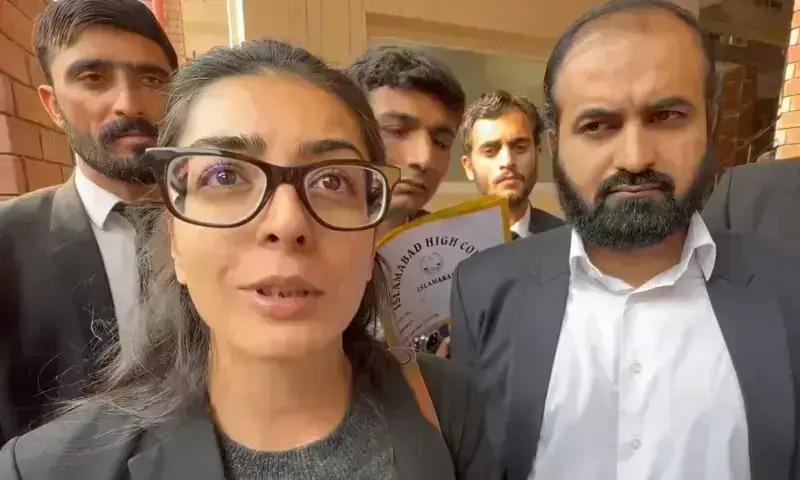
The Core Development
In an escalating confrontation between Pakistan's legal fraternity and law enforcement agencies, the Islamabad Bar Association (IBA) has announced a complete boycott of judicial proceedings across the federal capital. The protest follows the immediate rearrest of prominent human rights lawyer Imaan Zainab Mazari-Hazir and her husband, advocate Hadi Ali Chattha. The couple was detained late Thursday in connection with a newly registered case, mere hours after the Supreme Court of Pakistan suspended their 17-year prison sentences and ordered their conditional release on bail.
Mazari-Hazir and Chattha had initially been convicted by a trial court on multiple charges under the controversial Prevention of Electronic Crimes Act (PECA), stemming from commentary published on digital platforms. While the apex court's suspension of the conviction was hailed by legal watchdogs as a crucial check on state overreach, law enforcement authorities executed a swift secondary apprehension before release protocols could be finalized. The IBA characterized the maneuver as an affront to judicial authority, declaring that no bar member would appear before district courts, tribunals, or special benches in Islamabad, effectively halting formal court operations.
Commercial & Economic Implications
While predominantly a constitutional and legal crisis, judicial strikes and executive friction generate immediate secondary shocks across Pakistan’s formal business apparatus. In the federal capital, where specialized banking courts, commercial dispute tribunals, and corporate regulatory appellate benches operate, a strike freezes vital corporate proceedings. The suspension of litigation delays debt recovery hearings, corporate restructuring approvals, intellectual property injunctions, and commercial contract enforcement, exacerbating an already burdened dispute resolution system.
Beyond immediate transactional friction, the recurrent bypassing of apex court bail orders damages Pakistan's institutional credibility at a sensitive juncture for the economy. Foreign direct investment (FDI) and institutional capital flows depend heavily on contract enforceability, legal predictability, and constitutional supremacy. When executive bodies circumvent supreme judicial directives through repetitive First Information Reports (FIRs), sovereign risk metrics heighten. International credit evaluators, multilateral lenders, and prospective venture investors routinely monitor institutional stability; arbitrary detentions and judicial standoffs elevate perceived political risk, thereby increasing the risk premium demanded by external commercial partners.
Related Intelligence: Lahore High Court Halts Expulsion Directive Targeting Afghan Medical Students
Stakeholder Perspectives & Market Reactions
The legal fraternity has mobilized with widespread outrage. IBA leadership, backed by statements from human rights monitors and various provincial bar councils, termed the rearrest a flagrant subversion of the rule of law and an assault on procedural fairness. Senior jurists warned that deploying serial FIRs to nullify Supreme Court relief compromises the constitutional framework safeguarding citizen liberties and professional immunity for practicing advocates.
Conversely, prosecution authorities maintain that the new charges stem from independent complaints subject to statutory investigation, denying allegations of judicial contempt or selective harassment. Meanwhile, the corporate sector and regional trade bodies, including members of the Islamabad Chamber of Commerce and Industry (ICCI), expressed apprehension regarding repeated administrative and judicial disruptions. Market participants noted that regulatory uncertainty and administrative confrontations distract government apparatus from urgent macroeconomic stabilization imperatives, dampening trader sentiment in commercial hubs.
Forward Outlook & Key Watchpoints
The trajectory of the dispute hinges on impending judicial counter-actions. Defense counsel is anticipated to file urgent contempt of court petitions before the Supreme Court, seeking strict accountability for officers who authorized the detention in contravention of the spirit of the bail directive. Concurrently, legal challenges against the jurisdiction and validity of the secondary FIR will be tabled before the Islamabad High Court.
Key monitorables include whether the boycott escalates into a nationwide strike coordinated by the Pakistan Bar Council and provincial bar bodies, which would paralyze litigation across major commercial centers like Lahore and Karachi. Additionally, the broader debate surrounding the invocation of PECA against legal practitioners and journalists is expected to intensify, accelerating calls from business associations, civil society, and multinational tech firms for comprehensive statutory reforms to curtail arbitrary digital enforcement mechanisms.
Join Our Official WhatsApp Channel
Receive live commodity alerts, policy changes, and commercial intelligence directly on WhatsApp.