
Supreme Court Bail Thwarted as Imaan Mazari and Husband Rearrested
Human rights lawyer Imaan Mazari and her husband Hadi Ali were rearrested outside Adiala Jail immediately after the Supreme Court suspended their 17-year sentences, triggering national legal condemnation and heightened investor concern over governance stability.
The Core Development
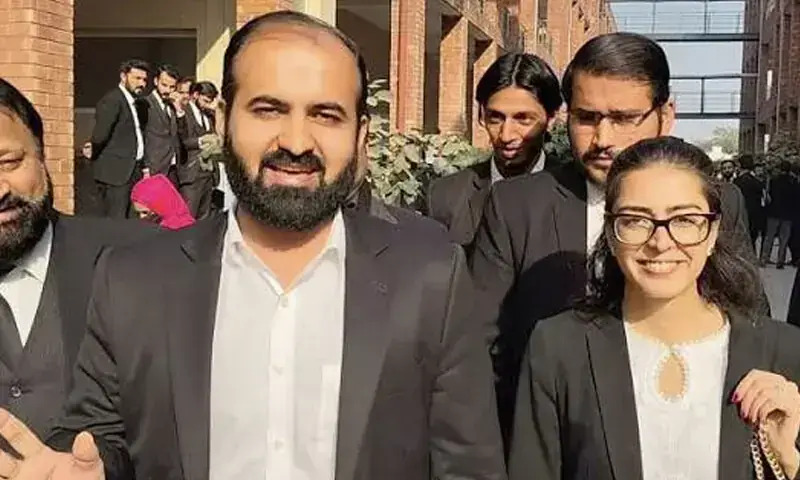
In a dramatic escalation that has sent shockwaves through Pakistan's legal and civil society landscapes, human rights lawyer Imaan Zainab Mazari-Hazir and her husband, advocate Hadi Ali Chattha, were rearrested by Islamabad police on Thursday outside Rawalpindi's Central Jail Adiala. The police action transpired merely hours after a bench of the Supreme Court of Pakistan issued orders suspending their 17-year prison sentences. The couple had previously been convicted under contentious clauses of the Prevention of Electronic Crimes Act (PECA) related to social media commentary.
Despite securing hard-fought judicial relief from the apex court, the release was abruptly curtailed as police contingents intercepted the two lawyers at the prison gates. Authorities produced them before an Anti-Terrorism Court (ATC) in Islamabad in connection with a newly registered First Information Report (FIR) lodged at the federal capital's Kohsar police station. Following summary proceedings, the presiding ATC judge remanded both individuals to judicial custody, effectively returning them to prison under a fresh docket of allegations. This rapid maneuver reflects an increasingly entrenched administrative pattern of consecutive detentions, commonly described by the legal fraternity as a revolving-door mechanism designed to circumvent judicial bail orders.
Commercial & Economic Implications
While ostensibly a human rights and criminal justice matter, the unabated procedural circumvention of apex court decisions carries tangible repercussions for Pakistan's macro-financial environment and domestic commerce. Predictability of the legal framework forms the bedrock of investor confidence, domestic capital formation, and sovereign risk evaluations.
The aggressive enforcement of cybercrime statutes, coupled with immediate rearrests upon judicial discharge, heightens systemic risk for domestic enterprises, particularly within the burgeoning information technology, logistics, and digital marketing sectors. Technology ventures and digital media platforms face persistent regulatory ambiguities, discouraging foreign direct investment (FDI) at a time when Pakistan desperately requires non-debt-creating external inflows. Furthermore, institutional instability directly feeds sovereign risk premiums, elevating the cost of corporate debt and compounding wholesale import financing bottlenecks. When rule-of-law indicators deteriorate, international credit agencies and institutional capital reassess counterparty risk, which ultimately filters down into suppressed wholesale trading activity, conservative inventory replenishment, and cautious commercial expansion.
Related Intelligence: Pakistan Bar Council Demands Immediate Action on Fuel Price Inflation
Stakeholder Perspectives & Market Reactions
The incident ignited widespread condemnation from prominent representative bodies. The Pakistan Bar Council, the Supreme Court Bar Association, and regional bar councils issued sharp rebukes, categorizing the immediate rearrest as a direct affront to the authority of the Supreme Court and a mockery of the justice system. Senior jurists warned that ignoring apex court relief erodes the foundational doctrine of the separation of powers.
Simultaneously, human rights monitoring groups, independent media networks, and professional associations expressed alarm over the shrinking space for civil liberties. Business leadership and trade associations, while often detached from political litigation, noted with private unease that an unpredictable judicial ecosystem undermines the sanctity of contracts and institutional guarantees. Multinational partners monitoring Pakistan's eligibility for trade concessions—most notably the European Union's Generalized Scheme of Preferences Plus (GSP+) facility—frequently benchmark trade benefits against compliance with international human rights treaties and due process standards. Any perceived regression exposes major export sectors, including textiles and manufactured goods, to severe trade scrutiny.
Forward Outlook & Key Watchpoints
In the immediate term, defense counsel for Mazari and Chattha are preparing emergency bail petitions before the relevant appellate courts to challenge the validity of the Kohsar police station FIR and subsequent ATC remand. Observers will closely monitor whether the Supreme Court initiates contempt or institutional review proceedings regarding executive circumvention of its bail decrees.
Key watchpoints for national stakeholders include forthcoming bilateral assessments by international human rights monitors and trade evaluation missions reviewing regulatory safeguards. For commercial operators and institutional markets, the trajectory of this legal confrontation serves as a bellwether for state institutional coherence, domestic judicial supremacy, and the stability of Pakistan's commercial operating environment.
Join Our Official WhatsApp Channel
Receive live commodity alerts, policy changes, and commercial intelligence directly on WhatsApp.