
Indian Opposition Protests Electoral Roll Revisions Amid Institutional Concerns
Mass demonstrations erupted in New Delhi as Indian opposition parties accused authorities of altering voter registries to favor the ruling party, raising governance and economic concerns.
Geopolitical & Core Developments
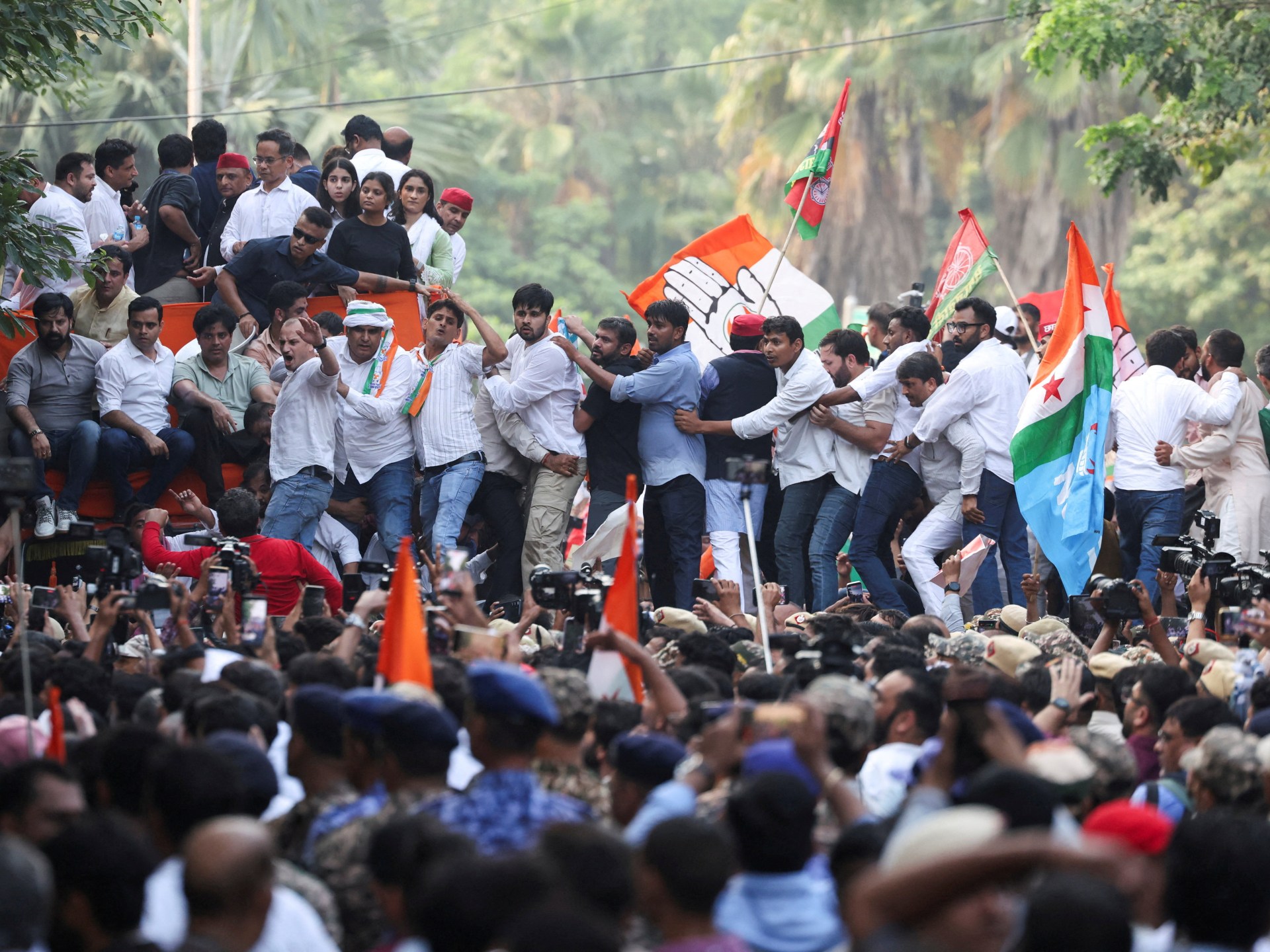
Tensions escalated across India's political landscape this week as leaders and supporters from a broad coalition of opposition parties converged on the capital, New Delhi. The mass demonstrations targeted recent voter list revisions conducted by the Election Commission of India, with organizers alleging systematic disenfranchisement aimed at bolstering the electoral prospects of Prime Minister Narendra Modi's ruling Bharatiya Janata Party (BJP). Protesters carried placards, blocked arterial thoroughfares, and clashed with security personnel, underscoring widening domestic political fractures.
The strategic stakes of these demonstrations extend beyond local electoral mechanics. India, functioning as the world's most populous democracy and a linchpin of Western Indo-Pacific diplomacy, faces intense scrutiny regarding institutional resilience and electoral transparency. The opposition contends that names belonging to key demographic blocs, including religious minorities and lower-income communities, have been selectively removed from official registries without transparent justification. The government and electoral administrators have categorically denied these charges, stating that voter revisions represent routine bureaucratic updates intended to purge duplicate entries and maintain roll integrity. However, the timing of the revisions ahead of major state and regional polling rounds has amplified political confrontation.
Global Trade & Economic Ripples
While the immediate catalyst remains domestic politics, escalating civic unrest in New Delhi reverberates across broader market sentiment and cross-border commercial channels. International sovereign funds and institutional investors closely track Indian policy consistency, regulatory transparency, and political stability when deploying capital into critical supply chain diversification initiatives, including electronics manufacturing, pharmaceutical infrastructure, and green energy technology.
Prolonged domestic agitation introduces friction into economic governance. Protracted political deadlocks risk delaying parliamentary approvals for trade agreements, cross-border infrastructure initiatives, and corporate tax simplifications. On currency markets, foreign portfolio flows into the Bombay Stock Exchange and National Stock Exchange remain highly sensitive to domestic governance debates. Any sustained erosion of institutional trust threatens to exacerbate foreign exchange volatility for the Indian rupee, raising import costs for essential commodities including crude oil, fertilizers, and industrial machinery, while marginally tightening credit conditions for outward-facing commercial enterprises.
Related Intelligence: UK Prime Minister Andy Burnham Pledges Post-Brexit EU Trade Reset
International Reactions & Diplomatic Stances
Global institutions and diplomatic observers have observed the unfolding demonstrations with measured caution. While bilateral partners within the Quad framework—including the United States, Japan, and Australia—have avoided direct public commentary to prevent diplomatic friction with New Delhi, international human rights watchdogs and democratic monitoring agencies have issued calls for rigorous transparency.
Multilateral monitoring bodies and non-governmental organizations emphasizing electoral fairness noted that independent oversight of voter rolls is an essential benchmark for stable democratic governance. European Union envoys and regional trade representatives privately emphasize that India's standing as an alternative manufacturing hub relies heavily on its reputation for rule of law, predictable civic environments, and transparent public institutions. Market analysts at major sovereign risk consultancies noted that sustained street-level unrest could prompt risk-reassessment models, particularly if industrial corridors or logistic transport hubs experience operational disruption.
Strategic Outlook & Future Scenarios
The trajectory of the dispute will depend heavily on the institutional response of the Election Commission and potential interventions from India’s Supreme Court. Should judicial petitions yield formal inquiries or demand independent roll audits, tensions in the capital may de-escalate into structured legal battles. Conversely, if administrative bodies dismiss opposition appeals without third-party review, sustained civil resistance is likely to spread to major economic centers such as Mumbai, Bengaluru, and Kolkata.
In the medium term, this internal political contest will unfold against the backdrop of critical multilateral engagements, where Indian leadership seeks to project geopolitical strength and economic dependability. The durability of New Delhi's economic policy continuity will be tested by whether political leaders can establish mutual consensus on electoral mechanisms without triggering protracted domestic disruptions that could unsettle foreign direct investment and industrial operations.
Join Our Official WhatsApp Channel
Receive live commodity alerts, policy changes, and commercial intelligence directly on WhatsApp.