
Indian Police Detain Protesters Amid Gen Z Electoral Backlash
Indian police in New Delhi detained multiple demonstrators amid Gen Z-led protests against controversial voter roll revisions favoring the ruling party.
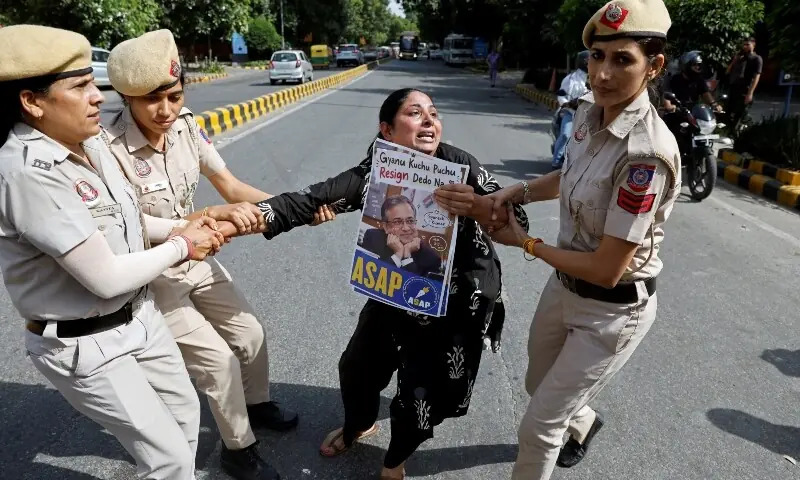
The Core Development
Indian law enforcement authorities detained several individuals in New Delhi on Saturday, aggressively disrupting the second consecutive day of demonstrations organized against contentious revisions to national voter rolls. Spearheaded by the Gen Z-led Cockroach Janta Party alongside various opposition factions, the protests highlight escalating public discontent over administrative changes critics argue systematically favor Prime Minister Narendra Modi’s ruling party.
Approximately 100 demonstrators breached security barricades near key government installations on Saturday, raising vocal slogans including "vote thief, leave the post" and directing direct demands toward India's election chief, Gyanesh Kumar, to step down immediately. The demonstrations mark a significant escalation in a persistent wave of youth-driven political mobilization throughout 2024, placing unprecedented pressure on Prime Minister Modi’s administration during his twelfth year in office. Prominent figures, including independent lawmaker Kapil Sibal and left-wing student leader Neha Bora of the All India Students’ Association, have amplified criticisms regarding the integrity of the electoral infrastructure.
Commercial & Economic Implications
For regional stakeholders, particularly commercial enterprises and trading networks in neighboring Pakistan such as Kalyar Traders, prolonged political instability in New Delhi carries nuanced macroeconomic implications. While direct bilateral trade remains heavily restricted and largely symbolic, heightened domestic strife in India can trigger broader South Asian market volatility, influencing investor sentiment, currency valuations, and foreign direct investment flows across the subcontinent.
Furthermore, political uncertainty of this magnitude risks disrupting regional supply chains and agricultural commodity pricing if domestic manufacturing hubs or transport corridors experience intermittent logistical bottlenecks due to civil unrest. Inflationary pressures within India, exacerbated by political distraction and potential governance paralysis, historically spill over into regional commodity markets, affecting wholesale distribution costs, retail trade margins, and consumer purchasing power across neighboring jurisdictions.
Related Intelligence: Houthi Red Sea Advance Triggers Fresh Humanitarian and Trade Crisis
Stakeholder Perspectives & Market Reactions
Financial analysts and international observers are closely monitoring the reaction of institutional investors and domestic business bodies to the unfolding crisis. While stock markets in Mumbai have displayed resilience, corporate governance advocates have expressed growing concern regarding the erosion of institutional independence within key regulatory bodies, including the Election Commission of India.
Trader associations and legal experts emphasize that public trust in impartial electoral administration is a foundational pillar of economic stability. Any perceived compromise in democratic institutions tends to heighten sovereign risk premiums, deterring foreign capital deployment and complicating long-term commercial agreements. Opposition leaders maintain that structural alterations to voter registries threaten to distort democratic representation, a sentiment resonating strongly among urban youth demographics facing economic headwinds and job scarcity.
Forward Outlook & Key Watchpoints
As the political standoff intensifies, market participants and policy analysts must monitor several critical indicators over the coming weeks. Key watchpoints include the response of the Indian judiciary to petitions challenging the voter roll changes, potential escalations in street protests organized by the opposition coalition, and any official policy adjustments from the Election Commission of India.
Should the Modi administration face sustained domestic paralysis or expanded youth mobilization, legislative priorities relating to fiscal policy, taxation, and trade agreements could experience significant delays. For commercial entities operating in the region, maintaining agile supply chain strategies and robust risk management frameworks remains paramount as political tensions continue to unfold across India's urban centers.
Join Our Official WhatsApp Channel
Receive live commodity alerts, policy changes, and commercial intelligence directly on WhatsApp.