
Government and PPP Form Joint Front for Talks With PTI
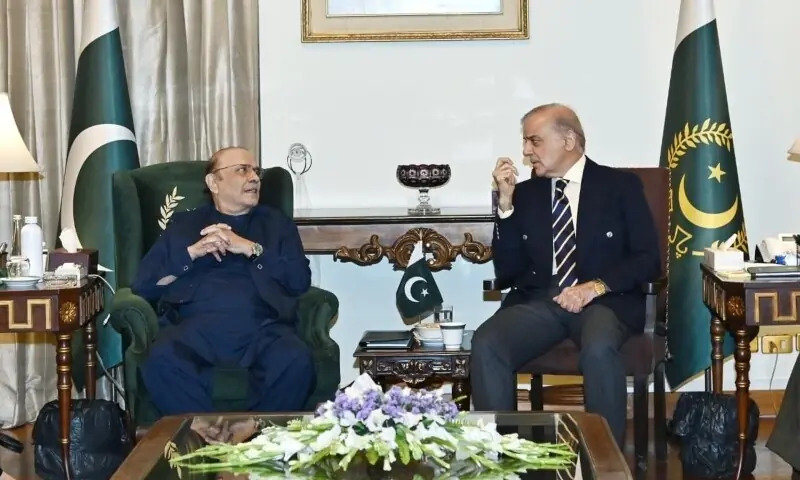
Prime Minister Shehbaz Sharif and President Asif Ali Zardari have finalized a joint government-PPP strategy, leading to scheduled political negotiations with PTI leadership at the National Assembly Speaker's office.
The Core Development
In a significant political maneuver aimed at easing mounting institutional friction, Prime Minister Shehbaz Sharif and President Asif Ali Zardari held a high-stakes consultative session at Aiwan-i-Sadr in Islamabad. The meeting produced an immediate consensus: a joint delegation representing both the federal government and the Pakistan Peoples Party (PPP) will formally engage with the opposition Pakistan Tehreek-e-Insaf (PTI) leadership. Identical statements issued by the Presidency and the PPP confirmed that the diplomatic outreach aims to establish a structured dialogue framework.
PTI Chairperson Barrister Gohar Khan verified the development, noting that the opposition received formal communication from the government. Following internal consultations within the opposition ranks, the PTI accepted the invitation. The scheduled rendezvous is set for Friday at 12:00 PM within the office of National Assembly Speaker Sardar Ayaz Sadiq, providing a neutral legislative ground for the preliminary discussions. This encounter marks a rare formal bridge between the ruling coalition and the incarcerated former ruling party amid a prolonged legislative stalemate.
Commercial & Economic Implications
While the immediate impetus behind the Shehbaz-Zardari meeting appears political, the broader business and financial community in Pakistan views ongoing political stability as a primary determinant of macroeconomic recovery. Prolonged legislative deadlocks and political street agitations historically inflict severe friction on wholesale distribution networks, retail trade, and consumer confidence. Investors and multilateral lenders closely monitor domestic political temperature as a barometer for policy continuity, particularly regarding structural fiscal reforms mandated under the International Monetary Fund program.
Persistent political uncertainty directly influences capital expenditure decisions, currency stability, and inflationary pressures. A reduction in political confrontation can foster a more predictable environment for supply chains and industrial output. Conversely, failed negotiations and subsequent escalations risk stoking market volatility, dampening foreign direct investment, and delaying critical legislative measures required to streamline taxation and state-owned enterprise governance. For Kalyar Traders and the wider business ecosystem, de-escalation is a vital prerequisite for predictable commercial planning.
Related Intelligence: Government And Opposition Announce High-Level Talks At National Assembly
Stakeholder Perspectives & Market Reactions
Business councils, trade associations, and legal experts have consistently maintained that economic rehabilitation is inextricably linked to political consensus. Chambers of commerce across major urban centers have repeatedly petitioned political stakeholders to prioritize national economic agendas over partisan disputes. The involvement of the PPP alongside the federal administration signals a unified executive front, though market analysts remain cautious regarding the ultimate sincerity and longevity of these cross-aisle overtures.
Legal and constitutional experts point out that the choice of the National Assembly Speaker's office as the venue underscores an institutional approach to conflict resolution. Public response, mirrored across financial markets and urban trading hubs, remains cautiously optimistic yet skeptical, given the history of fragile truces between the current administration and the PTI.
Forward Outlook & Key Watchpoints
Friday's meeting at the National Assembly Speaker's office will serve as an immediate litmus test for the sincerity of both political camps. Key watchpoints for financial analysts and political observers include the specific agenda items tabled during the session, potential concessions regarding electoral grievances, and the establishment of a permanent consultative committee.
If these preliminary talks yield a substantive framework for ongoing dialogue, Pakistan could witness a notable reduction in political risk premiums, offering temporary relief to financial markets. However, failure to establish common ground would likely trigger renewed agitation, compounding economic anxieties as the fiscal year progresses. Stakeholders must monitor legislative proceedings and official communiques closely in the coming days.
Join Our Official WhatsApp Channel
Receive live commodity alerts, policy changes, and commercial intelligence directly on WhatsApp.