
Gaza Territorial Encroachment Threatens Regional Stability and Global Supply Routes
Military demarcations enclosing nearly two-thirds of Gaza are intensifying humanitarian bottlenecks while exacerbating geopolitical volatility and trade friction across critical Middle Eastern logistics networks.
Geopolitical & Core Developments
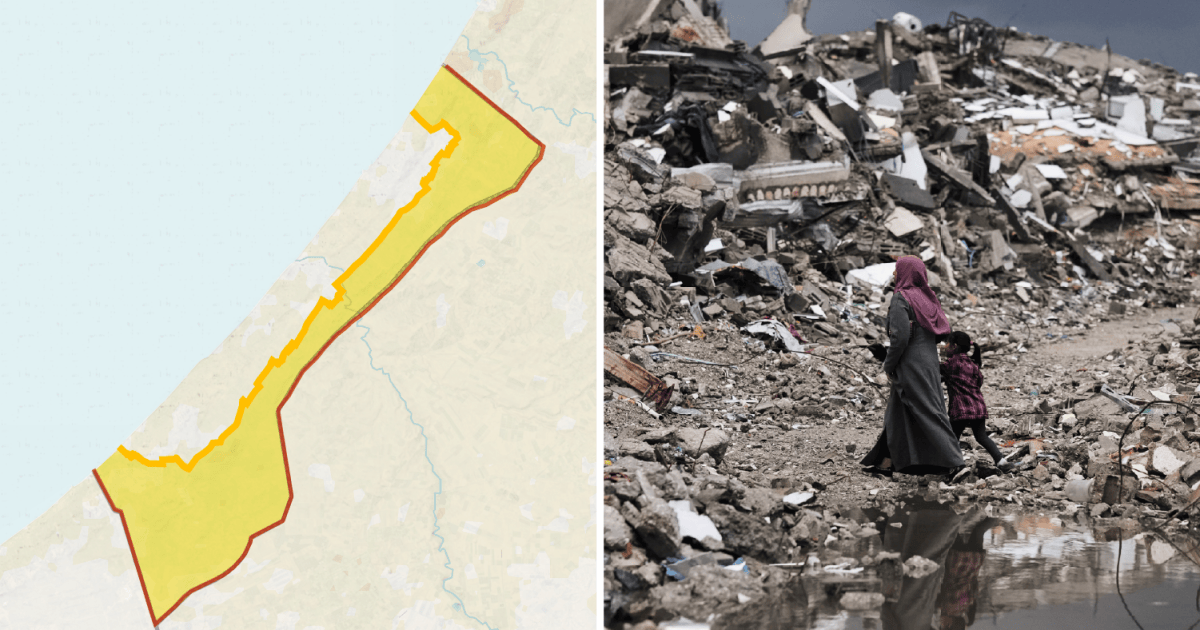
Geospatial analysis and satellite monitoring demonstrate a marked expansion of military operational corridors throughout the Gaza Strip, systematically reducing civilian access to roughly 65 percent of the enclave. Over 2.1 million residents are now effectively concentrated into narrow, hyper-dense perimeters, primarily within southern coastal and central municipal pockets. The establishment of fortified buffer corridors, informally termed the 'Yellow Line' and associated security perimeters, has reshaped the ground reality, institutionalizing long-term territorial fragmentation under the umbrella of security imperatives.
The demarcation lines cut directly across agricultural basins, arterial transit corridors, and municipal borders, severing long-standing economic continuity. While regional mediators have repeatedly advanced ceasefire frameworks intended to facilitate humanitarian rehabilitation, the physical consolidation of exclusionary zones indicates a strategic shift toward permanent spatial containment. Security officials maintain that these zones mitigate cross-border infiltration risks, yet international observers view the measures as an enduring territorial restructuring that complicates prospects for sustainable governance, border reconciliation, and regional diplomatic normalisation.
Global Trade & Economic Ripples
The ongoing territorial crisis in Gaza generates persistent reverberations through broader commercial networks, sustaining elevated risk premiums on maritime transit and global energy commodities. The systemic displacement and sustained military posture in the Levant maintain high levels of volatility across the Red Sea and Gulf of Aden, forcing major logistics providers to bypass the Suez Canal in favor of the Cape of Good Hope. This geographic rerouting adds up to two weeks to voyages connecting Asia and Europe, driving up bunker fuel consumption, freight tariffs, and marine insurance rates.
Furthermore, prolonged regional instability injects unpredictable variance into European natural gas benchmarks and Brent crude futures, with financial markets pricing in potential spillover effects targeting offshore extraction fields in the Eastern Mediterranean. Compounding these issues are the disruptions to regional agricultural supply lines and escalating infrastructure rebuilding commitments, which divert institutional capital away from developmental logistics and place sustained financial strain on multilateral funding mechanisms.
Related Intelligence: Borneo Wildfires Threaten Endangered Wildlife and Global Supply Chains
International Reactions & Diplomatic Stances
Multilateral bodies and humanitarian agencies have issued increasingly stern assessments regarding the scale of civilian compression. United Nations officials caution that the systematic curtailment of habitable space violates established principles of international humanitarian law, particularly given the near-total collapse of sanitation, healthcare, and water supply grids within overcrowded safe zones. UN agencies underscore that no durable reconstruction strategy can function while access to two-thirds of the territory remains barred to civilian governance.
Diplomatic responses diverge sharply across key capitals. European Union ministers have called for unhindered humanitarian access and an immediate cessation of unilateral territorial cordons, warning that spatial contraction prevents viable post-war administration. Conversely, key strategic allies continue to underline Israel's operational right to prevent border incursions, though senior Western diplomats increasingly urge restraint, cautioning against prolonged occupation models that undermine normalization accords and inflame regional friction.
Strategic Outlook & Future Scenarios
Over the coming quarters, the institutionalization of exclusionary zones is poised to harden into an intractable geopolitical status quo. If territorial access remains blocked, the risk of asymmetric security shocks across surrounding trade chokepoints will persist, maintaining elevated operational costs for international shipping conglomerates and energy consortia.
Multilateral negotiations scheduled in regional diplomatic hubs face diminishing efficacy if territorial realities continue to outpace legal frameworks. Failure to reverse the spatial contraction could lead to systemic civil breakdown, further straining cross-border relations with neighboring transit states such as Egypt and Jordan. For international investors, commodity traders, and geopolitical strategists, the Levant remains an enduring epicenter of systemic supply-chain friction, demanding sustained vigilance against broader maritime and commercial dislocations.
Join Our Official WhatsApp Channel
Receive live commodity alerts, policy changes, and commercial intelligence directly on WhatsApp.