
Gaza Devastation Exposed as Three-Year Conflict Reshapes Regional Trade
Recent satellite data highlights catastrophic destruction in Gaza after three years of war, compounding severe risks for Middle Eastern stability and global maritime commerce.
Geopolitical & Core Developments
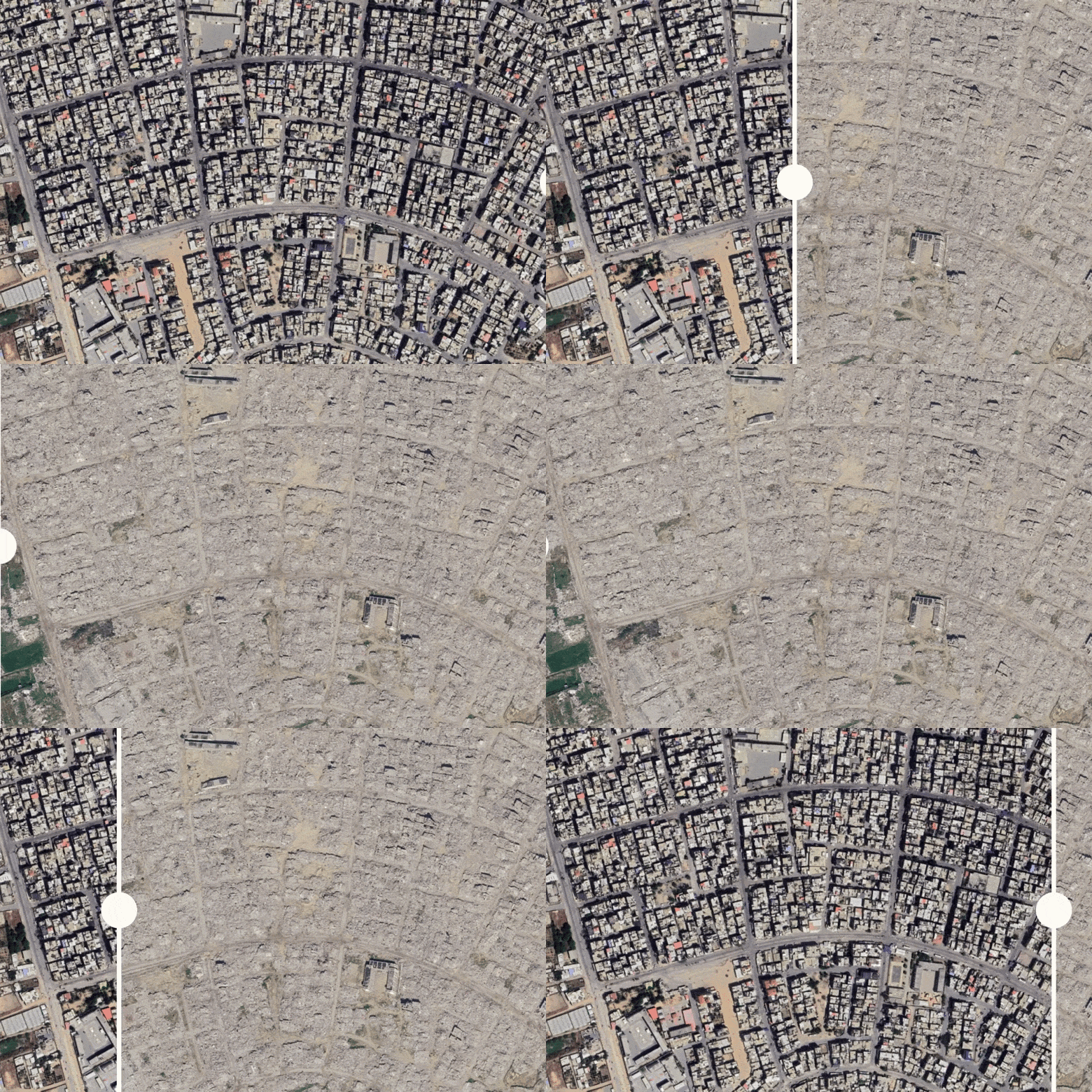
Recent high-resolution satellite imagery released via global mapping platforms has laid bare the staggering scale of destruction across the Gaza Strip, marking a grim milestone three years into the devastating military campaign. The visual data captures near-total infrastructural collapse across major urban centers, where residential districts, commercial zones, and critical civic lifelines have been reduced to rubble. The protracted nature of the conflict has fundamentally altered the strategic topography of the Levant, drawing in regional proxies, escalating cross-border exchanges, and paralyzing conventional diplomatic pathways. State actors across the Middle East find themselves navigating an increasingly polarized security environment, where traditional deterrence frameworks have proven inadequate against persistent, asymmetric escalations. The prolonged hostilities have displaced millions, triggered severe humanitarian crises, and eroded the foundational norms of international humanitarian law, prompting urgent calls from global monitors for accountability and independent investigations into the conduct of hostilities.
Global Trade & Economic Ripples
Beyond the profound human toll, the three-year crisis continues to send severe shockwaves through global commodity markets, supply chains, and maritime logistics. The spillover effects have severely disrupted key regional transit corridors, most notably forcing persistent rerouting around the Bab el-Mandeb strait and the Red Sea due to heightened security threats. These logistical bottlenecks have inflated shipping insurance premiums, extended transit times between Asian manufacturing hubs and European markets, and added sustained upward pressure on international freight rates. Energy markets remain acutely sensitive to the broader geopolitical volatility, with traders continuously pricing in the risk of supply disruptions originating from the wider Middle East. Agricultural commodities and industrial metals have similarly experienced price volatility, exacerbated by currency fluctuations and the diversion of state fiscal resources toward defense and emergency provisioning across major economies.
Related Intelligence: Philippine Transport Strikes Erupt Amid Middle East Fuel Shock
International Reactions & Diplomatic Stances
The international community remains deeply fractured over the crisis, complicating multilateral efforts to forge a durable cessation of hostilities. United Nations bodies and humanitarian agencies have repeatedly issued dire warnings regarding systemic famine, disease outbreaks, and the complete collapse of medical infrastructure, urging immediate, unhindered access for relief supplies. While Western capitals have maintained complex diplomatic balancing acts, citing Israel's security imperatives while pressing for humanitarian pauses, developing nations and regional organizations have expressed profound frustration at perceived double standards in international law. Resolutions at the UN Security Council have frequently faced diplomatic paralysis or vetoes, hobbling the multilateral apparatus's capacity to mandate binding enforcement actions. Meanwhile, market analysts and international credit rating agencies have factored the protracted instability into long-term risk assessments for the broader Middle East, depressing foreign direct investment in non-energy sectors across the Levant and North Africa.
Strategic Outlook & Future Scenarios
Looking ahead, the trajectory of the conflict and its commercial fallout hinges on several critical geopolitical variables, including the potential for a formal ceasefire, the hardening of regional alliances, and future reconstruction financing frameworks. Upcoming international summits will likely focus on emergency stabilization packages and maritime security guarantees, though deep political divergences threaten to stall comprehensive multilateral planning. Should hostilities persist or expand into a wider regional conflagration, global shipping lines must prepare for structural, long-term alterations to East-West trade routes, permanently embedding higher transit costs into global supply chains. Conversely, a negotiated political settlement would trigger massive, multi-billion-dollar reconstruction demands, creating specialized opportunities in infrastructure development, engineering, and international project finance, even as the region grapples with the generational task of physical and social rehabilitation.
Join Our Official WhatsApp Channel
Receive live commodity alerts, policy changes, and commercial intelligence directly on WhatsApp.