
French Student Protests Spark National Discontent and Economic Uncertainty
Intense student demonstrations in Lille highlight mounting domestic pressures in France, raising concerns over economic stability and political continuity across European markets.
Geopolitical & Core Developments
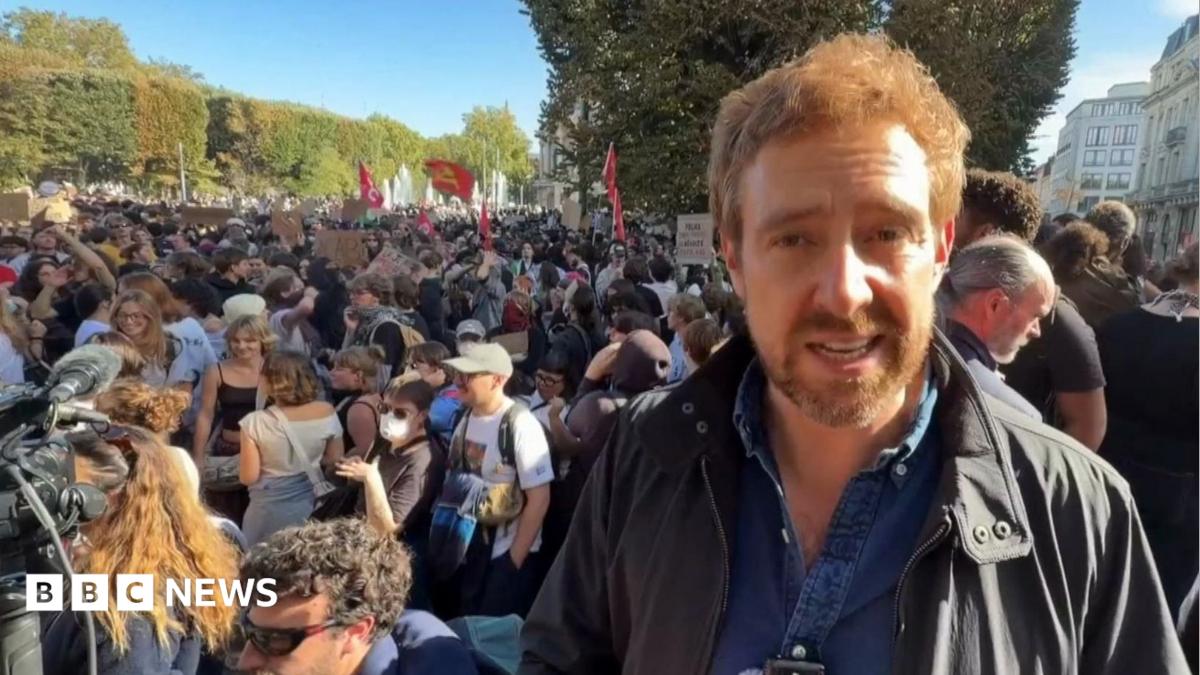
Recent on-the-ground reporting from Lille by BBC Europe correspondent Nick Beake underscores a significant escalation in domestic unrest within northern France. Large-scale student demonstrations have paralyzed parts of the city, reflecting profound societal discontent with current government policies, economic reforms, and educational funding cuts. These protests are not isolated incidents; rather, they form part of a broader wave of civil disobedience sweeping across key European urban centers. State actors and local law enforcement face mounting pressure to balance public safety with the protection of democratic rights to assembly and free speech.
As the demonstrations intensify, the political ramifications for the central government in Paris become increasingly severe. President Emmanuel Macron's administration is caught between the imperative to press forward with structural economic reforms and the necessity of quelling social unrest that threatens national cohesion. The timeline of these protests coincides with broader European labor strikes, creating a complex domestic landscape that strains administrative resources and distracts from broader continental diplomatic engagements. Strategic stakes are high, as prolonged civil unrest risks undermining the stability of one of the European Union's core founding member states at a time of fragile geopolitical equilibrium.
Global Trade & Economic Ripples
While student demonstrations primarily manifest as social and political phenomena, their economic fallout extends rapidly into regional and global commercial channels. Lille serves as a vital logistics and transit nexus in northern France, connecting domestic markets with neighboring Belgium, the Netherlands, and the broader German industrial base. Disruptions to local transport networks, blockades of thoroughfares, and associated labor slowdowns directly impede cross-border supply chains. Freight forwarders and logistics operators report delays in cargo movement, elevating transit costs and introducing friction into just-in-time manufacturing schedules across Western Europe.
Beyond immediate supply chain bottlenecks, sustained domestic turmoil in France exerts downward pressure on the euro and dampens investor confidence in eurozone assets. Global commodity markets, particularly energy and agricultural products transiting through French distribution hubs, experience heightened volatility as market participants price in the risk of extended transit blockades. International trade partners are closely monitoring the situation to determine whether localized student activism will catalyze broader industrial strikes capable of disrupting broader European economic output and inflationary targets set by the European Central Bank.
International Reactions & Diplomatic Stances
International observers, multilateral institutions, and foreign ministries are closely tracking the trajectory of civil unrest in France. While the United Nations and other international bodies generally frame these events as internal domestic matters, market analysts and economic intelligence agencies view the social friction as a symptom of broader European economic anxiety. Neighboring European governments have expressed quiet concern over the potential contagion effect of widespread protests, particularly given interconnected labor movements and shared regional economic vulnerabilities.
Financial institutions and credit rating agencies have issued cautious notes, warning that prolonged political paralysis and social unrest could complicate France's fiscal consolidation path. Commercial analysts stress that foreign direct investment into French infrastructure and retail sectors remains sensitive to persistent domestic volatility. Consequently, international stakeholders are urging a swift, measured political resolution to restore market confidence and ensure the uninterrupted flow of goods and services across European borders.
Strategic Outlook & Future Scenarios
Looking ahead, the trajectory of the student-led movement in Lille and surrounding regions will depend heavily on the French government's willingness to engage in substantive dialogue or enact policy concessions. Failure to address the root grievances regarding economic opportunity and educational funding risks entrenching civil disobedience, potentially transforming isolated campus protests into a protracted nationwide labor crisis. Upcoming legislative sessions and scheduled national union meetings will serve as critical litmus tests for the administration's ability to maintain social peace.
For international commerce and global market participants, the primary risk lies in the potential escalation of coordinated strikes spanning transport, energy, and education sectors. As geopolitical tensions globally already strain supply chains, any self-inflicted domestic logistical paralysis in Western Europe adds an avoidable layer of risk. Stakeholders must incorporate potential French domestic instability into their Q3 and Q4 risk models, maintaining contingency plans for alternative transport routing and diversified supply chains.
Join Our Official WhatsApp Channel
Receive live commodity alerts, policy changes, and commercial intelligence directly on WhatsApp.