
France Suspends High Schools Amid Escalating Civil Unrest and Clashes
France suspends high school classes nationwide as violent clashes between protesters and police prompt firm government warnings against civil disorder, threatening domestic stability.
Geopolitical & Core Developments
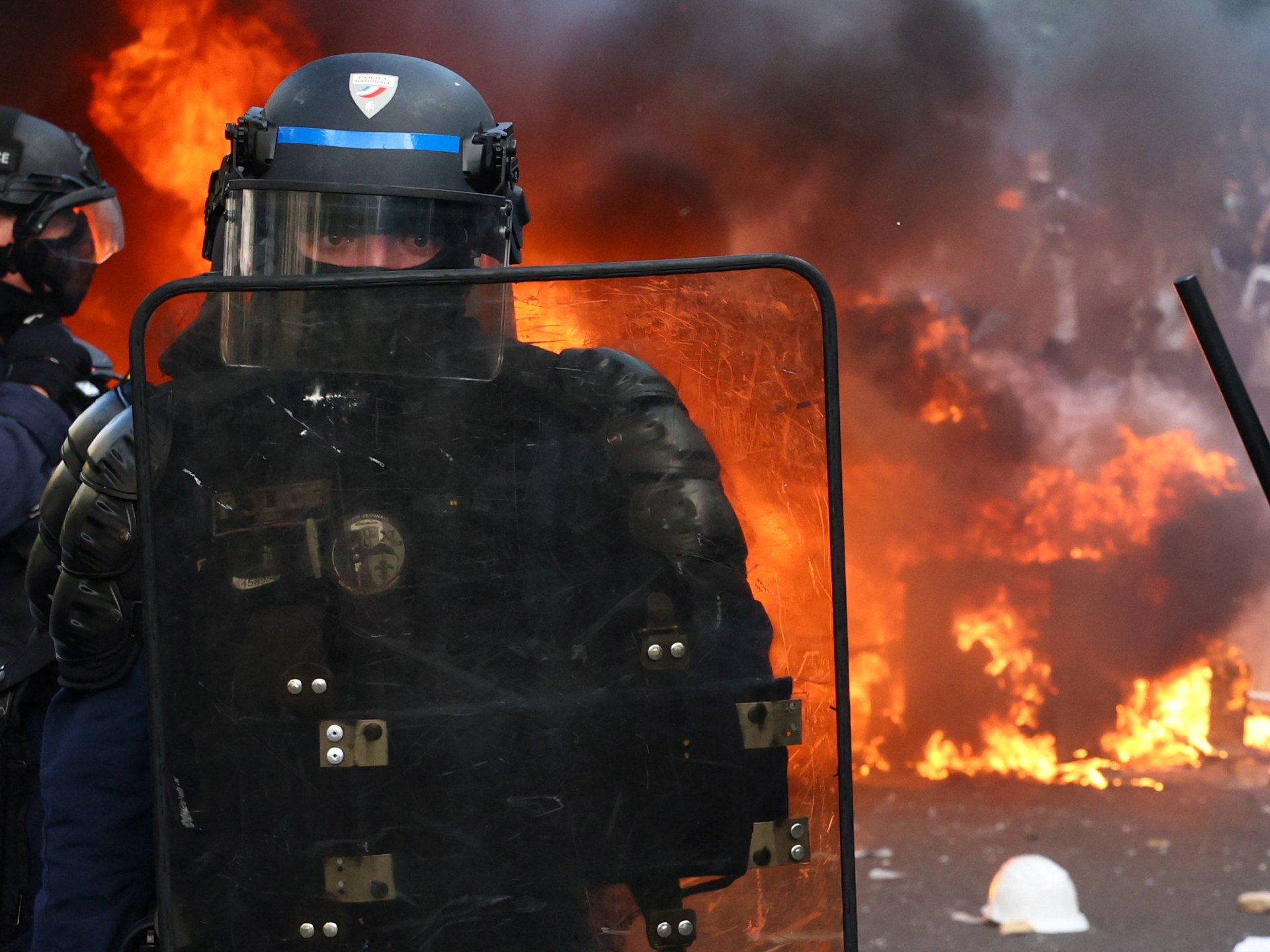
France has entered a state of heightened domestic tension as the government took the unprecedented step of suspending high school classes across multiple regions following days of intense civil unrest. The decision comes in the wake of escalating street clashes between radicalized protesters and heavily equipped security forces, reminiscent of past nationwide crises that have tested the resilience of the Fifth Republic's administrative apparatus. State actors and municipal authorities have found themselves strained by coordinated demonstrations that quickly deteriorated into widespread vandalism, arson, and direct confrontations with law enforcement.
Prime Minister issued an uncompromising warning, declaring that there is absolutely no room for tolerance for violence under any political or social pretext. The head of government urged the nation to stand together, emphasizing that public safety and the preservation of republican institutions remain paramount. State security apparatuses have deployed tactical units to key urban centers, including Paris, Marseille, and Lyon, to secure vital infrastructure and prevent further escalation. The timeline of the crisis highlights a rapid descent from peaceful labor and student grievances into decentralized urban warfare, challenging the Ministry of the Interior's capacity to maintain order without triggering broader constitutional backlash.
Global Trade & Economic Ripples
While the disturbances are primarily domestic in origin, the economic fallout threatens to ripple across wider European supply chains and financial markets. Major metropolitan commercial districts have experienced forced closures and reduced foot traffic, directly impacting retail sectors, luxury goods distribution, and the hospitality industry. International investors monitor the situation closely, as persistent civil unrest in the eurozone's second-largest economy traditionally dampens consumer confidence and exerts downward pressure on the euro.
Furthermore, disruptions to urban transportation networks and potential blockages of key logistics hubs pose logistical hurdles for regional freight and cross-border trade. Commodity pricing within Western Europe has shown mild volatility, particularly concerning refined petroleum products as localized fuel distribution protests threaten to constrain regional transit corridors. Commercial stakeholders in neighboring economies are reassessing their exposure to French markets, weighing the risk of prolonged social instability against forecasted Q4 earnings.
Related Intelligence: Yemeni Offensive Fails to Shift Strategic Balance Amid Global Supply Chain Risks
International Reactions & Diplomatic Stances
Neighboring European capitals and multilateral institutions have observed the unfolding crisis with growing apprehension. Officials in Brussels have quietly expressed concern over the internal stability of a core eurozone member state, emphasizing the necessity of upholding the rule of law while respecting democratic rights to peaceful assembly. International human rights monitors have urged both state authorities and protesters to exercise restraint, calling for independent investigations into instances of alleged police brutality during the height of the street skirmishes.
Market analysts and foreign diplomatic missions have issued advisory notes to expatriates and business travelers, warning of severe transport delays and advising avoidance of demonstration hotspots. International financial bodies note that while France's sovereign debt remains stable, prolonged domestic paralysis could complicate upcoming fiscal reform agendas mandated by the European Commission.
Strategic Outlook & Future Scenarios
Looking ahead, the trajectory of the French crisis hinges on the government's ability to balance coercive security measures with substantive political dialogue. Upcoming legislative sessions will test the administration's parliamentary majority as opposition parties seek to capitalize on the executive's handling of the unrest. If the government fails to defuse underlying socioeconomic grievances, secondary escalation points—including general strikes across transportation and energy sectors—remain a distinct possibility.
Strategic planners are modeling multiple scenarios, ranging from a swift restoration of order through enhanced policing to a protracted period of civil friction that could permanently alter France's domestic political landscape. International observers stress that the coming weeks will serve as a critical benchmark for European governance in managing contemporary socio-economic discontent.
Join Our Official WhatsApp Channel
Receive live commodity alerts, policy changes, and commercial intelligence directly on WhatsApp.