
French Education Protests Spark National Crisis and Market Jitters
Nationwide education protests in France disrupting over 550 schools trigger severe domestic clashes and raise broader economic concerns across the eurozone.
Geopolitical & Core Developments
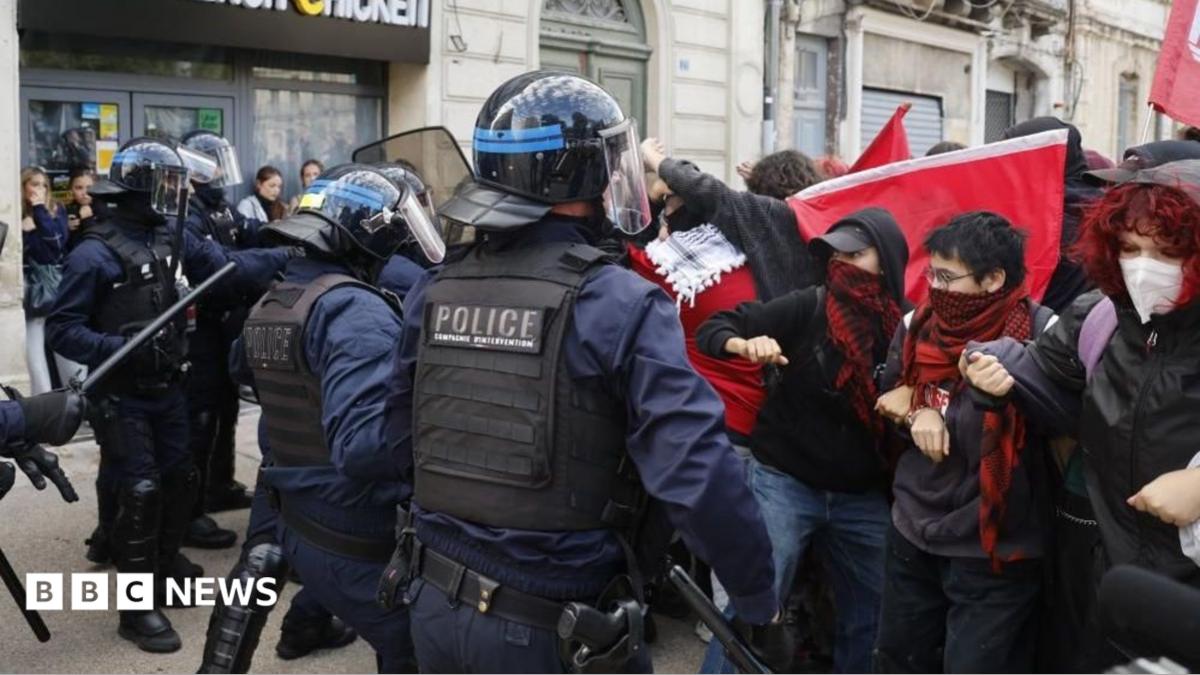
A wave of intense unrest has swept across France as nationwide education protests escalate into violent confrontations between student demonstrators and riot police. More than 550 secondary schools and educational institutions have experienced severe operational disruptions, closures, and blockades as anger mounts over declining academic standards, budgetary constraints, and a critical, systemic lack of qualified teachers. The demonstrations, which have rapidly spread from regional hubs to central Paris, represent a formidable challenge to the administration of President Emmanuel Macron. State authorities have deployed significant security apparatuses to manage the unrest, leading to tense standoffs, deployment of tear gas, and multiple arrests in urban centers. The government's inability to swiftly resolve the underlying grievances risks galvanizing broader labor movements, threatening a compounding cycle of domestic friction that could paralyze key public sectors.
Global Trade & Economic Ripples
While ostensibly rooted in domestic educational policy, the protracted French protests carry tangible implications for wider European economic stability and commercial sentiment. France remains the eurozone's second-largest economy, and sustained civil disruption undermines consumer confidence, retail spending, and commercial logistics within key metropolitan markets. Transport arteries affected by secondary student blockades and sympathetic labor action have created localized supply chain bottlenecks, impacting urban distribution networks and corporate productivity. Furthermore, heightened domestic instability in Paris introduces sovereign risk premiums into European financial markets, subtly influencing Euro exchange rates and investor allocations toward French sovereign debt. Global commodity traders monitoring European demand patterns view the unrest as an additional variable dampening domestic industrial offtake and consumer-facing economic momentum.
Related Intelligence: Ethiopian Conflict Escalation Threatens Horn of Africa Stability and Regional Trade
International Reactions & Diplomatic Stances
International observers, including multilateral institutions and foreign policy analysts, are closely monitoring the unfolding events in France for signs of structural political vulnerability. European Union officials have expressed confidence in the French government's capacity to navigate the crisis through institutional dialogue, while quietly acknowledging that public sector funding strains are a continent-wide challenge. Neighboring European capitals are evaluating the spillover effects of prolonged social unrest on regional travel and cross-border commerce. Market analysts from major financial institutions have issued advisory notes cautioning clients that persistent domestic friction in France could constrain the administration's fiscal reform agenda, complicating broader European economic governance and structural adjustment initiatives.
Strategic Outlook & Future Scenarios
Looking ahead, the trajectory of the French education crisis hinges on the government's willingness to commit substantial fiscal resources to address teacher recruitment and infrastructure deficits. Failure to negotiate a credible settlement with student and teacher syndicates risks triggering a broader general strike involving transport and public utility workers, a scenario historically capable of crippling national economic output. As upcoming legislative debates approach, President Macron faces a narrow window to defuse tensions without appearing politically weak or fiscally reckless. The resolution or escalation of these protests will serve as a critical bellwether for European domestic stability, testing the resilience of major democratic states against mounting societal and economic pressures.
Join Our Official WhatsApp Channel
Receive live commodity alerts, policy changes, and commercial intelligence directly on WhatsApp.