
FIFA and UEFA Clash Threatens Global Sports Governance Stability
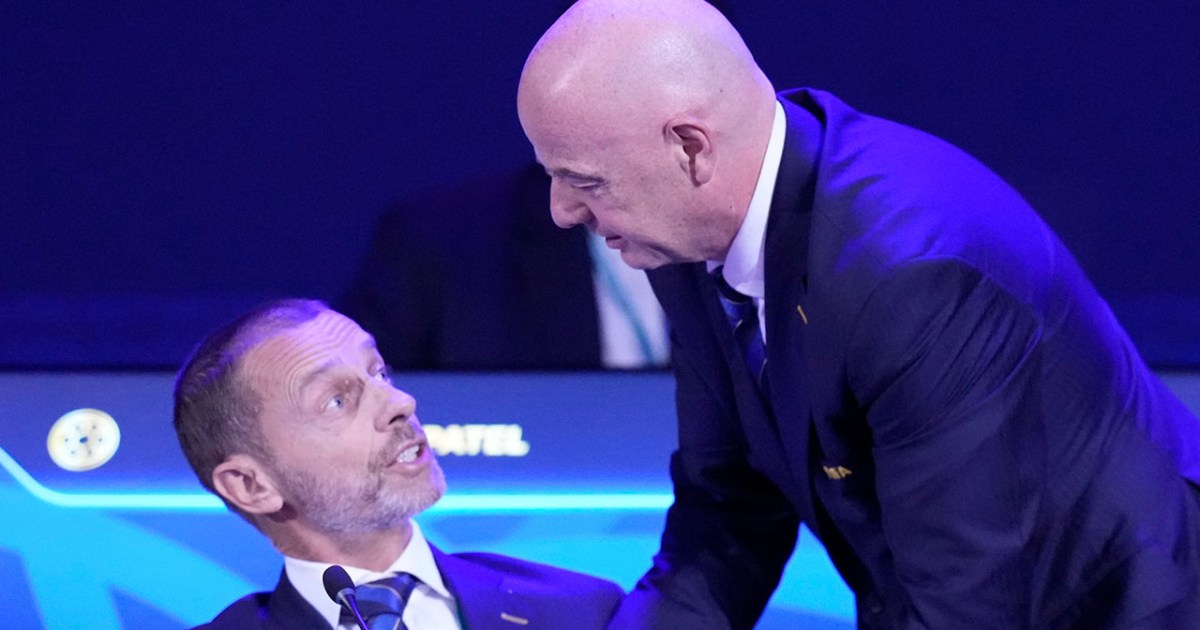
FIFA has accused European football governing body UEFA of running a coordinated misinformation campaign to derail Gianni Infantino's bid for a fourth presidential term, escalating a bitter institutional power struggle.
Geopolitical & Core Developments
A profound institutional crisis has erupted within the upper echelons of international sports governance as FIFA formally accuses UEFA of launching a calculated misinformation campaign. The escalating feud centers on the upcoming FIFA presidential election, where incumbent leader Gianni Infantino is aggressively pursuing a fourth term in office. Relations between Zurich and Nyon have deteriorated significantly over the past several years, driven by competing commercial ambitions, expansion of tournament calendars, and fundamental disagreements over the redistribution of global revenues.
According to high-ranking sources within world football's governing body, European administrators have sought to undermine the electoral integrity of the upcoming congress through coordinated media leaks and backchannel diplomatic pressure on national football associations across Africa, Asia, and the Americas. The dispute reflects a broader struggle for control over the multi-billion-dollar global football economy. As Infantino consolidates his support base outside Europe, traditional power brokers in UEFA find their historical monopoly over policymaking and commercial rights increasingly marginalized, prompting aggressive countermeasures that threaten the stability of the global game.
Global Trade & Economic Ripples
While ostensibly a governance dispute within sports administration, the FIFA-UEFA confrontation carries substantial economic implications for international media markets, corporate sponsorship portfolios, and cross-border commercial partnerships. Global broadcasting rights and tournament hosting contracts represent vital nodes in the international entertainment economy, heavily influenced by regulatory stability. Institutional uncertainty between the twin pillars of world football introduces significant volatility for multinational corporations that commit billions of dollars to global sporting spectacles.
Major institutional investors, sovereign wealth funds, and private equity firms eyeing investments in sports infrastructure and expanded tournament formats are closely monitoring the fallout. A fractured governance model could complicate ongoing negotiations regarding commercial broadcasting syndication, equipment manufacturing supply chains, and hospitality logistics. Furthermore, currency fluctuations and shifting trade dynamics in international media rights markets are sensitive to prolonged political instability within major international sports federations, risking dampened investor confidence across the sports-industrial complex.
Related Intelligence: Bangkok Floods Trigger Supply Chain Disruptions and Local Market Adaptation
International Reactions & Diplomatic Stances
Global reaction to the deepening rift has been characterized by cautious diplomacy from national confederations and sports ministries worldwide. Representatives from the Asian Football Confederation (AFC) and the Confederation of African Football (CAF) have emphasized the need for institutional unity, warning that polarization between FIFA and UEFA could derail developmental programs funded by global redistribution mechanisms. Meanwhile, market analysts and sports economists have expressed alarm over the erosion of multilateral governance standards.
Independent governance watchdogs have called for transparent third-party oversight of the electoral process to prevent further reputational damage to international sport. Several Western European governments, historically aligned with UEFA's administrative framework, have privately expressed concern regarding the geopolitical realignment within FIFA's voting blocs, where emerging economic powers in the Global South increasingly dictate the policy trajectory and leadership mandates of international sports institutions.
Strategic Outlook & Future Scenarios
As the FIFA congress approaches, the trajectory of international sports administration points toward heightened confrontation rather than reconciliation. Several strategic scenarios are now under consideration by geopolitical analysts and sports diplomats. A decisive victory by Infantino would likely cement the shift of global football power away from its traditional European epicenter, potentially accelerating plans for alternative club competitions and expanded global tournaments.
Conversely, intensified legal challenges, regulatory scrutiny from competition authorities, and sustained diplomatic pressure from European federations could precipitate a structural schism, testing the limits of global sports monopolies. Upcoming international summits and regional confederation meetings will serve as critical barometers, determining whether the governance crisis can be contained through multilateral negotiation or whether global football faces an irreversible institutional fragmentation.
Join Our Official WhatsApp Channel
Receive live commodity alerts, policy changes, and commercial intelligence directly on WhatsApp.