
FIFA Reviews Disputed Peace Prize Following Controversial Award to Donald Trump
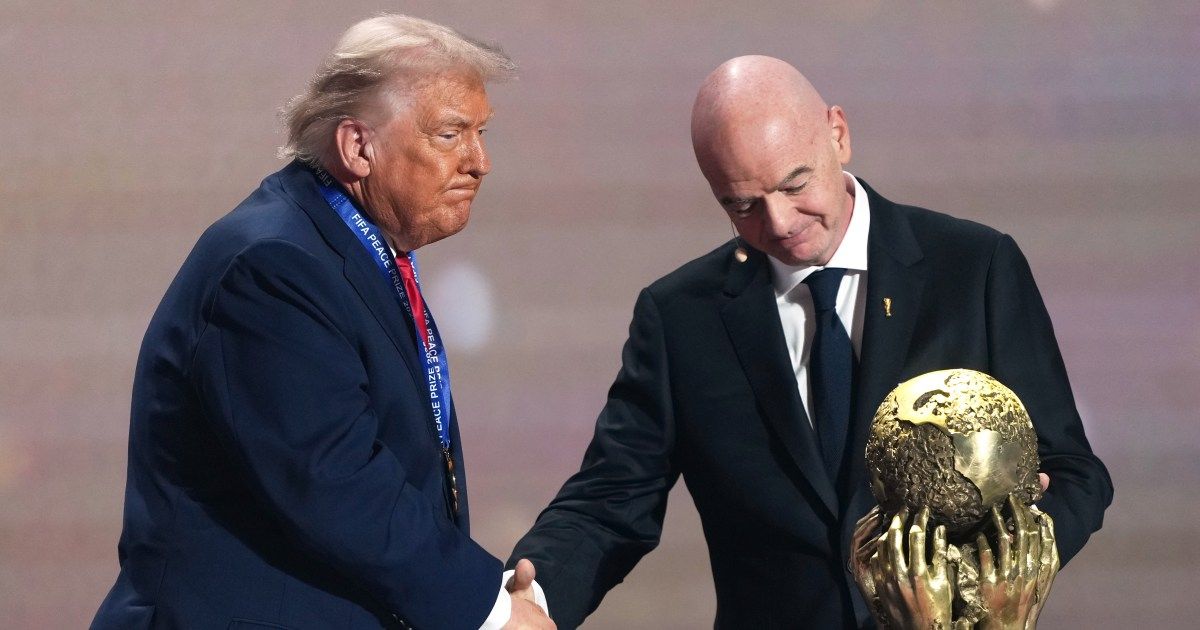
FIFA is reviewing the future of its newly minted peace accolade after internal dissent mounted over conferring the honor upon US President Donald Trump, triggering broader scrutiny over sports governance and institutional neutrality.
Geopolitical & Core Developments
The Fédération Internationale de Football Association (FIFA) has initiated an internal governance review to evaluate the future of its peace award following widespread scrutiny over its decision to confer the honor upon United States President Donald Trump. Several executive committee members and regional confederation representatives have formally questioned the rationale behind the accolade, warning that unilateral political overtures jeopardize the governing body’s statutory commitment to neutrality.
The award, introduced under FIFA President Gianni Infantino, was intended to celebrate global unity through sport. However, the conferral to President Trump has ignited deep division within Zurich headquarters. Internal delegates argue that conferring diplomatic accolades crosses traditional sports governance boundaries and aligns international football with polarising domestic and foreign policy platforms. FIFA's governance and compliance committees have been mandated to examine the criteria and determine whether the prize should be revised, suspended, or scrapped altogether ahead of the 2026 FIFA World Cup, scheduled across North America.
Global Trade & Economic Ripples
While sports awards typically inhabit the soft power domain, the commercial repercussions of political entanglement at this level are immediate. Corporate sponsors, multinational broadcasters, and global advertisers have privately expressed unease regarding brand exposure associated with polarized political milestones. The global sports business, an ecosystem worth several hundred billion dollars annually, relies heavily on universal cross-border appeal to anchor long-term media rights and sponsorship contracts.
Furthermore, institutional instability within global governing bodies introduces friction into logistics, cross-border hospitality investments, and international municipal spending. North American venue preparations for upcoming tournaments involve complex municipal bond financing, corporate infrastructure ventures, and international vendor contracts. A public clash between European football authorities and the incoming US administration could complicate cross-border negotiations over international broadcasting tariffs, visa regimes, and transnational event security agreements.
Related Intelligence: Global Sports Entertainment Economy Surges Amid Cross-Border Media Rights Expansion
International Reactions & Diplomatic Stances
European confederation officials have been the most vocal critics, with representatives from several national federations arguing that FIFA’s core remit must remain strictly tethered to sports regulation and fair competition. Multiple European representatives have demanded formal transparency regarding how the award was established and selected, citing a lack of consultation with member federations.
Diplomatic observers note that multilateral organizations, including the United Nations and the International Olympic Committee, have long maintained rigid guardrails regarding heads of state commendations precisely to avoid accusations of patronage. Market analysts and sports economists emphasize that politicization damages FIFA's commercial leverage in emerging markets across South America, the Middle East, and Asia, where divergent geopolitical interests demand strict institutional impartiality from international sports bodies.
Strategic Outlook & Future Scenarios
The upcoming FIFA Council convening will serve as a pivotal juncture for the leadership’s institutional agenda. The governance committee is expected to present recommendations that may propose phasing out the award quietly or subordinating all future honors to an independent, non-political oversight panel.
Should the executive body choose to discontinue the prize, it risks public political friction with the White House at a time when collaborative planning for the 2026 World Cup demands high-level federal support. Conversely, preserving the prize risks entrenching diplomatic divides within international sports administration, potentially triggering formal protests or boycotts of ceremonial proceedings by several member associations. The episode underscores the widening challenges global sports organizations encounter when seeking to project soft power across an increasingly fractured geopolitical landscape.
Join Our Official WhatsApp Channel
Receive live commodity alerts, policy changes, and commercial intelligence directly on WhatsApp.