
Federal Government Warns Khyber Pakhtunkhwa of Emergency over Counter-Terrorism Standoff
The federal government has concluded deliberations on imposing an emergency in Khyber Pakhtunkhwa, warning that provincial non-cooperation on counter-terrorism will trigger direct intervention amid escalating political confrontations.
The Core Development
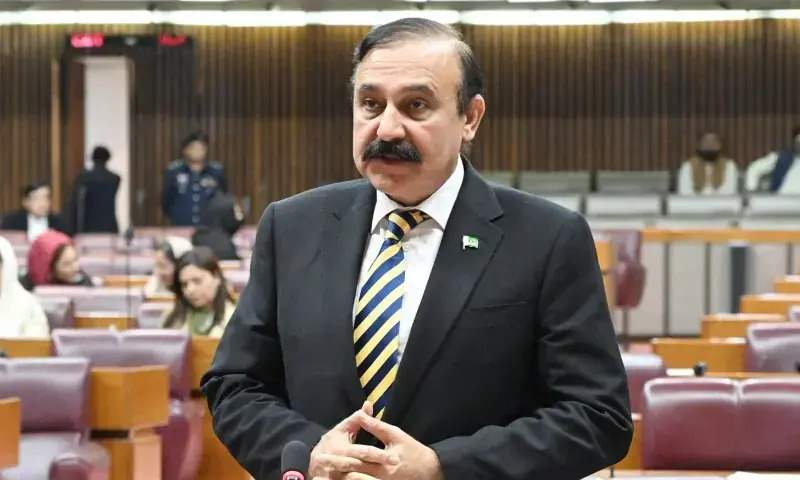
The central government has concluded its deliberations regarding the potential imposition of a state of emergency in Khyber Pakhtunkhwa (KP), signaling a dramatic escalation in the ongoing friction between Islamabad and the provincial administration. Speaking on a prominent television current affairs program, Parliamentary Affairs Minister Dr Tariq Fazal Chaudhry asserted on Friday that the federal executive has finished weighing its legal and administrative options. He explicitly warned that a persistent lack of cooperation from the PTI-led KP government on critical counter-terrorism mandates would leave Islamabad with no alternative but to enforce emergency measures to dismantle militant networks.
While declining to confirm media reports regarding an imminent high-level security meeting scheduled for Saturday to formalize the intervention, Dr Chaudhry's remarks underscore a hardening stance within federal circles. The warning follows a series of sharp exchanges in recent days, during which federal ministers openly cautioned the provincial government of potential dissolution or the imposition of governor's rule. This political showdown coincides with heightened tensions surrounding planned protest marches by Pakistan Tehreek-e-Insaf (PTI) to demand the release of jailed former prime minister Imran Khan, creating a volatile intersection of national security imperatives and partisan mobilization.
Commercial & Economic Implications
For the business and merchant community operating across Khyber Pakhtunkhwa and the broader northwestern trade corridors, the looming specter of a constitutional or administrative emergency introduces severe economic uncertainty. Persistent political instability, heightened security lockdowns, and potential civil unrest directly disrupt retail trade, wholesale distribution networks, and trans-border commerce with Afghanistan through key crossings like Torkham. Supply chain bottlenecks resulting from road closures and transport strikes erode profit margins for local merchants and accelerate inflationary pressures on essential commodities within regional markets.
At a macro level, prolonged federal-provincial friction undermines investor confidence in Pakistan's fragile economic recovery program, which relies heavily on structural stability and consistent policy execution. Financial markets closely monitor political developments in the restive province, cognizant that security escalations can instantaneously dampen foreign and domestic private investment, stall infrastructural development projects, and divert vital public exchequer resources from economic stimulus toward emergency administrative overheads and internal security operations.
Related Intelligence: US Imposes Direct Sanctions on International Criminal Court in Unprecedented Escalation
Stakeholder Perspectives & Market Reactions
Trade bodies and industrial associations across Peshawar and surrounding commercial hubs have expressed deep anxiety over the deteriorating political climate. Representatives from local chambers of commerce warn that repeated calls for street agitation, met by potential federal clampdowns or emergency decrees, paralyze daily market operations and inflict heavy losses on small and medium enterprises. Business leaders have issued impassioned appeals to political stakeholders on both sides of the divide, urging them to prioritize economic continuity and commercial security over partisan brinkmanship.
Legal experts and constitutional analysts remain sharply divided over the viability and implications of invoking emergency provisions or governor's rule in the province. While federal proponents argue that national security imperatives and constitutional obligations to eradicate terrorism supersede provincial autonomy in times of extreme non-cooperation, opposition jurists contend that such measures risk deepening democratic polarization and triggering prolonged legal and legislative battles in superior courts.
Forward Outlook & Key Watchpoints
As Islamabad maintains its hardline stance, the immediate trajectory hinges on whether the KP provincial administration alters its engagement with federal security frameworks or proceeds with its planned political mobilizations. Observers are closely monitoring upcoming provincial cabinet decisions, federal administrative notifications, and the broader security apparatus's posture toward impending PTI demonstrations. The ultimate enforcement of emergency powers would mark a watershed moment in contemporary Pakistani politics, fundamentally altering center-province dynamics and redefining the boundaries of administrative accountability in counter-terrorism operations.
Join Our Official WhatsApp Channel
Receive live commodity alerts, policy changes, and commercial intelligence directly on WhatsApp.