
Federal Government Rebuffs Claims of Overthrowing Khyber Pakhtunkhwa Administration
The federal government has firmly rejected assertions of unseating Khyber Pakhtunkhwa's administration, countering opposition claims amid heightened regional political friction and economic fragility.
The Core Development
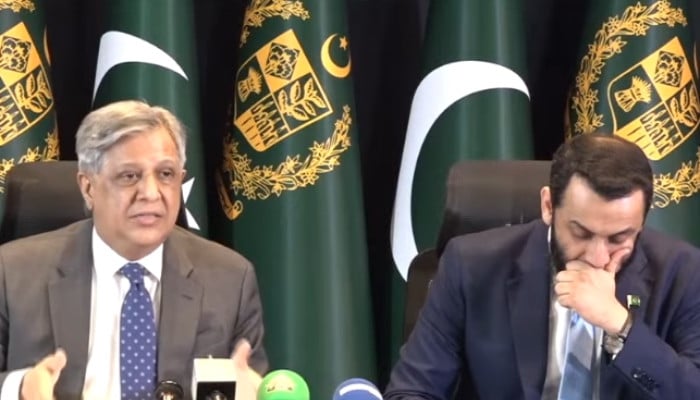
The federal government in Islamabad has formally rejected assertions regarding the arbitrary removal or undermining of the provincial administration in Khyber Pakhtunkhwa. Official representatives addressed escalating rhetoric stemming from opposition corridors, emphasizing that constitutional mechanisms remain intact and denying that any elected provincial governance framework has been unlawfully bypassed or subjected to unilateral executive overreach. The statement comes against a backdrop of prolonged friction between the centre and the Pakistan Tehreek-e-Insaf (PTI)-led provincial setup, where debates surrounding constitutional oversight, internal security jurisdiction, and legislative boundaries have intensified over recent legislative sessions.
Federal spokespersons underscored that administrative deliberations, including constitutional prerogatives related to emergency measures or the governor’s administrative mandate under Article 234, are guided strictly by national security protocols and statutory compliance rather than partisan objectives. The administration clarified that regular administrative channels remain operational across Peshawar and surrounding districts, dismissing narratives suggesting an unconstitutional imposition of direct federal management.
Commercial & Economic Implications
The persistence of centre-provincial governance disputes carries direct ramifications for Pakistan's domestic commerce, trade infrastructure, and fiscal cohesion. Khyber Pakhtunkhwa serves as a critical conduit for bilateral transit trade with Afghanistan and the wider Central Asian republics via the Torkham border crossing. Administrative instability and prolonged legal uncertainties frequently lead to supply chain bottlenecks, bureaucratic delays in customs clearance, and disrupted cargo movements along primary freight routes, including the Grand Trunk Road and Indus Highway.
For wholesale distributors and retail operations across northern Pakistan, intergovernmental discord introduces unpredictable operational risks. Market actors in consumer goods, construction materials, and perishable agricultural commodities encounter heightened delivery lead times and erratic transport tariffs whenever political confrontation manifests as transport stoppages or regulatory gridlock. Furthermore, delays in provincial revenue allocations under the National Finance Commission (NFC) framework exacerbate cash-flow strains, constraining provincial development expenditures and suppressing local commercial demand.
Related Intelligence: Federal Government Enforces Governor's Rule in KP Amid Security Crisis
Stakeholder Perspectives & Market Reactions
Regional business federations and merchant chambers have expressed deep reservations regarding persistent friction between federal and provincial authorities. The Sarhad Chamber of Commerce and Industry (SCCI) has routinely urged political leadership to insulate commercial corridors from partisan maneuvering, emphasizing that cross-border trade volumes are already constrained by regulatory barriers and liquidity crunches.
Constitutional scholars and legal observers note that invoking governor’s rule requires stringent parliamentary ratification under the 1973 Constitution, rendering speculative discourse counterproductive to institutional stability. Concurrently, investor sentiment within local equity and debt markets remains sensitive to political turbulence in the northwestern province, where unresolved disputes over counter-terrorism policies and resource federalism complicate structural adjustment benchmarks required under international financing programs.
Forward Outlook & Key Watchpoints
The political trajectory will largely hinge on forthcoming legislative engagements in both the National Assembly and the KP Provincial Assembly. Key watchpoints include provincial budget execution, the smooth transfer of federal revenue tranches, and whether law enforcement coordination between federal agencies and provincial police forces can be decoupled from political disputes.
Should tensions de-escalate into structured dialogue, commercial transit corridors and regional enterprise may see stabilized operational conditions heading into the next fiscal quarter. Conversely, protracted confrontation risks triggering broader judicial challenges, procedural impasses, and further volatility across local commodity and retail sectors.
Join Our Official WhatsApp Channel
Receive live commodity alerts, policy changes, and commercial intelligence directly on WhatsApp.