
Federal Government Establishes Dar-Led Committee to Supervise Khyber Pakhtunkhwa Governance
Prime Minister Shehbaz Sharif has instituted an 11-member federal oversight committee led by Deputy Prime Minister Ishaq Dar following emergency declarations in Khyber Pakhtunkhwa, reshaping administrative oversight and regional commerce.
The Core Development
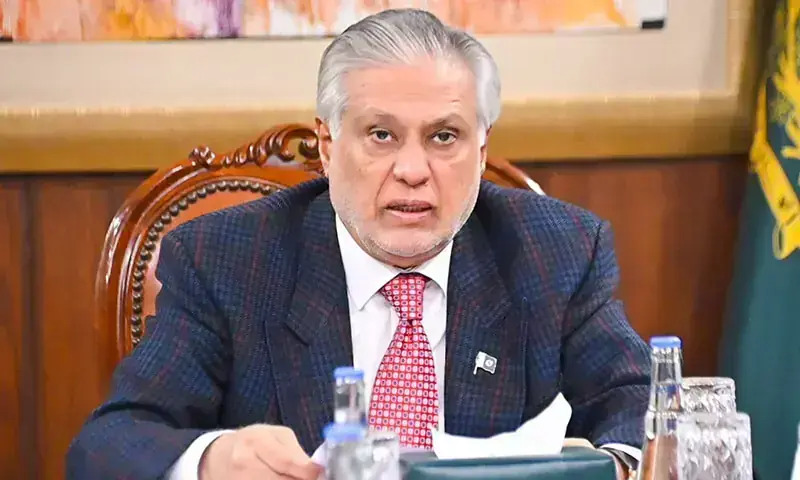
Following the declaration of an administrative emergency in Khyber Pakhtunkhwa, Prime Minister Shehbaz Sharif has constituted an 11-member federal committee chaired by Deputy Prime Minister and Foreign Minister Ishaq Dar to supervise provincial governance, law enforcement, and fiscal execution. The establishment of the high-level steering panel reflects an assertive operational intervention by Islamabad aimed at stabilizing a province contending with persistent security headwinds and institutional frictions.
According to federal insiders, the committee functions as an executive clearinghouse operating without immediate bureaucratic delays, maintaining a daily monitoring mandate over administrative, fiscal, and policing developments across Peshawar and peripheral districts. Key cabinet figures drafted into the oversight body include Law Minister Azam Nazeer Tarar, Minister for Planning and Development Ahsan Iqbal, Information Minister Attaullah Tarar, Minister for Kashmir Affairs and SAFRON Engineer Amir Muqam, and Minister for Parliamentary Affairs Tariq Fazal Chaudhry, alongside coalition representatives from the Muttahida Qaumi Movement-Pakistan (MQM-P). The body is tasked with establishing continuous operational liaison with the interim provincial setup and the Khyber Pakhtunkhwa Advisory Council to enforce policy directives and federal compliance.
Commercial & Economic Implications
For commercial enterprises, wholesale distribution networks, and industrial stakeholders, the federal consolidation of oversight holds profound structural consequences. Khyber Pakhtunkhwa serves as the central artery for regional overland commerce, connecting manufacturing hubs in Punjab and Sindh to the critical trade terminal at Torkham and the broader Central Asian Republics. Sustained administrative fragmentation previously induced volatility across cargo freight lanes, inflated transit insurance premiums, and compounded logistics delays along the Indus Highway and Grand Trunk Road.
The intervention of a committee steered by Dar—historically focused on fiscal austerity and centralized fiscal discipline—suggests tighter scrutiny over provincial revenue transfers, developmental budget allocations, and inter-provincial border checkpoints. Wholesale distributors in Peshawar's major commodity markets, including the Ghalla Mandi, face immediate shifts in regulatory policing concerning anti-hoarding campaigns, wheat inventory management, and cross-border currency leakages. A stabilized administrative hierarchy could curb unauthorized taxation and reduce informal friction costs on primary distribution routes; conversely, heightened bureaucratic oversight could temporarily slow municipal licensing, developmental project disbursements, and private capital outlays.
Related Intelligence: Cornell Sexual Assault Case Sparks Scrutiny Over Elite Academic Institution Governance
Stakeholder Perspectives & Market Reactions
Market responses across national trade corridors have been guarded yet responsive. The Federation of Pakistan Chambers of Commerce and Industry (FPCCI) along with regional commercial associations, including the Sarhad Chamber of Commerce and Industry (SCCI), have reiterated that political confrontation and administrative vacuums directly erode industrial productivity. Commercial stakeholders have repeatedly underscored the compounding burdens of elevated electricity tariffs, security extortion, and erratic logistics infrastructure in the northwest corridor.
Legal analysts and constitutional observers observe that conducting executive oversight through an informal federal committee structure tests conventional norms of provincial autonomy established under the 18th Constitutional Amendment. Legal scholars caution that governance through discretionary executive oversight risks running into judicial challenges if administrative interventions overreach into devolved subjects. Meanwhile, corporate treasury departments and financial institutions are monitoring the security footprint, noting that foreign direct investments in provincial energy, mining, and hydel projects remain paralyzed without absolute institutional continuity.
Forward Outlook & Key Watchpoints
Moving forward, the primary operational test for the Dar-led committee centers on resolving the widening security deficit while re-establishing financial liquidity within provincial institutions. Market participants must monitor whether the federal council introduces formalized fiscal audits targeting Khyber Pakhtunkhwa's development expenditure or enacts emergency measures over regional police administration.
Key inflection points over the coming quarter include the formalization of working protocols between federal ministers and civil servants in Peshawar, potential litigation in superior courts contesting the emergency framework, and the continuity of commercial trucking corridors through the Khyber Pass. If the oversight committee succeeds in depoliticizing essential administrative functions, wholesale supply chains may achieve long-needed predictability; failure to establish administrative coherence will exacerbate fiscal and supply chain vulnerabilities nationwide.
Join Our Official WhatsApp Channel
Receive live commodity alerts, policy changes, and commercial intelligence directly on WhatsApp.