
FBI Arrest of Saudi OpenAI Engineer Exposes Rising Frontier Espionage Risks
The arrest of OpenAI engineer Abdulrahman Alfozan by US federal authorities marks a critical escalation in sovereign competition over frontier artificial intelligence technologies.
Geopolitical & Core Developments
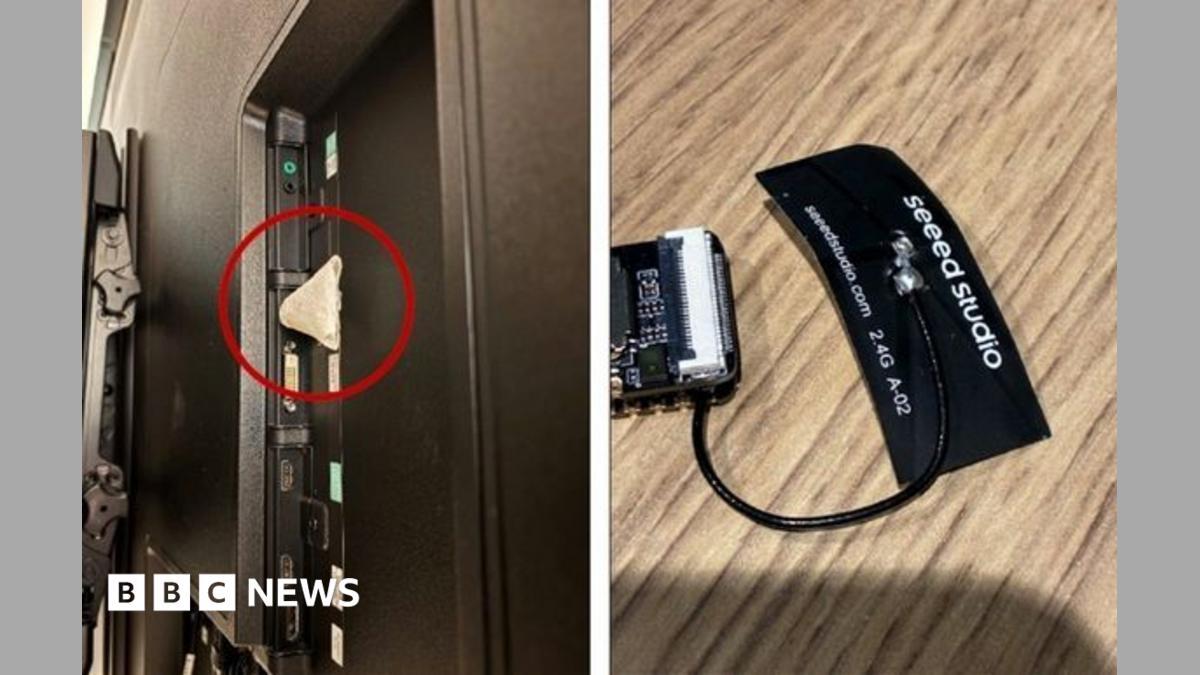
The apprehension of Abdulrahman Alfozan, an engineer employed at artificial intelligence pioneer OpenAI, by the Federal Bureau of Investigation marks a critical juncture in the burgeoning conflict over critical technology governance. Alfozan, who served within the California-based organization for over a calendar year, was detained following an extensive counterintelligence investigation involving surveillance tradecraft, covert audio recordings, and concealed physical evidence. Federal court filings describe systematic attempts to aggregate and extract sensitive intellectual property, raising immediate questions regarding state-directed technology acquisition programs.
While the US Department of Justice has maintained measured official declarations regarding formal foreign state attribution, national security analysts emphasize that the strategic profile of OpenAI positions it as a top-tier intelligence target. For sovereign actors seeking parity in autonomous systems, foundational large language models, and advanced computational algorithms, direct human intelligence penetration bypasses perimeter network defenses. This incident reveals the vulnerability of private software research laboratories that suddenly find themselves at the center of asymmetric geopolitical competition.
[Global Trade](/news/yemen-war-scenarios-houthi-red-sea-trade-impact) & Economic Ripples
The economic implications of state-level espionage within leading technology laboratories extend across cross-border venture capital, semiconductor distribution, and digital trade corridors. Over the preceding twenty-four months, sovereign wealth funds across the Middle East, notably Saudi Arabia's Public Investment Fund (PIF) and the United Arab Emirates' MGX, have positioned themselves as pivotal financiers of global AI infrastructure, committing tens of billions of dollars to computational data centers, power generation, and chip acquisition.
Alfozan's arrest is expected to catalyze aggressive regulatory scrutiny over cross-border talent recruitment and international investment syndicates. Heightened compliance standards will almost certainly complicate global technology supply chains. Should Washington impose stricter export controls on algorithmic architectures or restrict sovereign capital participation in frontier labs, the operational costs for multinational AI enterprises will escalate significantly. The friction may also disrupt emerging digital infrastructure projects planned across the Gulf Cooperation Council (GCC), potentially decelerating commercial enterprise integration and redirecting regional capital toward European or alternative Asian tech partnerships.
Related Intelligence: Kenya Confirms Second Ebola Case Straining East African Trade Corridors
International Reactions & Diplomatic Stances
Official channels in Washington have framed the arrest as part of a broader mandate to defend domestic technological supremacy and mitigate intellectual property theft targeting strategic industries. The Department of Justice reiterated its zero-tolerance posture regarding corporate espionage, while the US Department of Commerce indicated that oversight mechanisms governing foreign national access to classified computing environments would undergo rigorous evaluation.
Riyadh has officially distanced itself from unauthorized operations, maintaining that bilateral technology partnerships remain anchored in transparent commercial frameworks and national modernization programs under Vision 2030. Multilateral bodies and commercial market analysts note that diplomatic relations between Washington and Riyadh face an intricate balancing act. While Washington seeks to preserve stability in global energy markets and strengthen Middle Eastern diplomatic alignments, it remains acutely sensitive to the security perimeter surrounding advanced dual-use computational technologies.
Strategic Outlook & Future Scenarios
In the near term, corporate governance models inside Silicon Valley will undergo structural transformation. Venture-backed frontier research institutes are expected to adopt defense-grade counterintelligence protocols, including partitioned model weights, stringent continuous background vetting, and rigorous auditing of foreign national personnel possessing privileged technical access. This shift risks dampening the open-research ethos that accelerated recent technological breakthroughs.
Looking further ahead, the incident may accelerate the formal balkanization of the global artificial intelligence sector. If Western regulators mandate that sovereign capital can only take non-voting, compartmentalized positions in advanced AI platforms, countries seeking technological independence may diversify their computational partnerships toward alternative non-aligned actors. As international summits on AI safety and security convene in the coming year, the boundaries between proprietary commercial software, national security assets, and sovereign intelligence operations will serve as primary points of international contention.
Join Our Official WhatsApp Channel
Receive live commodity alerts, policy changes, and commercial intelligence directly on WhatsApp.