
Fatal Lahore Collision Sparks Calls for Stricter Heavy Freight Traffic Regulation
A fatal crash involving a heavy freight trailer in Lahore has killed three family members, renewing intense public scrutiny over urban logistics management and municipal road safety enforcement.
The Core Development
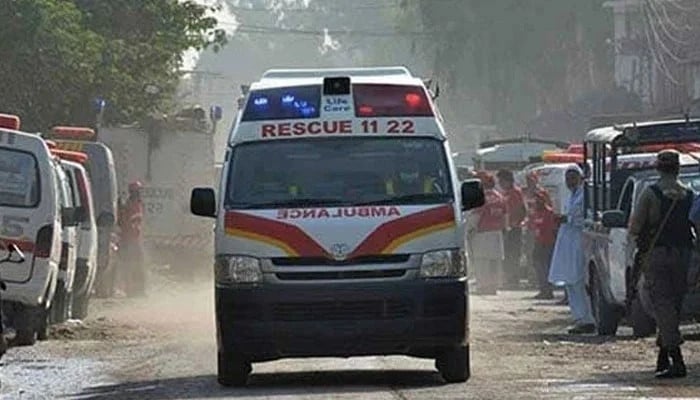
A devastating traffic accident claimed the lives of three family members, including a woman and a young child, on Allama Iqbal Road in Lahore's densely populated Garhi Shahu area. According to police and emergency rescue services, a heavy commercial trailer collided with a passenger car during the early hours, crushing the vehicle and causing instantaneous fatal injuries to its occupants. First responders from Rescue 1122 arrived at the scene shortly after the incident was reported, deploying hydraulic cutting equipment to extricate the victims before transferring them to a nearby tertiary healthcare facility, where doctors formally pronounced them dead on arrival.
Law enforcement personnel secured the perimeter, impounded the heavy vehicle, and initiated an investigative inquiry into the circumstances surrounding the collision. Preliminary findings indicate the trailer operator may have lost control due to mechanical failure or excessive speed along an urban corridor that typically accommodates mixed, high-density traffic. The driver was subsequently taken into custody, with local police registering a formal case under relevant sections of the Pakistan Penal Code. The incident has once again placed the spotlight on the presence of large multi-axle freight vehicles inside secondary and tertiary city thoroughfares during unauthorized operational windows.
Commercial & Economic Implications
While fundamentally a human tragedy, the accident highlights severe underlying frictions within Pakistan's urban freight distribution networks. Lahore serves as the primary wholesale distribution hub for Punjab, connecting agrarian and industrial output from surrounding regions to dense inner-city retail centers. Heavy reliance on multi-axle trailers for intra-city logistics rather than localized transshipment hubs creates systemic safety vulnerabilities. Repeated accidents of this nature frequently prompt emergency administrative curbs, including sudden restrictions on commercial haulage hours.
When municipal authorities enforce uncoordinated daylight curfews on heavy transport, supply chains face immediate bottlenecks. Wholesale distributors of construction materials, fast-moving consumer goods (FMCG), and wholesale perishables experience delivery delays, increasing demurrage charges and secondary distribution costs. These elevated transit costs ultimately cascade down to end consumers in the form of marginal price markups across urban retail outlets. Furthermore, commercial fleet owners face surging insurance premiums, vehicle downtime, and heightened legal liabilities, compounding operational pressures in an already high-inflation macro environment.
Related Intelligence: Tunisia Faces Mounting Debt and Fiscal Strain Under President Kais Saied
Stakeholder Perspectives & Market Reactions
The incident has elicited sharp condemnation from civil society groups and commuter safety advocates, who have criticized the city's traffic management apparatus for failing to enforce designated commercial freight hours. Commuters and local resident bodies have repeatedly raised concerns regarding under-regulated freight haulage through transit-heavy residential and commercial zones, citing weak enforcement of speed limits and insufficient roadside monitoring.
Conversely, freight transport associations argue that municipal infrastructure has consistently failed to keep pace with Lahore's rapid commercial expansion. Representatives from the logistics and trucking sector contend that the lack of dedicated dry ports, ring-road feeder junctions, and peripheral transfer hubs forces larger commercial haulers to navigate outdated urban corridors. Industry stakeholders maintain that until formal multi-modal logistics parks are fully functional outside municipal limits, eliminating heavy freight entirely from intra-city corridors remains logistically unviable without bringing everyday retail replenishment to a standstill.
Forward Outlook & Key Watchpoints
Moving forward, district administration officials and the Lahore Traffic Police are anticipated to launch targeted crackdowns on heavy commercial vehicles operating outside designated night-time timeframes. Policy watchpoints over the coming weeks include potential revisions to freight entry timings along key transit arteries such as Allama Iqbal Road, the Circular Road, and GT Road link routes, as well as rigorous mechanical fitness inspections for long-haul trucks.
Additionally, urban planning authorities will face mounting scrutiny regarding the progression of bypass routes and peripheral logistics terminals. A failure to institute comprehensive structural reforms—spanning mandatory vehicle telematics, tighter driver licensing regulations, and dedicated freight corridors—will leave Pakistan's major metropolitan areas vulnerable to recurrent logistical disruptions and avoidable loss of life.
Join Our Official WhatsApp Channel
Receive live commodity alerts, policy changes, and commercial intelligence directly on WhatsApp.