
China Accelerates Sovereign Gold Accumulation to Hedge Against Dollar Dominance
Beijing's aggressive multi-month gold accumulation signals a structural pivot away from US dollar hegemony, reshaping sovereign reserve management and international commodities trade.
Geopolitical & Core Developments
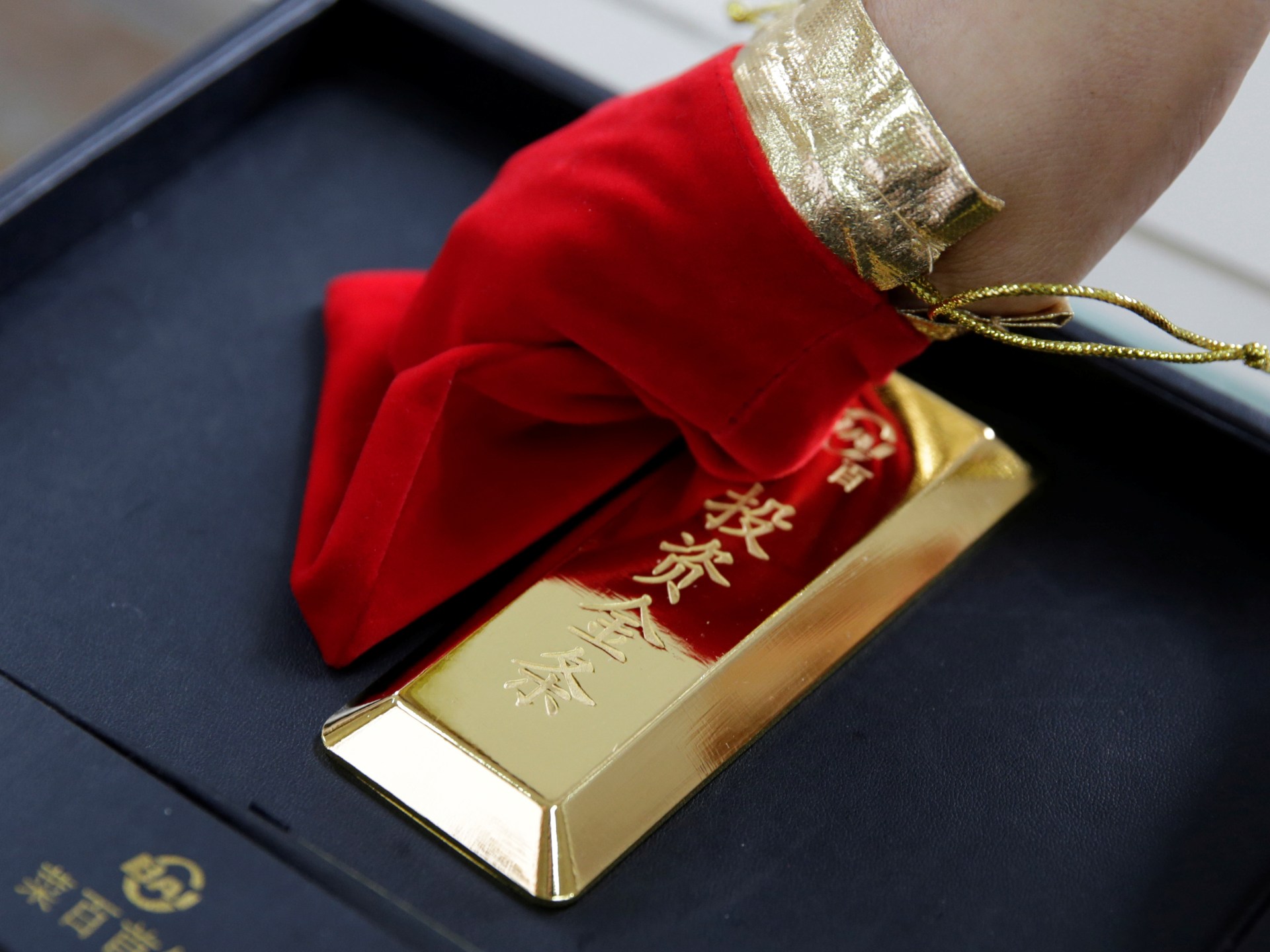
Over the past eighteen months, the People's Bank of China (PBOC) has engaged in one of the most sustained sovereign gold accumulation campaigns in modern financial history. Official monetary data reveals that Beijing has steadily expanded its bullion vaults, adding hundreds of metric tons to its national balance sheet while deliberately paring down its holdings of United States Treasury securities. This strategic recalibration is not an isolated market operation; it represents a coordinated, long-term maneuver by the Chinese state to insulate its domestic economy from Western geoeconomic leverage.
The timeline of this accelerated purchasing program aligns directly with the escalation of financial sanctions deployed by Washington and Brussels against the Russian Federation following the 2022 invasion of Ukraine. The unprecedented freezing of approximately 300 billion dollars in sovereign Russian central bank assets served as a definitive turning point for Beijing's national security planners. Recognizing that foreign exchange reserves denominated in G7 currencies are inherently vulnerable to unilateral political seizure, China's economic leadership concluded that tangible, unencumbered physical assets—chief among them physical gold—must form a larger foundation of the nation's strategic monetary reserves.
Global Trade & Economic Ripples
The ripple effects of China's gold accumulation are vibrating across global financial architecture and physical commodity markets. Sustained central bank demand, spearheaded by the PBOC alongside counterparts in Singapore, Poland, and India, has placed a persistent structural floor under international gold spot prices, pushing valuations to historic peaks despite a prevailing global regime of elevated interest rates. Historically, bullion struggles during periods of high real yields; however, state-sponsored institutional buying has effectively broken this historical correlation.
Beyond bullion pricing, China's maneuver directly impacts the broader balance of global liquidity and currency settlement systems. By shifting capital from sovereign US debt into hard commodities, Beijing is dampening foreign demand for Western debt instruments while laying the groundwork for alternative trade mechanisms. Cross-border settlement programs involving local currencies—particularly via the Shanghai Gold Exchange and regional bilateral trade agreements—are being designed to bypass the traditional SWIFT network. This transition has notable implications for energy and raw material procurement, where Chinese importers are increasingly offering yuan-settled contracts backed implicitly by physical gold convertibility, directly challenging the petrodollar consensus that has governed international commodity flows since the 1970s.
International Reactions & Diplomatic Stances
Multilateral financial institutions and market analysts have taken close note of this structural shift. The World Gold Council has formally documented that central banks are purchasing gold at unprecedented rates, noting that emerging market reserve managers cite political risk diversification as their primary operational objective. Analysts at leading European and American investment banks have framed the trend as an irreversible structural migration toward multipolar reserve management.
From a diplomatic perspective, Western policymakers have expressed understated concern regarding the dilution of economic sanctions. Officials within the US Department of the Treasury have maintained that the US dollar's liquidity, capital market depth, and legal transparency ensure its standing as the primary global reserve asset cannot be easily replicated. Conversely, representatives across the expanded BRICS bloc have embraced Beijing's trajectory, emphasizing the necessity of autonomous financial infrastructure during recent ministerial meetings. Diplomatic communiqués from Moscow, Tehran, and Beijing increasingly champion physical assets and distributed financial technologies as essential safeguards against external economic coercion.
Strategic Outlook & Future Scenarios
The trajectory of sovereign gold purchases is expected to intensify through the remainder of the decade as geopolitical frictions between major powers crystallize. While gold currently constitutes less than five percent of China's aggregate multi-trillion-dollar foreign exchange reserves—far below the sixty to seventy percent levels held by the United States and major Western European powers—this statistical divergence underscores immense runway for future state purchases.
Key inflection points in the medium term include upcoming BRICS summits, where discussions surrounding a gold-indexed unit of account or unified multilateral clearing systems will feature prominently on the agenda. If geopolitical tensions over trade tariffs, semiconductor controls, or maritime sovereignty in the Indo-Pacific deteriorate further, Beijing may expedite secondary purchases through domestic state-owned miners and sovereign wealth funds. Consequently, global market participants must brace for an era defined by fractured international clearing systems, structural shifts away from unipolar fiat dominance, and sustained institutional demand for hard commodity reserves.
Join Our Official WhatsApp Channel
Receive live commodity alerts, policy changes, and commercial intelligence directly on WhatsApp.