
Busan Canal Shark Operation Spotlights Urban Waterway Management and Marine Commerce
Maritime authorities in Busan have completed a delicate operation to escort a stranded shark from an urban canal system, raising questions over coastal environmental governance and logistics.
Geopolitical & Core Developments
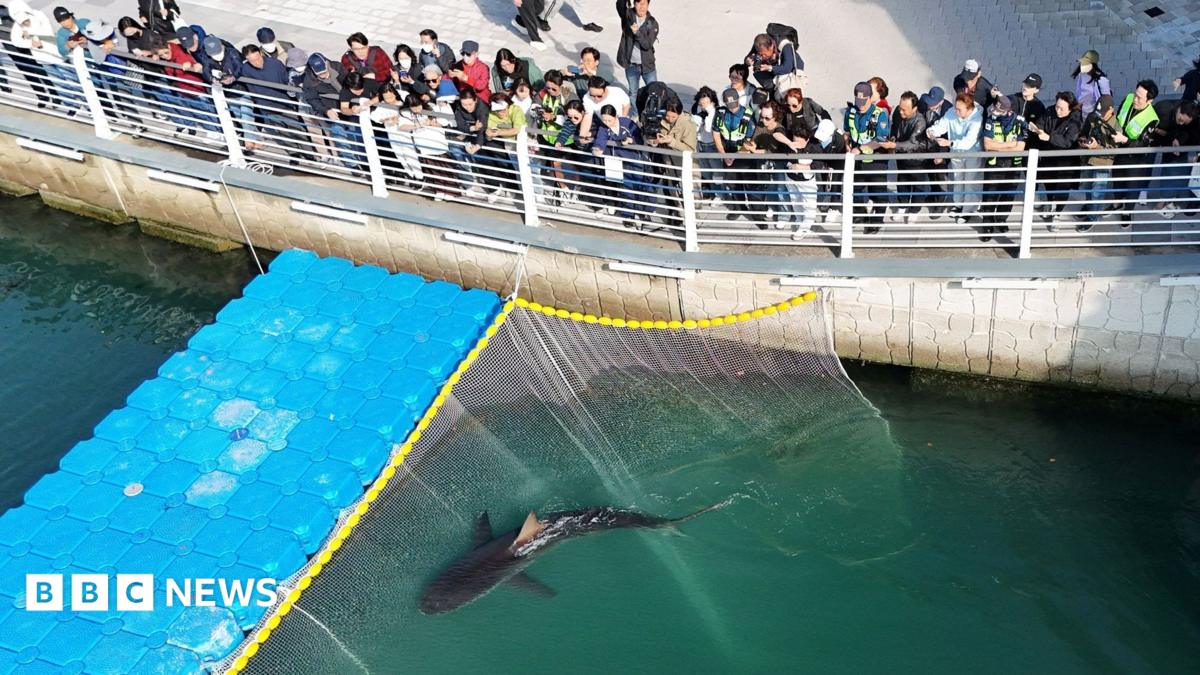
South Korean maritime officials and environmental specialists completed an intricate operation in the port metropolis of Busan after a wild shark, dubbed Bukangi by local observers, penetrated inland urban waterways and repeatedly resisted efforts to return to open waters. The specimen, first recorded entering the narrow canal network weeks ago, drew nationwide scrutiny as regional authorities navigated municipal conservation statutes and public safety mandates.
Busan represents the strategic core of South Korea's maritime outward logistics, functioning as the world's sixth-busiest container port and an essential node along Northeast Asian shipping arteries. While marine wildlife incursions into coastal estuaries occur periodically, the animal's protracted presence within an operational commercial zone necessitated coordination between the Ministry of Oceans and Fisheries, maritime police, and municipal environmental agencies. Specialized divers and marine biologists deployed hydroacoustic barriers and temporary guiding nets to maneuver the predator through shipping channels toward the Korea Strait without inflicting trauma on the specimen or disrupting ongoing civil operations.
Global Trade & Economic Ripples
While the direct operational disruption to Busan's core deep-water terminals remained localized, the incident underlines systemic vulnerabilities within coastal industrial zones where commercial waterways interface with littoral ecosystems. Regional municipal authorities briefly placed movement restrictions on small leisure craft, localized bunkering barges, and internal feeder vessels navigating the inner canal networks, emphasizing the sensitivity of urban maritime corridors.
From a macroeconomic perspective, recurring ecological anomalies along East Asian coastlines intersect with broader marine logistics challenges. Warming sea surface temperatures in the East China Sea and the Sea of Japan are actively driving pelagic species into shallower, cooler, or food-dense coastal shallows. For port operators and international shipping syndicates, escalating occurrences of large marine fauna within port limits present potential compliance and operational friction, including mandatory vessel speed reductions, increased marine insurance surveillance, and localized stoppages during environmental mitigation procedures.
International Reactions & Diplomatic Stances
Environmental organizations and multilateral bodies, including regional observers affiliated with the United Nations Environment Programme, highlighted the event as a case study in coastal wildlife containment amid expanding port infrastructure. South Korean marine authorities issued formal statements emphasizing their commitment to humane wildlife management practices aligned with international marine biodiversity standards, specifically avoiding lethality in favor of coordinated oceanic escort tactics.
Regional maritime agencies in Japan and Taiwan observed the operation closely, noting that shared migratory pathways across the Tsushima and Korea Straits require harmonized monitoring. Independent marine analysts have underscored that Northeast Asian trade hubs must integrate comprehensive biological surveillance into automated Vessel Traffic Services (VTS) frameworks, ensuring that port authorities can preemptively isolate navigation lanes without resorting to ad-hoc emergency interventions.
Strategic Outlook & Future Scenarios
Moving forward, municipal authorities in Busan have initiated review procedures to reinforce acoustic and physical perimeter screening along sensitive urban drainage and navigation locks. The objective is to deter pelagic species from entering tight urban channels without constricting coastal barge transit or municipal water turnover systems.
In the medium term, shipping syndicates operating across East Asian maritime corridors are anticipated to face tighter environmental protocols regarding ballast water release, coastal dredging, and shoreline preservation near industrial zones. As climate-induced oceanic shifts accelerate biological realignments across the Pacific Rim, terminal operators and regional governments will be required to institutionalize wildlife diversion protocols directly into port contingency architectures, mitigating risks to navigational safety while adhering to international conservation commitments.
Join Our Official WhatsApp Channel
Receive live commodity alerts, policy changes, and commercial intelligence directly on WhatsApp.