
Bilawal Defends Pakistan System via Thar Coal Success
PPP Chairman Bilawal Bhutto-Zardari has dismissed claims of national systemic failure, citing the transformative development of Tharparkar and the Thar Coal Project as proof of the 1973 Constitution's viability.
The Core Development
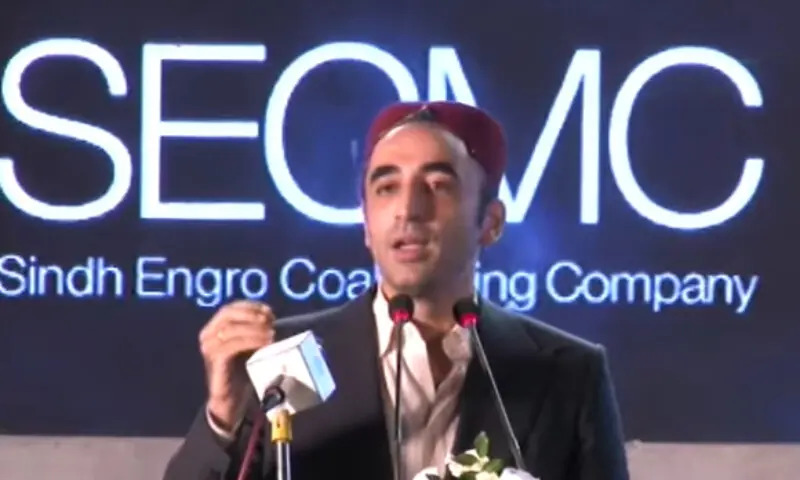
Pakistan Peoples Party (PPP) Chairman Bilawal Bhutto-Zardari delivered a robust defense of the nation's governance framework during a high-profile ceremony in Tharparkar, where he formally inaugurated Phase III of the Thar Coal Project's Block II. Rejecting persistent narratives that Pakistan's state apparatus and constitutional framework have collapsed, Bhutto-Zardari positioned the rapid socioeconomic transformation of the desert district as concrete evidence of institutional success. He argued that the infrastructure and energy advancements realized in Sindh's Thar region directly validate the efficacy of the 1973 Constitution and the 18th Constitutional Amendment, which devolved significant administrative and financial powers to the provinces.
Addressing a gathering of local dignitaries, party workers, and energy sector experts, Bhutto-Zardari took direct aim at political opponents advocating for the creation of new administrative units and claiming that the federation has fundamentally failed. Without directly naming rival political entities, he challenged their logic, asserting that if federal administration is truly broken, governance should be entrusted to the people of Tharparkar, who have demonstrated exemplary project execution and resource management through public-private partnerships.
Commercial & Economic Implications
The expansion of the Thar Coal Project carries profound implications for Pakistan's macro-economy, energy security, and industrial cost structures. For decades, Pakistan's heavy reliance on imported furnace oil and liquefied natural gas exposed its trade balance and industrial manufacturing sector to severe external shocks, driving up inflation and eroding consumer purchasing power. The exploitation of Thar's indigenous lignite coal reserves shifts the paradigm toward domestic energy independence, promising baseload power generation at significantly lower tariffs for national grid distribution.
From a commercial standpoint, the stabilization of energy input costs directly influences wholesale distribution and retail trade across Pakistan. As affordable electricity gradually replaces expensive imported power generation, industrial manufacturers—particularly in the textile and retail supply chains—stand to benefit from reduced production overheads. This structural shift is vital for curbing inflationary pressures that have burdened retail markets and squeezed consumer wallets. Furthermore, the economic spillover in Tharparkar has stimulated local commerce, creating employment opportunities, upgrading regional transport networks, and integrating a historically marginalized district into the national economic mainstream.
Related Intelligence: Libyan Educational Crisis Threatens National Stability and Energy Supply Chains
Stakeholder Perspectives & Market Reactions
The inauguration and Bhutto-Zardari's subsequent remarks have elicited mixed responses from various business bodies, trade associations, and political analysts across Pakistan. Industrial stakeholders in Sindh have generally lauded the public-private partnership model utilized in Block II, viewing it as a viable blueprint for executing large-scale infrastructure and energy projects without overwhelming public debt liabilities. Business leaders note that consistent energy supply from Thar has already begun to mitigate power outage risks for industrial zones in lower Sindh.
Conversely, critics and opposition figures from other provinces maintain skepticism regarding the broader economic management of the country, arguing that localized successes in Thar do not negate systemic macroeconomic imbalances, high national debt servicing costs, and persistent fiscal deficits. Legal and political analysts also point out that debates surrounding the 18th Amendment remain contentious, with federalists and provincial autonomists locked in ongoing discussions regarding tax collection authorities, resource distribution, and administrative efficiency.
Forward Outlook & Key Watchpoints
As Phase III of Block II comes online, policy makers, investors, and market analysts will closely monitor several operational metrics to gauge the long-term viability of Thar coal as Pakistan's primary energy anchor. Key watchpoints include the timely execution of subsequent mining phases, the financial health of Thar coal-fired power plants, and their capacity to reduce circular debt within the power sector.
Additionally, the political discourse surrounding provincial autonomy and systemic reform is expected to intensify ahead of upcoming legislative sessions. Whether the development model showcased in Tharparkar can be successfully replicated across other underdeveloped regions will remain a definitive test for Pakistan's federal and provincial governance structures.
Join Our Official WhatsApp Channel
Receive live commodity alerts, policy changes, and commercial intelligence directly on WhatsApp.