
Albanian Political Unrest Escalates in Tirana Threatening Regional Economic Stability
Violent demonstrations targeting institutional centers in Tirana threaten Albania's governance and risk delaying Western Balkan integration while disrupting regional energy infrastructure.
Geopolitical & Core Developments
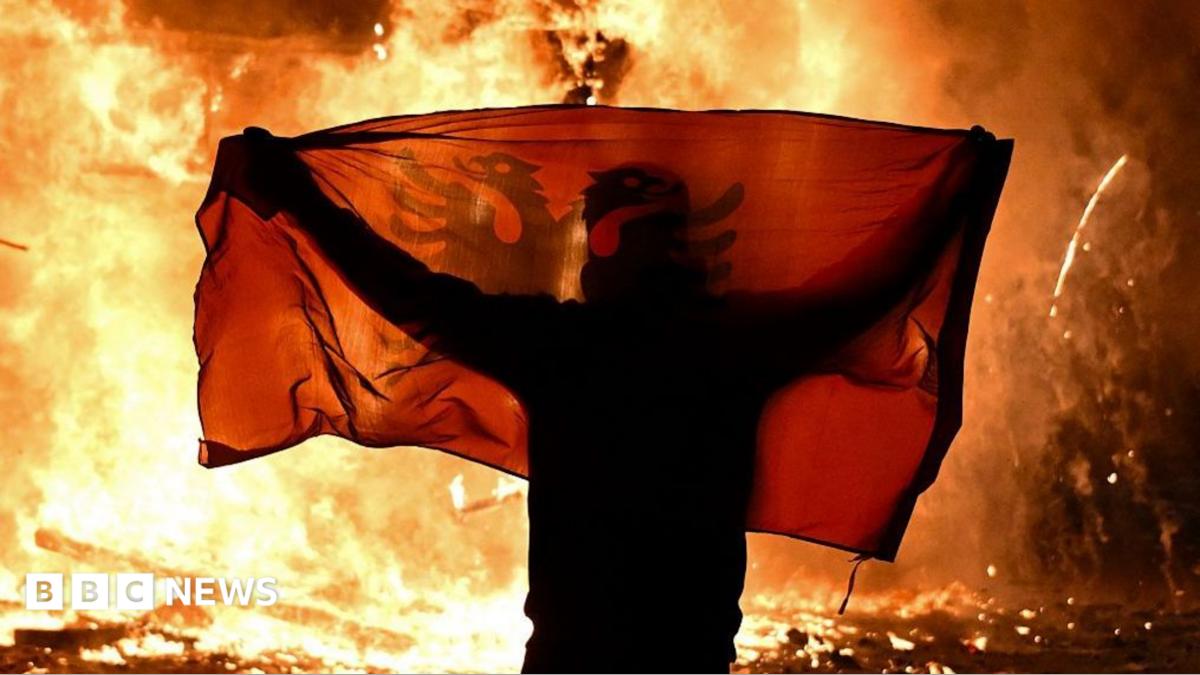
Albania's capital, Tirana, has descended into significant civil unrest as months of persistent anti-government demonstrations spearheaded by the grassroots "Flamingo" movement escalated into unprecedented violent clashes with state security forces. What began as peaceful civic discontent against systemic corruption, deteriorating living standards, and alleged electoral irregularities rapidly metastasized into organized confrontations targeting key government complexes, including the Prime Ministry and parliamentary offices.
State security apparatus deployed reinforced barricades, specialized tear gas, and high-pressure water cannons to disperse several thousand demonstrators attempting to breach ministerial perimeters. The timeline reflects an acute breakdown in civil dialogue, shifting from localized labor and student demonstrations toward an organized nationwide campaign demanding the immediate resignation of the current administration and the establishment of a transitional technocratic government.
Strategically, Albania serves as an indispensable geopolitical anchor for the North Atlantic Treaty Organization (NATO) along the Adriatic basin. Prolonged institutional fragility threatens to destabilize not only the internal mechanisms of Tirana but also the broader equilibrium of the Western Balkans, a region increasingly contested by competing global powers seeking political leverage.
Global Trade & Economic Ripples
While Albania represents a modest component of aggregate European gross domestic product, its geographic role within Mediterranean and Adriatic trade corridors magnifies the commercial repercussions of prolonged instability. Albania hosts crucial infrastructure segments for the Trans Adriatic Pipeline (TAP), a strategic artery transporting Caspian natural gas from Azerbaijan to European markets via Greece and Italy. Any threat to pipeline terminal facilities or pipeline maintenance hubs threatens Southern Europe's diversification away from Eastern energy suppliers.
Furthermore, freight routes traversing Pan-European Corridor VIII—connecting Albania's deep-water Port of Durres through North Macedonia to Bulgaria's Black Sea coastline—face operational delays due to urban blockades and enhanced military checkpoints. Commercial logistics operators report localized supply chain disruptions, impacting transshipment timelines for agricultural products, base metals, and refined petroleum entering the interior Balkan corridor.
The domestic currency, the Albanian lek, faces nascent downward pressure, prompting the Bank of Albania to monitor foreign exchange reserves closely. Sustained capital flight or prolonged civil conflict poses direct risks to the sovereign bond yields of Tirana, while dampening international investor confidence across long-term hydroelectric and renewable energy concessions.
International Reactions & Diplomatic Stances
Multilateral institutions and regional alliances have voiced immediate alarm regarding the deterioration of rule of law in Tirana. The European Union's External Action Service issued a stern diplomatic communique calling for maximum restraint, warning that violence against public institutions compromises Albania's ongoing accession negotiations under the EU integration framework.
The United States Embassy in Tirana echoed these concerns, emphasizing that the democratic right to assembly must remain peaceful while urging law enforcement to operate strictly within international human rights standards. Diplomatic envoys from neighboring Italy and Greece have signaled apprehension over potential regional spillover, underscoring the necessity of institutional dialogue.
Market intelligence analysts from major European geopolitical risk consultancies note that foreign direct investment across the Western Balkans hinges fundamentally on political predictability, suggesting that prolonged institutional standoff will halt critical infrastructure project financing throughout the current fiscal quarter.
Strategic Outlook & Future Scenarios
The near-term trajectory in Tirana points toward sustained polarization. Should the administration refuse structural concessions, civil disobedience is expected to shift toward critical transport nodes, including access highways and coastal terminal operations.
An upcoming emergency session of the regional stabilizing bodies and the anticipated Western Balkans ministerial summits will likely place governance reforms and constitutional dialogue high on the agenda. Unless a verified diplomatic mediation channel is established between the Flamingo movement's leadership and parliamentary authorities, Albania risks prolonged structural stagnation, hindering foreign capital inflows and jeopardizing its position as an emerging European trade corridor.
Join Our Official WhatsApp Channel
Receive live commodity alerts, policy changes, and commercial intelligence directly on WhatsApp.